Car Battery Warning Light: Causes, Signs & How to Fix
Introduction
A glowing dashboard icon rarely appears at a convenient time. It shows up during peak-hour traffic, on a highway run, or minutes before an important commute. And when the car warning light linked to the charging system appears, most drivers assume the battery is dying. That’s only part of the story.
Modern Indian cars, especially feature-loaded SUVs and connected hatchbacks, rely heavily on stable electrical systems. From ADAS sensors to infotainment units and automatic climate control, even a slight voltage imbalance can trigger expensive failures. When the car battery light is on, the issue may involve the battery, alternator, regulator, or wiring network itself.
Ignoring it isn’t cheap. Battery-related breakdowns remain one of the most common roadside assistance requests across Indian cities, particularly during monsoon months and extreme summer heat.
What is the Car Warning Battery Light on the Dashboard?
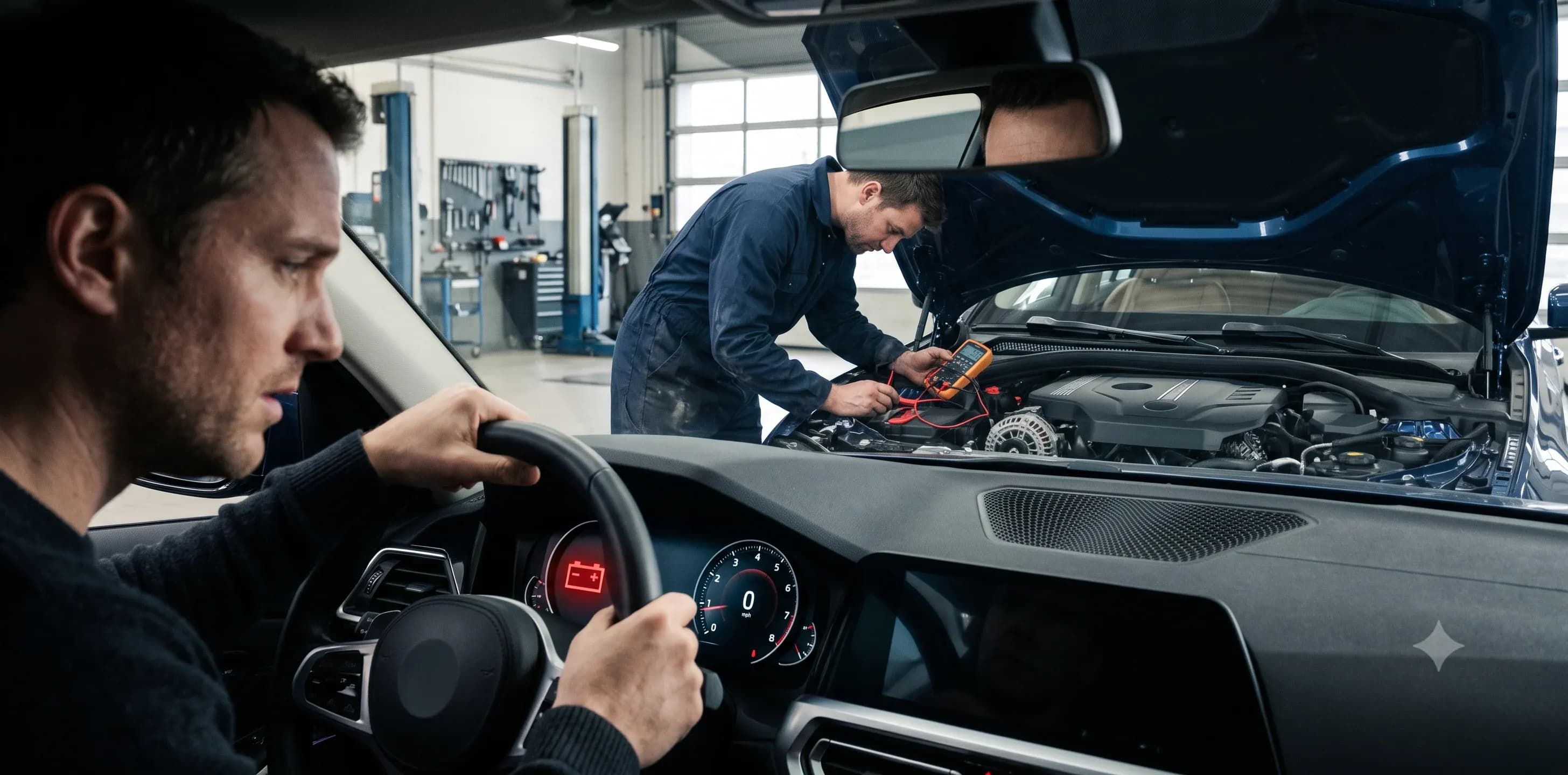
The car warning light associated with the battery usually appears as a battery-shaped icon on the instrument cluster. It signals that the vehicle’s charging system isn’t operating within the required voltage range.
Here’s the catch. The battery may still hold enough power to start the engine while the alternator silently fails to recharge it during driving. That’s why many drivers notice the issue only after the car suddenly refuses to restart.
In several modern vehicles, the low battery indicator in car systems can also trigger secondary alerts involving steering assist, ABS, or infotainment resets because electrical voltage affects multiple modules simultaneously.
Important Causes for the Car Warning Light on the Dashboard?
1. Weak or Discharged Car Battery
Indian driving conditions are harsh on batteries. Constant stop-go traffic, excessive AC usage, and prolonged idle times reduce battery efficiency faster than expected.
When the car battery light is on, an ageing battery is often the first suspect. Most factory-fitted batteries last roughly 3 to 5 years, depending on climate and usage patterns.
2. Problems with the Alternator
The alternator converts engine power into electricity. If it fails, the battery alone powers the car until complete discharge.
A workshop technician in Chennai once described a recurring case involving premium SUVs arriving with dead batteries every fortnight. The battery wasn’t faulty. A failing alternator bearing reduced charging efficiency under load, especially during night driving with headlights and ventilated seats active.
That’s the reality with modern electronics-heavy vehicles.
3. Corroded or Loose Battery Connections
Battery terminals collect corrosion over time, particularly in humid coastal regions. Loose clamps interrupt current flow and may trigger the car's warning light intermittently.
White or bluish residue around terminals is usually the first visible sign.
4. Malfunctioning Voltage Regulator
Voltage regulators maintain a controlled electrical output. Too much voltage can damage ECUs and sensors; too little causes charging failure.
When the car battery light is on, fluctuating dashboard brightness or unstable infotainment behaviour often point toward regulator issues.
5. Electrical Wiring Problems
Rodent damage has become surprisingly common in urban India. Modern cars use extensive wiring harnesses beneath the bonnet, making them vulnerable to chewed insulation and broken circuits.
And yes, damaged grounding wires can also activate the low battery indicator in car systems unexpectedly.
6. Burnt-Out Fuse Issues
A damaged charging-system fuse may interrupt electrical flow between the alternator and battery. However, relatively inexpensive to fix, a delayed diagnosis can lead to complete battery drainage.
Also Read: What is a Turbo Engine in Cars?
Also Read: Best Car Under 20 Lakhs
Signs of the Car Battery Warning Light
1. Dashboard Battery Light is On
The most obvious indicator remains the illuminated battery symbol. If the car battery light is on continuously while driving, immediate inspection is necessary.
A light that flickers during acceleration or while using electrical accessories usually signals unstable charging output.
2. Electrical Components Are Malfunctioning
Power windows are slowing down. Touchscreens freezing. Cabin lights are dimming.
These symptoms often appear before total failure. When the car battery light is on, electrical irregularities typically follow.
3. Car Struggling to Start
A weak crank, delayed ignition response, or clicking sound during startup points toward insufficient battery charge.
Think of it this way: modern petrol and diesel engines require a stable voltage even before combustion begins. Without it, ignition systems and fuel pumps may fail to operate correctly.
4. Frequent Jump Start Required
If jump-starts become routine, the problem extends beyond temporary discharge. Persistent charging-system failure usually sits underneath.
Repeated jump-starting without diagnosis risks damaging sensitive electronics.
Also Read: What is an Axle on a Car?
How to Fix or Prevent the Car Battery Warning Light
1. Check Battery Health
Battery voltage and electrolyte condition should be tested periodically, especially after three years of ownership.
If the car battery light is on, a load test quickly reveals whether the battery can still retain adequate charge capacity.
2. Get the Charging System Tested Regularly
Alternator performance testing takes only minutes at most service centres. Preventive checks matter even more in cars equipped with connected tech and hybrid-assist systems.
3. Check for Damaged or Loose Wiring
Inspect battery terminals, grounding points, and visible wiring harnesses for corrosion or looseness.
Even a partially disconnected cable can trigger the car battery light to come on unexpectedly.
4. Inspect the Alternator
Grinding sounds, burning smells, or inconsistent charging voltage indicate alternator wear.
If the car battery light is on alongside dim cabin electronics, alternator inspection shouldn't be delayed.
5. Dim or Flickering Headlights
Headlights reacting to engine RPM changes usually indicate unstable voltage delivery.
But many drivers ignore this early symptom until the vehicle fails entirely.
Conclusion
When the car battery light is on, the issue rarely remains isolated for long. Today’s vehicles depend on tightly integrated electrical systems where one charging fault can disrupt multiple functions at once.
Quick diagnosis saves money. Delayed action usually multiplies repair bills. That small dashboard icon deserves immediate attention.
FAQs
Can Cold Weather Affect Car Battery Performance?
Yes. Cooler temperatures slow down chemical reactions within the battery, which decreases cranking power and charging efficiency.
How Do I Fix the Car Battery Warning Light?
Test batteries, inspect terminals and perform alternator diagnostics. Worn wiring or charging components can often be replaced to correct the problem.
Can I Drive with The Battery Warning Light ON?
It is possible for a short distance. However, when this car battery light is ON, the vehicle may stall when the battery is completely discharged.
What are the Signs of a Weak Car Battery?
Slow engine cranking, dim headlights, electrical glitches, and repeated jump-start requirements are common indicators.
What Precautions Should You Take When Jump-Starting a Modern Car?
Always use proper polarity, don't use faulty jumper cables, and don't attempt multiple jump starts if there is a problem with the electrical system. In today's vehicles, even sensitive ECUs can be damaged by voltage problems.