What is a Turbo Engine in Cars? Meaning, How it Works? & Benefits
Introduction
Small-capacity engines are no longer slow. That shift changed the Indian car market dramatically. From compact SUVs to premium hatchbacks, manufacturers now rely heavily on turbocharged petrol and diesel setups to deliver stronger performance without massively increasing fuel consumption. For buyers researching what is turbo engine, the answer goes beyond speed alone.
A turbocharged setup allows smaller engines to produce power figures once associated with larger naturally aspirated motors. Think of the 1.0-litre turbo units now pushing over 115 bhp in Indian SUVs. Ten years ago, that output demanded much bigger engines.
But there’s a trade-off. Maintenance patterns change. Driving habits matter more. Fuel quality becomes critical. Understanding what a turbo engine in cars helps buyers avoid expensive ownership mistakes later.
What is a Turbo Engine?
A turbo engine is an internal combustion engine equipped with a turbocharger that forces extra compressed air into the combustion chamber. More air means more fuel can burn efficiently, resulting in higher power output from a smaller engine.
Put simply, what is turbo engine technology trying to achieve? Greater performance without dramatically increasing engine size.
The meaning of turbo engine lies in forced induction. Unlike naturally aspirated engines that rely only on atmospheric pressure, turbocharged engines compress incoming air before combustion begins. This improves torque delivery and acceleration.
That’s why compact Indian cars such as the Hyundai Venue or Mahindra XUV 3XO now deliver performance once expected from larger sedans.
How Does a Turbo Engine Work?
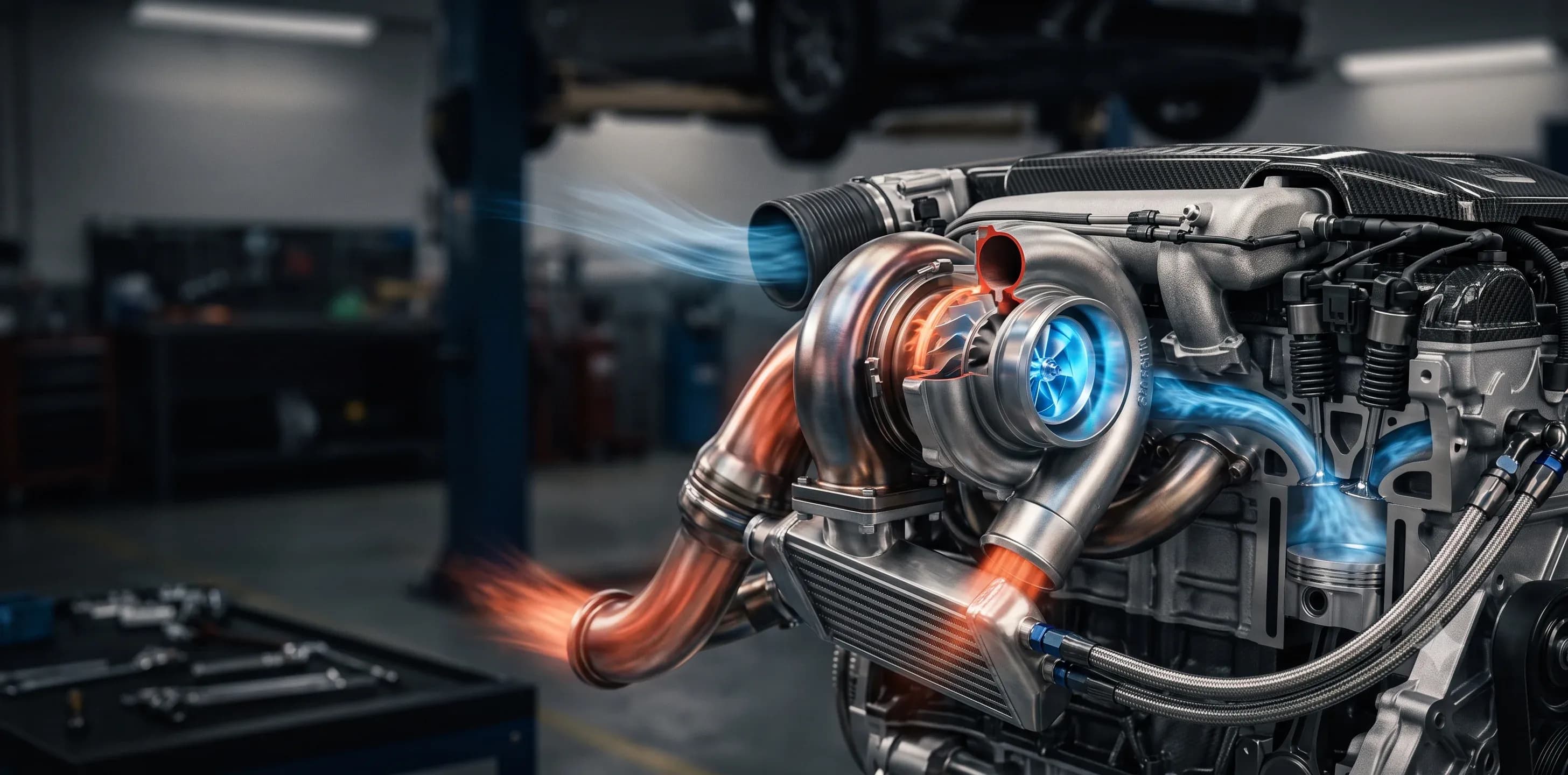
Understanding what is turbo engine operation requires looking at exhaust gases.
Here’s the sequence:
● Exhaust gases spin a turbine.
● That turbine is connected to a compressor wheel.
● The compressor pushes dense air into the engine cylinders.
● More oxygen enters combustion.
● Power output increases significantly.
Think of it this way: a naturally aspirated 1.5-litre engine may produce similar power to a modern 1.0-litre turbocharged unit. But the smaller turbo engine usually delivers stronger low-end torque, especially useful during overtaking on Indian highways.
And yet, aggressive driving can expose weaknesses. A Bengaluru-based service technician once described how customers often switch off turbocharged cars immediately after long highway runs. The turbo remains extremely hot after sustained operation. Repeating that habit reduces turbo lifespan over time.
That’s where ownership awareness becomes crucial while understanding what is turbo engine systems.
Also Read: What is RPM in Cars?
Advantages & Disadvantages of Turbo Engines
| Advantages | Disadvantages |
|---|---|
| Better power from smaller engines | Higher maintenance costs |
| Strong low-end torque for city driving | Turbo lag in some vehicles |
| Improved fuel efficiency under balanced driving | Sensitive to poor fuel quality |
| Reduced emissions compared to larger engines | Repairs can be expensive |
| Better highway overtaking performance | Engine heating risks under stress |
Difference Between Turbo Engine & Normal Engine
| Turbo Engine | Normal Engine |
|---|---|
| Uses compressed air induction | Uses natural air intake |
| Higher torque output | Linear power delivery |
| Smaller engines can produce more power | Larger engines are needed for similar output |
| Better performance at high speeds | Simpler mechanical setup |
| Requires careful maintenance | Lower maintenance complexity |
For buyers still researching what is turbo engine is, this comparison explains why turbocharged vehicles dominate newer Indian launches.
What Should You Avoid Doing with a Turbo Engine?
Turbocharged cars reward disciplined ownership. Ignore that, and repair bills climb quickly.
Avoid these habits:
● Don’t accelerate aggressively immediately after startup.
● Don’t switch off the engine instantly after high-speed driving.
● Avoid low-grade fuel in turbo petrol cars.
● Don’t skip engine oil replacement intervals.
● Avoid prolonged engine idling in extreme heat conditions.
The reality is, many Indian traffic conditions already stress turbocharged systems. Heat, stop-go congestion, and inconsistent fuel quality increase wear faster than in colder international markets. That’s another reason why buyers frequently search what is turbo engine before purchasing performance-oriented variants.
Also Read: Types of Car Chassis
Ways to Make Turbo Car Engines More Efficient
Efficiency depends heavily on driving style.
Key practices include:
● Use manufacturer-recommended synthetic oil.
● Maintain correct tyre pressure.
● Allow proper engine warm-up time.
● Avoid unnecessary hard acceleration.
● Service air filters regularly.
● Use high-quality fuel wherever possible.
Modern turbocharged engines can deliver impressive mileage figures when driven calmly. But spirited driving changes the equation quickly. That balance matters while evaluating what is turbo engine ownership costs over five to seven years.
Best Turbo Engine Cars in India
| Car Model | Engine | Power Output |
|---|---|---|
| Kia Sonet | 1.0L Turbo Petrol | 120 bhp |
| Hyundai Creta | 1.5L Turbo Petrol | 160 bhp |
| Volkswagen Virtus | 1.0L TSI Turbo | 115 bhp |
| Skoda Slavia | 1.5L TSI Turbo | 150 bhp |
| Tata Nexon | 1.2L Turbo Petrol | 120 bhp |
| Mahindra XUV 3XO | 1.2L Turbo Petrol | 110 bhp (TCMPFi - Standard 129 bhp (mStallion - TGDi) |
| Maruti Suzuki Fronx | 1.0L Turbo Petrol | 99 bhp |
Conclusion
Turbocharging reshaped modern car engineering. Smaller engines now produce stronger performance, improved highway drivability, and better efficiency when driven responsibly. But ownership discipline matters more than many buyers realise.
Anyone researching what is turbo engine technology should evaluate not just acceleration figures, but also fuel quality requirements, maintenance budgets, and long-term reliability expectations. For Indian buyers navigating rising fuel prices and expensive ownership costs, that distinction matters.
FAQs
What is turbo lag in cars?
Turbo lag is the slight delay between pressing the accelerator and receiving full power delivery because the turbocharger needs time to build pressure.
Do turbo engines give better mileage?
Yes, under controlled driving conditions. Turbocharged engines can improve efficiency by producing higher power from smaller displacement engines.
Can turbo engines overheat?
Yes. Continuous aggressive driving, delayed servicing, or immediate engine shutdown after highway use can increase overheating risks.
How Much Does It Cost to Maintain a Turbo Engine?
Turbocharged cars generally cost more to maintain than naturally aspirated vehicles due to premium oil requirements, complex components, and higher repair costs if the turbocharger fails.