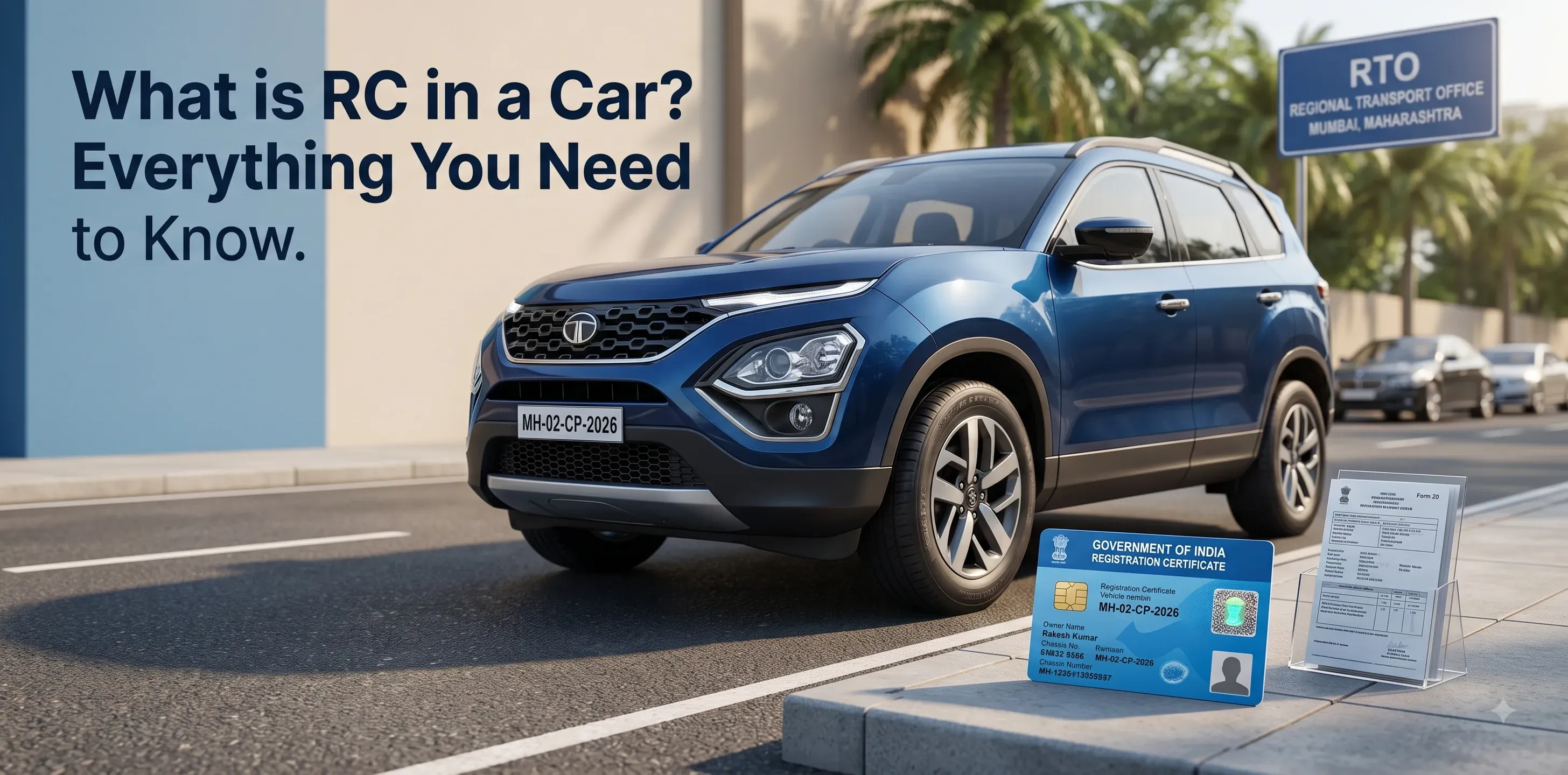
What is RC in a car? Everything you need to know
Key takeaways
● A private car's RC is valid for 15 years, renewable in 5-year blocks after that.
● RC now comes as a smart card or digitally via DigiLocker and mParivahan.
● Skipping RC transfer after a sale leaves the original owner legally liable for fines.
● You'll need your RC for insurance claims, loans, and any ownership transfer.
Introduction
Get pulled over without your paperwork, and one document matters more than any other. That's the RC, or Registration Certificate. Knowing what RC is in car terms means understanding one thing. It's your proof that the vehicle is legally registered with the state transport authority.
Without it, you can't legally drive, sell, or insure your car with any confidence. This guide covers the RC full form, what's printed on it, the different types, and how to get your own.
RC Full Form and Meaning
RC full form is Registration Certificate. The rc meaning is straightforward. It's official proof that your car is registered with the RTO, under the Motor Vehicles Act.
Without a valid RC, you can't legally drive your car on public roads. It also matters every time you sell, insure, or take a loan against the vehicle. The RC in the car context covers ownership, vehicle details, and registration validity, all in one document. Most owners only think about what RC is when something forces them to. A traffic stop, a sale, or a loan application usually brings it back into focus.
Also Read: Types of Car Transmission
Details You Will Find on an RC
Your RC packs in more information than most owners realise.
Owner and registration details
This includes the registered owner's name, address, and the vehicle's registration number and date. It's the section most often checked during traffic stops.
Vehicle specifications and class
You'll find the make, model, engine and chassis number, fuel type, and vehicle class here. These details should always match your actual vehicle exactly.
Validity, fuel type, and compliance data
This section shows RC validity dates, fuel type, and any hypothecation details if you've taken a car loan. Lenders rely on this to confirm their financial interest in the vehicle.
Types of Car RC in India
Not every RC looks or works the same way.
Temporary RC
Issued right after purchase, this is valid for a short period, usually around a month, until your permanent RC arrives. You can still legally drive with it during this window.
Permanent RC
This is your long-term RC, valid for 15 years for private cars, and renewable afterwards in 5-year blocks. Most owners only deal with renewal once or twice in a car's lifetime.
Smart Card RC
A laminated, chip-based card that replaced the older paper booklet is harder to damage or tamper with. Most new registrations now default to this format.
Digital RC
A soft copy stored in DigiLocker or the mParivahan app is legally accepted during traffic checks. It's a handy backup if you ever misplace the physical card.
Also Read: Car Tyre Pressure
Why Do You Need RC?
Your RC isn't just paperwork. It's required at several key moments.
During traffic checks
Traffic police can ask for your RC at any time. Not having one can mean a fine on the spot. A digital copy on your phone usually works just as well as the physical card.
While selling or buying a used car
Ownership transfer can't be completed legally without updating the RC to the new owner's name. Buyers should insist on this before handing over any payment.
For insurance, loans, and claims
Insurers and lenders both reference your RC details. A mismatch can delay or complicate a claim, so keep your details accurate and up to date.
Keeping vehicle records updated helps protect resale value and makes future ownership transfers quicker and smoother.
How to Get a New RC
Getting a new RC is straightforward if you have the right paperwork ready.
How to Apply
Apply through your RTO directly or via the Parivahan portal for certain services like duplicates or renewals. Processing times vary by state and service type.
Documents Required
You'll typically need:
● Proof of purchase or invoice
● Identity and address proof
● Valid insurance copy
● PUC certificate
● Road tax payment proof
Conclusion
So, what is RC in car terms? It's the single document proving your car is legally yours to drive. Keep it valid, keep it updated after any sale, and keep a digital copy handy for quick access.
FAQs
Is an RC mandatory for every car in India?
Yes. Every vehicle driven on public roads must be registered and carry a valid RC under the Motor Vehicles Act.
How long is a car RC valid?
A private car's RC is valid for 15 years, then renewable in 5-year blocks after that.
Is the RC book different from the RC card?
Yes. The RC book is the older paper format, while the RC card is the newer smart card version. Both serve the same legal purpose.
Can I show my RC digitally during a traffic check?
Yes, a digital RC via DigiLocker or mParivahan is legally accepted by the traffic police in India.
What happens if the RC transfer is not completed after the sale?
The original owner stays legally liable for fines and complications, so the transfer should be completed promptly after any sale.