What is Engine Flushing? Benefits, Process & When You Need It
Introduction
Modern car ownership in India has become far more demanding than it appears on the surface. Dense traffic, extreme summer temperatures, dusty roads, irregular service intervals, and frequent stop-and-go driving conditions place enormous pressure on an engine’s lubrication system. That’s where understanding “what is engine flushing” becomes an important discussion for car owners trying to avoid expensive repairs and declining efficiency.
An engine may continue running even when sludge, carbon residue, and degraded oil deposits quietly build up inside. But performance gradually changes. Fuel economy drops. Engine noise increases. Oil circulation weakens. And over time, repair bills start climbing.
A workshop technician once described a neglected diesel SUV that arrived with rough idling and sluggish pickup. The owner assumed turbocharger failure. The actual culprit? Thick sludge is choking oil passages after years of delayed oil changes. A proper engine flush restored lubrication flow before serious damage occurred.
Here’s the reality: understanding what is engine flushing can help vehicle owners extend engine life and reduce long-term maintenance costs.
What is Engine Flushing?
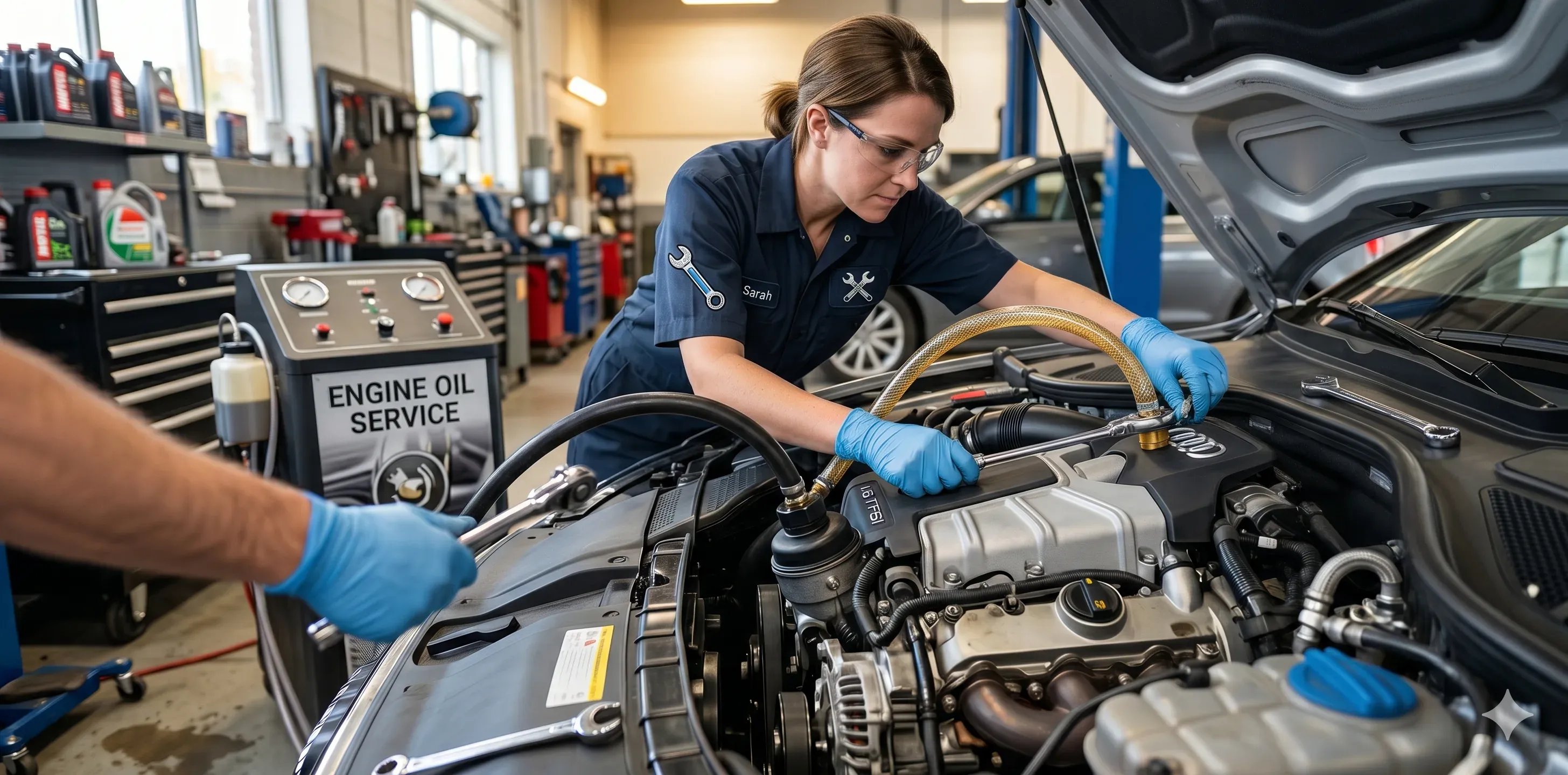
Simply put, what is engine flushing refers to the process of cleaning internal engine components using a chemical cleaning solution designed to dissolve sludge, varnish, and oil contaminants.
The flushing liquid is added to old engine oil before draining. Once circulated briefly through the engine, it loosens accumulated deposits. The contaminated oil is then drained completely and replaced with fresh engine oil and a new filter.
In Indian driving conditions, especially in cities like Chennai, Bengaluru, Mumbai, or Delhi, engines rarely operate under ideal circumstances. Constant traffic congestion increases engine temperatures and accelerates oil degradation. That’s why “what is engine flushing” has become increasingly relevant for high-mileage vehicles.
How Does Engine Flush Work?
Understanding what is engine flushing requires knowing how oil contamination develops inside the engine.
Over time, old oil thickens and leaves sticky deposits across pistons, valve trains, crankcases, and oil channels. The flushing agent contains detergents and dispersants that break down these deposits before an oil replacement.
The basic process usually includes:
● Adding the flush solution to old engine oil
● Running the engine at idle for 10–15 minutes
● Draining contaminated oil completely
● Replacing the oil filter
● Filling fresh manufacturer-approved oil
Anyone researching how to use engine flush should understand one thing clearly: excessive flushing or using poor-quality chemicals can create problems instead of solving them.
Why is Engine Flushing Needed?
Removal of Engine Sludge
One major reason behind understanding “what is engine flushing” is sludge removal. Sludge forms when engine oil oxidises due to heat, moisture, and contaminants. It thickens into a tar-like residue that restricts lubrication.
Cleaning Oil Deposits
Deposits gradually accumulate around piston rings and oil galleries. A proper cleaning process helps dissolve these hardened contaminants before they affect engine reliability.
Improving Engine Performance
Drivers often notice smoother acceleration and reduced engine vibration after maintenance involving engine flush for car applications, particularly in older petrol and diesel vehicles.
Better Oil Circulation
Oil passages inside the engine are narrow. Even small blockages reduce lubrication efficiency. Cleaner oil channels improve circulation and reduce friction-related wear.
How Does Engine Sludge Form?
Poor Oil Maintenance
Skipping scheduled oil changes remains one of the biggest causes behind sludge formation. Many Indian car owners delay servicing to reduce short-term costs. The long-term financial impact is usually worse.
Old Engine Oil
Another reason why discussions around what is engine flushing matters is ageing oil chemistry. Engine oil eventually loses viscosity stability and detergent effectiveness, especially under high thermal stress.
Short Distance Driving Habits
Short urban commutes don’t allow engines to reach optimal operating temperatures consistently. Moisture and fuel contaminants remain trapped inside the oil, accelerating sludge formation.
And this issue has become more common with modern turbo-petrol engines operating in crowded urban environments.
Also Read: Best Car Under 20 Lakhs
Benefits of Engine Flush for a Car
Cleaner Engine Components
One key advantage linked to what is engine flushing is internal cleanliness. Cleaner components reduce wear and help maintain stable lubrication performance over longer intervals.
Improved Fuel Efficiency
A cleaner engine operates with lower internal resistance. Some vehicles may see a relatively small gain in fuel economy after removing the sludge collected over time, but not a huge one.
Better Engine Life
Lubrication has a direct effect on the life of an engine. Less contamination translates to less friction, heat, and early component failure.
Smoother Engine Performance
If your vehicle experiences any engine-related issues, such as rough idling, a lack of response from the throttle, or engine noise, you might find it quieter and more responsive once it's been serviced with proper engine flushing procedures.
But results depend heavily on engine condition and maintenance history.
Potential Risks of Engine Flushing
Damage in Older Engines
Here’s the catch. Engines with extremely high mileage sometimes rely on old sludge deposits to seal worn internal gaps. Aggressive cleaning may expose existing wear and increase oil consumption.
Oil Leak Risks
Another concern surrounding what is engine flushing involves weakened seals and gaskets. Chemical cleaners can occasionally reveal pre-existing leaks hidden beneath sludge buildup.
Sludge Blocking Oil Passages
Ironically, loosened sludge particles can sometimes clog narrow oil channels if flushing is performed improperly. That’s why workshops using poor-quality products or rushed procedures create unnecessary risk.
Not every engine requires flushing. Vehicles maintained with timely synthetic oil changes often remain clean internally without additional chemical treatment.
Conclusion
Understanding what is engine flushing goes beyond workshop upselling or preventive maintenance trends. It’s really about lubrication health, engine longevity, and operating efficiency under demanding Indian driving conditions.
If an engine has been neglected and sludge has accumulated, if the oil changes have not been performed regularly, or if the engine has experienced a decline in performance, a carefully designed flushing process can return smoother running and better oil flow to the engine. However, simply doing “engine flushing” at each service time is not always required.
Now the wise thing to do is to check the engine, mileage, oil maintenance, and manufacturer's advice. In long-term car ownership, avoiding mechanical neglect usually costs far less than repairing it later.