Car Maintenance Checklist: 15 Things Every Driver Should Inspect
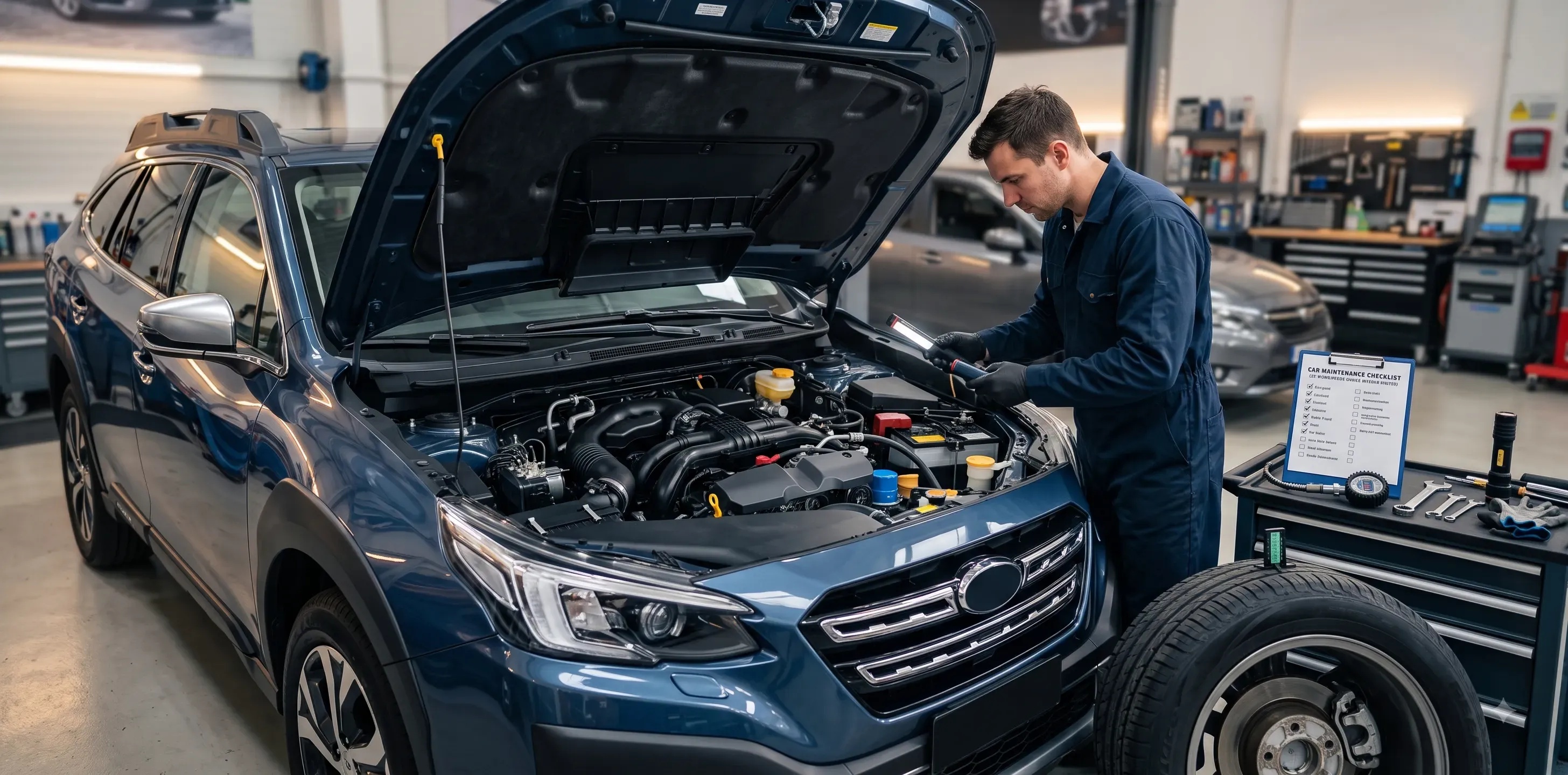
Key takeaways
● Engine oil, coolant, and brake fluid should all be checked monthly, not just at service time.
● Tyre pressure and tread affect both safety and mileage more than most drivers realise.
● A lit warning light should never be ignored, even if the car still drives normally.
● Most of these checks take a few minutes and need no special tools.
Introduction
Most car problems don't appear overnight. They build quietly, one missed check at a time. A simple car maintenance checklist catches these early, often before they become expensive repairs. Running through it regularly is one of the cheapest habits a car owner can build.
This guide covers 15 specific things worth checking, and what to actually look or listen for on each one. These car maintenance tips work whether your car is brand new or already a few years old.
Why Do You Need Regular Car Maintenance
Small issues rarely stay small. A slow oil leak or a worn brake pad left unchecked can turn into a far costlier repair within months. Regular maintenance also protects resale value and keeps your car reliable when you need it most. Knowing how to maintain a car properly doesn't require mechanical expertise. Most of it just comes down to noticing changes early.
Also Read: What is ECU in Cars?
15 checks to maintain your car
Here are 15 checks worth running through regularly to maintain your car properly.
1. Engine oil level and condition
Check the dipstick when the engine's cold. Oil should sit between the marked levels and look clear, not dark or gritty. Top up or schedule a change if it looks off.
2. Coolant reservoir level
Check the coolant level with the engine off and cool. Low coolant risks overheating, so top it up with the correct type only. Mixing coolant types can cause its own problems later.
3. Brake fluid and pedal feel
Check the fluid reservoir, and notice if the pedal feels soft or spongy. That usually signals air in the lines or low fluid. Get this looked at quickly, since it affects stopping distance directly.
4. Power steering and transmission fluids
Low or degraded fluid here can cause stiff steering or rough gear shifts. Check levels periodically, even if nothing feels obviously wrong yet. Discoloured transmission fluid is often an early warning sign.
5. Tire pressure
Check monthly while tyres are cold, against the pressure listed on the door jamb sticker. Wrong pressure hurts both handling and mileage.
6. Tire tread and sidewall damage
Look for cracks, bulges, or cuts on the sidewall, and check tread depth regularly. Worn tread loses grip fastest in wet conditions.
7. Tire rotation timing
Rotating tyres at the recommended interval helps wear out evenly across all four. Skipping it often shows up as uneven tread later.
8. Battery terminals and charge strength
Check terminals for corrosion and make sure connections are tight. A battery that drains faster than usual may need testing soon.
9. Brake pad wear
A squealing sound when braking often means the pads are wearing thin. Get them inspected, since pads directly affect stopping distance.
10. Wiper blades and washer fluid
Streaking or skipping blades need replacing. Top up washer fluid regularly too, especially before long trips or dusty conditions.
11. Exterior lights and signals
Test headlights, brake lights, indicators, and reverse lights now and then. A blown bulb is a quick fix, but easy to miss yourself.
12. Air filters
A clogged engine or cabin air filter can quietly reduce performance and air quality inside the car. Check and replace them periodically.
13. Belts, hoses and visible leaks
Look underneath the car occasionally for cracking, fraying, or fresh fluid spots. Catching a small leak early avoids a much bigger repair.
14. Warning lights and dashboard alerts
Never ignore a lit warning light, even if the car still drives fine. Get it checked promptly rather than waiting to see what happens.
15. Spark plugs and starting performance
A rough start or a noticeable dip in power can point to worn spark plugs. These get checked at manufacturer-recommended intervals.
Also Read: What is Teflon Coating
Conclusion
A car maintenance checklist doesn't need to be complicated to work. Running through these 15 checks regularly catches most problems while they're still cheap to fix. Pick one day a month and work through the list. It takes less time than most people expect.
More importantly, consistent maintenance helps improve safety, fuel efficiency, and long-term reliability. Small tasks like checking tyre pressure, fluid levels, and battery health can prevent unexpected breakdowns and costly repairs later. Regular attention also helps preserve your car's resale value and keeps it performing at its best.
A few minutes spent on preventive checks today can save thousands in unexpected repair bills tomorrow. Smart maintenance is always cheaper than emergency repairs.
FAQs
How often should I follow a car maintenance checklist?
Once a month for quick checks works well, plus another pass before any long trip.
What maintenance should I do on a new car?
Mostly routine checks like fluids, tyres, and lights, until your first scheduled service comes due.
How do I care for my car at home?
Most items on this list, fluids, tyres, lights, and wipers, can be checked at home with basic tools.
Does regular maintenance improve fuel economy?
Yes, generally. Properly inflated tyres, clean air filters, and fresh oil all help the engine run more efficiently.
What happens if I miss a scheduled service?
Minor issues can go unnoticed and worsen over time, often leading to costlier repairs down the line.