What is an ECU in Cars? - Full Form and Meaning
Key takeaways
● The ECU reads sensor data and adjusts fuel injection, ignition timing, and idle speed in real time.
● Modern fuel-injected cars cannot run at all without a working ECU.
● Common ECU faults include water damage, wiring corrosion, and voltage spikes.
● Repair costs vary hugely. A diagnostic scan first usually saves money before assuming full replacement.
Introduction
Your car runs on more software than most people realise. At the centre of it sits the ECU, quietly making thousands of small decisions every minute. Knowing what the ECU in cars actually do explains why a single sensor fault can throw the check engine light on.
This guide covers the ECU's full form, how it works, and what it controls. It also looks at what to expect if it ever needs repair.
ECU meaning in a car
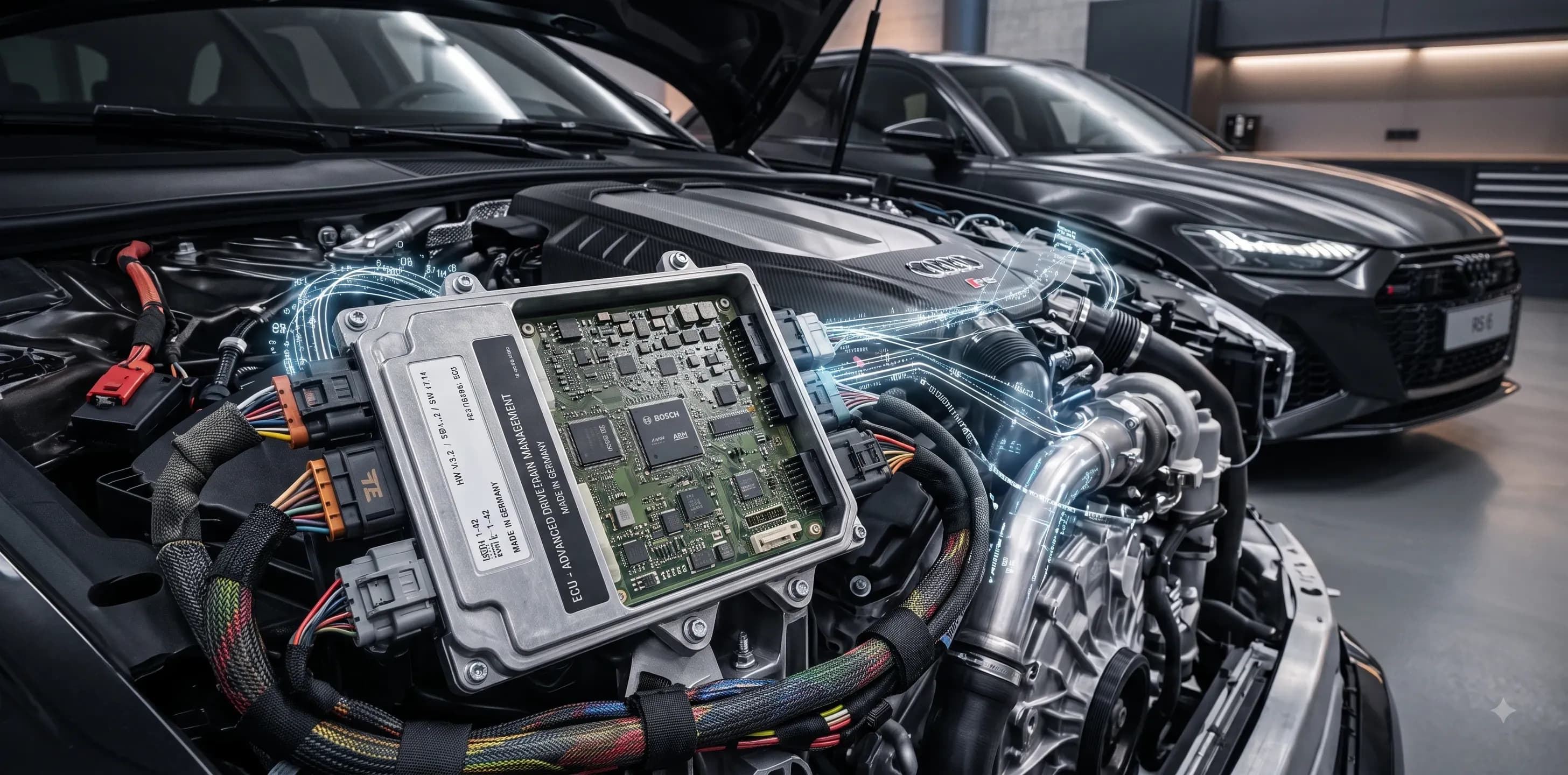
ECU full form is Electronic Control Unit, sometimes called the Engine Control Module instead. The ECU's meaning is simple: it's the onboard computer managing your engine's behaviour. It constantly reads data and adjusts engine settings, all without you noticing. The ECU's full form in automobile contexts always points back to this same core function.
How an ECU works
The ECU runs a continuous loop of reading, deciding, and adjusting, many times every second.
Sensor inputs and real-time data
Sensors track oxygen levels, throttle position, coolant temperature, and more, feeding constant data to the ECU.
Software rules and control signals
Stored software maps tell the ECU how to respond, sending precise control signals to fuel injectors and ignition coils.
Communication with other modules
The ECU also talks to other car computers, like the transmission and ABS modules, over a shared data network.
Addressing ECU-related issues early helps maintain engine efficiency, prevents performance losses, and avoids costly component replacements later.
Also Read: Types of Car Suspensions
Types of ECU in Cars
Modern cars rarely have just one onboard computer. Several specialised units handle different jobs.
● Engine Control Unit: manages fuel injection, ignition timing, and overall engine performance.
● Transmission Control Unit: manages automatic gearbox shifts and timing.
● Body Control Module: manages lights, locks, windows, and other electrical features.
● ABS and airbag control units: manage braking safety systems and crash sensors
These units constantly share data, so a fault in one can sometimes show up as a symptom in another. A flickering dashboard light doesn't always mean the engine itself is at fault.
Importance of the ECU in a Car
The ECU directly shapes fuel efficiency, emissions, and overall performance. Without it, modern engines simply can't run at their intended efficiency, or at all. It also enables diagnostics through the OBD-II port, letting mechanics pinpoint faults quickly instead of guessing.
What the ECU Controls
The ECU manages fuel injection quantity and timing, ignition timing, idle speed, and emissions-related systems. On many modern cars, it also manages throttle response and cooling fan operation, keeping everything working together smoothly.
Common ECU problems and signs
Most ECU issues show up through a handful of recognisable symptoms.
Warning lights and starting issues
A lit check engine light often points to an ECU or sensor fault. So can a car that won't start at all.
Poor mileage, stalling or misfires
Incorrect fuel or ignition data can cause rough running, stalling, or noticeably worse mileage than usual.
Water, wiring and voltage damage
Flooding, corroded connectors, and voltage spikes are among the most common causes of ECU failure. Parking in flood-prone areas raises this risk considerably during monsoon months.
What is the cost to repair the ECU?
ECU repair cost varies hugely, so treat any number you see online as a rough guide, not a quote. A simple sensor or wiring fix usually costs far less than a full ECU replacement and reprogramming. Get a proper diagnostic scan first. It often reveals a cheaper fix than you'd expect.
Conclusion
So, what is an ECU in cars, in plain terms? It's the small computer quietly keeping your engine running efficiently every time you drive. Most faults trace back to sensors, wiring, or water damage rather than the ECU itself failing outright. Get a diagnostic scan before assuming the worst, and you'll often save real money.
FAQs
Where is the ECU located in a car?
It's usually near the engine bay, behind the glove box, or under the dashboard, depending on the model.
Can a car run without an ECU?
No. Modern fuel-injected cars depend entirely on the ECU to manage fuel and ignition.
How is a car ECU tested?
Mechanics use an OBD-II scanner to read fault codes, alongside wiring and voltage checks where needed.
Can an ECU be repaired instead of replaced?
Often yes, especially for connector corrosion or component-level faults. Full replacement is usually a last resort.
Is an ECU expensive to fix?
It depends entirely on the fault. Minor repairs are usually affordable, while full replacement and reprogramming cost more.
Is ECU tuning safe for everyday cars?
It can be, but tuning may affect your warranty and emissions compliance. Stick to reputable, experienced tuners only.