Electric Cars Vs. Petrol Cars: Which is Cheaper?
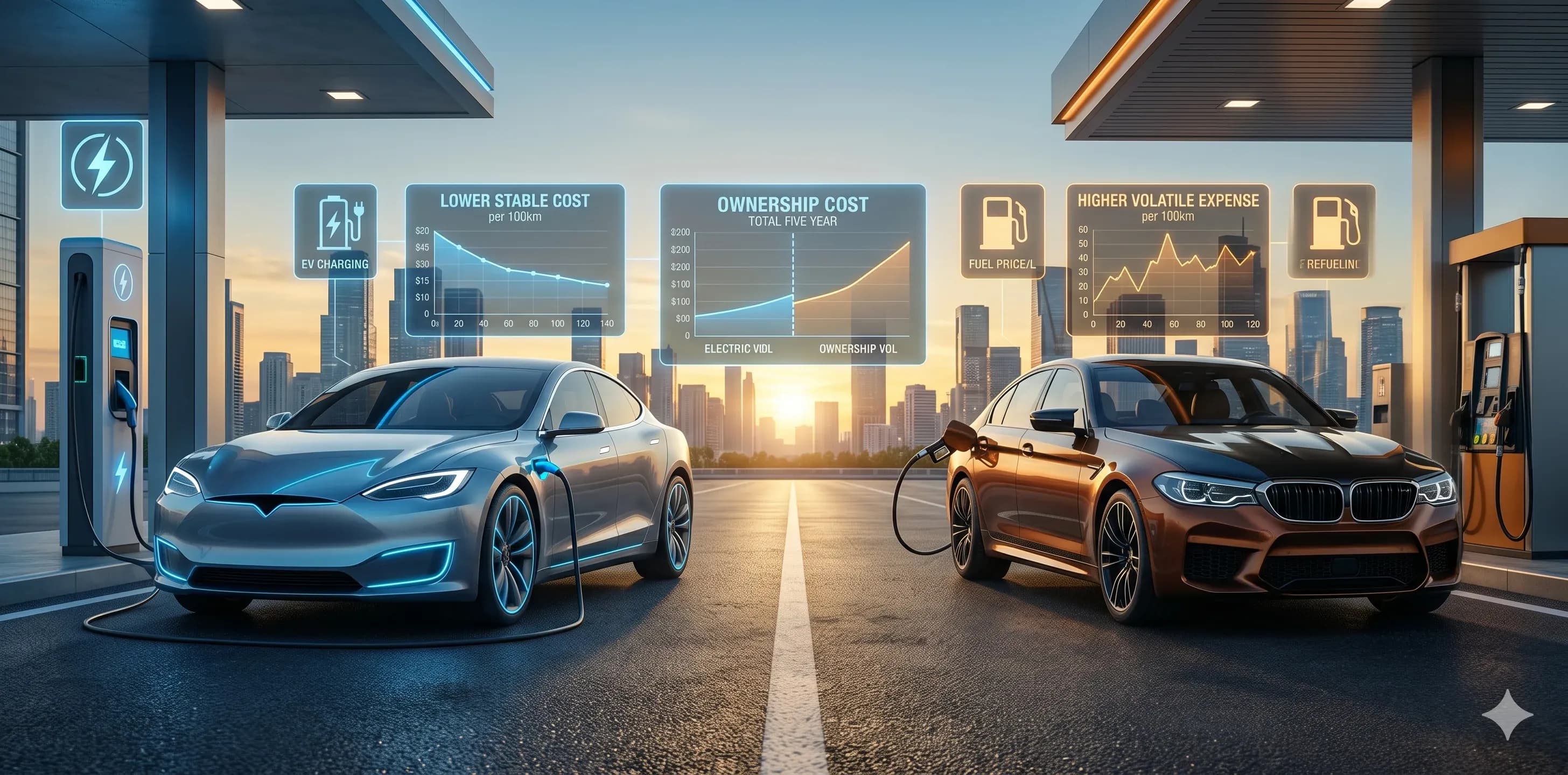
Decoding Your Car's Monthly Running Expenses
Your car's running cost consists of two main parts: fuel or electricity costs and maintenance. We'll ignore one-time expenses like the initial purchase price, financing, and insurance to focus purely on the recurring monthly outlay.
Cost Breakdown for a Petrol Car
Petrol cars are the market standard, but their monthly costs are subject to fluctuating fuel prices and consistent maintenance needs.
- Fuel Cost: Based on an average mileage of 15 km/L (a realistic blend of city and highway driving) and an average petrol price of ₹95/L, the running cost per kilometre is approximately ₹6.33.
- Maintenance Cost: A typical petrol car requires regular servicing, oil changes, filter replacements, and checks on various moving parts. An average annual maintenance cost is estimated at around ₹10,000, which breaks down to a monthly average of roughly ₹833.
Cost Breakdown for an Electric Car
Electric cars, while having a higher initial price, are fundamentally different in their running costs due to their simpler mechanics and power source.
- Electricity Cost: Based on an average efficiency of 8 km/kWh (a conservative, real-world figure) and an average home charging cost of ₹8/kWh, the running cost per kilometre is approximately ₹1. This is a dramatic difference.
- Maintenance Cost: An EV has far fewer moving parts than a petrol car. There are no oil changes, spark plugs, or exhaust systems to maintain. Routine servicing is minimal, typically involving tire rotations, brake fluid checks, and software updates. The average annual maintenance cost is estimated at a low ₹5,000, which is a monthly average of about ₹417.
EV Vs. Petrol: A Direct Comparison
To truly understand the difference between electric cars and petrol cars, let's look at the numbers. The following tables illustrate the monthly and annual running costs based on two common mileage scenarios.
Also Read: Key Differences Between Hybrid and Electric Vehicles
Assumptions:
- Fuel/Electricity Price: Petrol ₹95/L, Electricity ₹8/kWh.
- Average Mileage/Efficiency: Petrol 15 km/L, EV 8 km/kWh.
- Annual Maintenance: Petrol ₹10,000, EV ₹5,000.
| Scenario 1: Low Usage (1,000 km/month) | Petrol | Electric (EV) |
|---|---|---|
| Monthly Running Cost (Fuel/Electricity) | Rs. 6,333 | Rs. 1,000 |
| Monthly Maintenance Cost | Rs. 833 | Rs. 417 |
| Total Monthly Running Cost | Rs. 7,166 | Rs. 1,417 |
| Annual Savings with EV | Rs. 69,000 | |
| 5 Year Savings with EV | Rs. 3,45,000 |
| Scenario 2: High Usage (2,500 km/month) | Petrol | Electric (EV) |
|---|---|---|
| Monthly Running Cost (Fuel/Electricity) | Rs. 15,833 | Rs. 2,500 |
| Monthly Maintenance Cost | Rs. 833 | Rs. 417 |
| Total Monthly Running Cost | Rs. 16,666 | Rs. 2,917 |
| Annual Savings with EV | Rs. 1,65,000 | |
| 5 Year Savings with EV | Rs. 8,25,000 |
For a typical car owner in India, the monthly running costs of an electric car are a fraction of those of a petrol car. These savings become even more pronounced as the annual distance driven increases.
Why Consider Running Cost Separately from Initial Cost?
- While purchase prices vary widely and are often financed, it's the monthly running costs that drivers feel most directly and consistently.
- Differences in running costs directly affect your day-to-day spending, making them crucial for budgeting and long-term ownership planning.
- EV upfront prices are coming down, but still remain higher than petrol cars. However, the savings on charging versus fuel are immediate and tangible.
Beyond the Numbers: Other Factors to Consider
While the cost breakdown makes a compelling case for EVs, a few other factors contribute to the whole picture.
- Charging Habits: The cost calculation above assumes home charging, which is the cheapest. Public fast charging is significantly more expensive, though still cheaper than petrol, and can impact your monthly bill if used frequently.
- Battery Degradation: While not a monthly cost, the battery's long-term health is a factor. Most EVs in India now come with an 8-year or 1,60,000 km warranty, and the average degradation is minimal with proper care.
- Vehicle Choice: The comparison is most accurate between similar vehicles. A small electric hatchback will have far lower running costs than a large petrol SUV.
- Insurance: Insurance premiums for an EV can be slightly higher than for a petrol car due to the higher initial value and specialised component costs, but the gap is narrowing.
EV Vs. Petrol: The Clear Winner on Monthly Expenses
The debate over EV vs. petrol is decisively won by electric vehicles when it comes to monthly running expenses. The savings on fuel and maintenance are substantial, making an electric car and a petrol car choice a compelling one for anyone looking to save money in the long run. Only if you bear the initial cost of an EV, the monthly expenses are way lower.
By understanding this crucial cost breakdown, you can make a confident, financially sound decision.
FAQs
1. Is it true that electric vs. petrol car maintenance is much cheaper?
Yes, electric vs. petrol car maintenance is significantly cheaper due to EVs having fewer moving parts, no engine oil changes, and less wear on brakes.
2. Do EV charging costs vary much in India?
Yes, home charging is the most economical option, while public AC and DC fast chargers become progressively more expensive, which can affect your total monthly bill.
3. What is the difference in insurance costs for an electric car and a petrol car?
Insurance premiums for an electric car are generally higher than a similar petrol car due to the EV's higher upfront value and specialised repair costs.
4. Does the cost comparison change if I use public fast chargers?
Yes, while still cheaper than petrol, using public fast chargers frequently will increase your monthly electricity bill, reducing the cost advantage of an EV.
5. How is an electric car's mileage (efficiency) measured?
An electric car's efficiency is measured in kilometres per kilowatt-hour (km/kWh), representing the distance it can travel for every unit of electricity consumed.