What is Handbrake in a Car & How to Use It?
Key takeaways
● A handbrake works on the rear wheels only, separate from your main hydraulic brakes.
● Most modern cars use either a cable-operated lever or an electronic parking brake button.
● On a manual car, releasing the handbrake smoothly during a hill start prevents rolling back.
● Driving with the handbrake on can wear out your rear brakes faster.
Introduction
Ever wondered why your car still needs a second brake, separate from the one under your foot?
That's the handbrake, and it does a very specific job. Knowing what a handbrake is in car terms means understanding one thing. It's there purely to hold your car still when parked. It's not meant to slow you down while driving.
Most drivers pull the lever or press the button without a second thought. But how to use handbrakes in car situations, like a steep hill start, is where things get trickier.
What a handbrake does
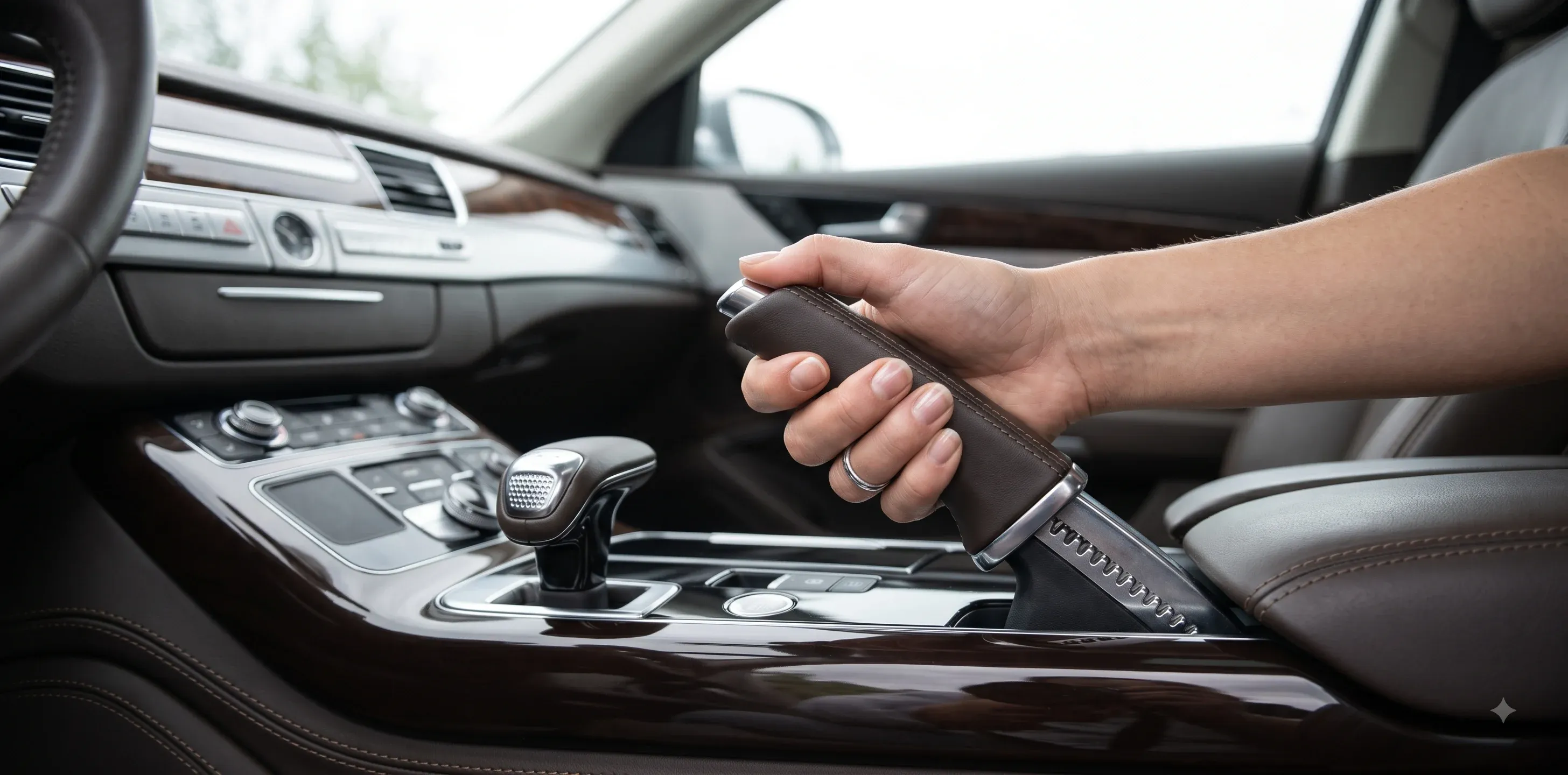
A handbrake car system locks your rear wheels in place, keeping the car from rolling once you've parked.
It works independently of your main brakes. So even if your foot brake fails, the handbrake can still hold the car. That's exactly why it's such an important backup system.
Whether your car's handbrake is in the up or down position depends on the design. Most levers lock when pulled up, while electronic buttons simply stay engaged until pressed again.
Also Read: LMV Full Form
How does a handbrake work
Most explanations of how a handbrake works come down to one idea. It clamps the rear brakes mechanically, without needing engine power or hydraulic pressure. Whether you pull a lever or press a button, the result is the same. The rear wheels lock until you release them.
Cable-operated handbrakes
This is the classic setup, found in most older and budget cars. Pulling the lever tightens a cable connected to the rear brakes, clamping them shut. It's simple, reliable, and easy to service.
Electronic parking brakes
Newer cars replace the lever with a button. A small motor pulls the rear brakes shut electronically, often releasing automatically when you accelerate. It frees up cabin space, too, since there's no lever taking up room.
Independent Rear Brakes
Many cars use a small drum tucked inside the rear disc, dedicated purely to the handbrake. This keeps parking and driving brakes fully separate. If one system wears out, the other still works fine on its own.
Also Read: Petrol vs Diesel Car
How to Use a Handbrake in An Automatic Car?
Using a handbrake in an automatic is simple, but the order of steps still matters.
When The Car is Parked
1. Bring the car to a complete stop.
2. Shift into Park (P).
3. Engage the handbrake or electronic parking brake.
4. Turn off the engine once the handbrake is set.
Setting the handbrake even in Park adds real security on a slope. Park alone can slip on some older or worn transmissions, so don't skip this step.
When You're Ready To Go
5. Start the engine and check your surroundings.
6. Press the brake pedal, then shift out of Park.
7. Release the handbrake or let the electronic system auto-release as you accelerate.
8. Move off smoothly once you're sure it's fully released.
How to Use a Handbrake in A Manual Car?
A manual car needs a bit more technique, especially on a slope.
When The Car is Parked
1. Stop the car and press the clutch.
2. Shift into first gear or reverse, depending on the slope direction.
3. Engage the handbrake firmly.
4. Turn off the engine and release the clutch.
When You're Ready To Go
1. Start the engine and press the clutch fully.
2. Select first gear and find the clutch's biting point.
3. Gently add throttle while slowly releasing the handbrake.
4. Let the car move forward before fully releasing the clutch.
Getting this sequence right is what stops you from rolling backwards on a hill start. It takes practice, but it becomes second nature after a few tries.
What is Handbrake in a car, in Short
So, what is handbrake in car terms, really? It's your car's dedicated parking brake, built to hold position safely once you've stopped. Using the handbrake correctly can reduce unnecessary strain on the transmission and parking mechanism, helping components last longer.
Whether you drive automatic or manual, using it correctly protects your brakes and keeps your car secure on any slope. Make it a habit every time you park, not just on hills.
FAQs
Can I park a car without using the handbrake?
Technically, yes, in an automatic left in Park, but it's not recommended, especially on a slope.
What happens if I drive with the handbrake on?
Your rear brakes wear out faster and can overheat. Many electronic systems now auto-release to prevent this.
Is the handbrake the same as the parking brake?
Yes, they're the same system. "Handbrake" usually refers to the lever version, while "parking brake" covers both lever and electronic types.