Car Engine Immobiliser: All You Need to Know
Key takeaways
● Most cars sold in India since the early 2010s have one fitted at the factory.
● It can lower your insurance premium, since many insurers reward anti-theft devices.
● A flat key fob battery is one of the most common reasons a car cranks but won't start.
● Losing your only key usually means a locksmith or dealer visit, not a simple key cut.
Introduction
Your car cranks. The engine turns over. But it just won't fire up.
Before you assume the worst, check your key first. An engine immobiliser could be the real reason, not a dead battery or a fuel fault. This small electronic system quietly protects your car every day. Most owners never notice it until the day it misbehaves.
It's been part of Indian car security for over a decade now, fitted quietly alongside the alarm and central locking. Few buyers ever ask the showroom about it directly. This guide covers how it works, what it's good for, and what to do when it stops cooperating.
What Is an Engine Immobiliser?
It's an anti-theft system that prevents your engine from starting without the correct key. Most modern cars in India come with one fitted at the factory.
It works alongside your regular door locks and alarm, not instead of them. Think of it as a silent gatekeeper sitting inside the ignition system. A car immobiliser like this is now so common in newer models. Many buyers never think to ask if their car even has one until they need it.
How a Car Engine Immobiliser Works
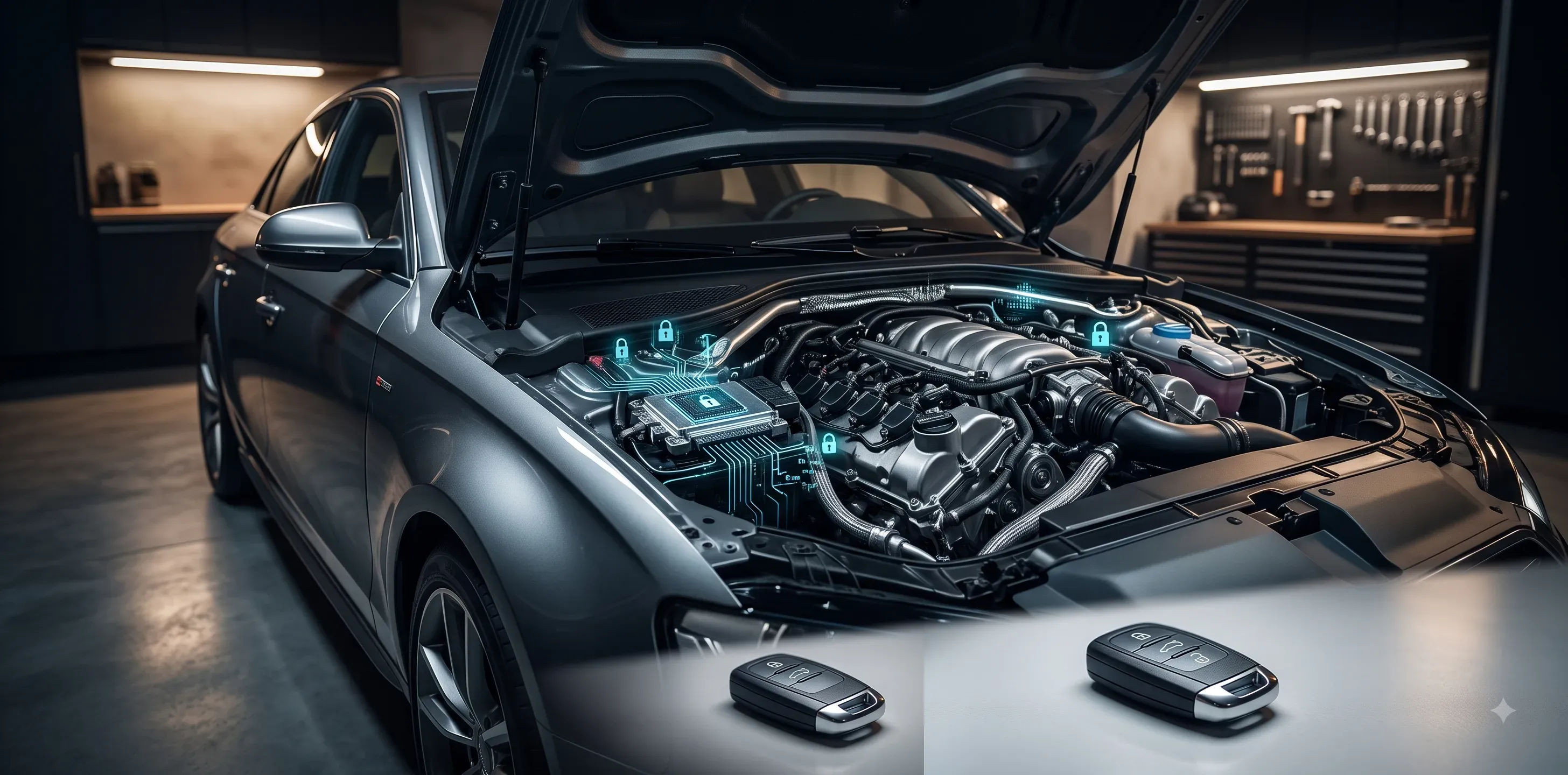
Every immobiliser key has a small chip, called a transponder, hidden inside it. This chip carries a unique code. When you turn the key or press start, the car's computer reads that code over a short-range signal. Engineers call this computer the ECU.
If the code matches, the ECU lets the fuel and ignition systems work as normal. If it doesn't match or there's no chip, the ECU blocks the fuel pump or ignition. The engine can still crank in that case. It just has no way to actually run, no matter how many times you try.
This whole check happens in a fraction of a second. You'd never notice it during normal use, and that's the point. You'll only really notice the system when something goes wrong with the key or the reader. That's usually when owners start searching for answers online.
Also Read: What Is Electronic Stability Control
Benefits of an Engine Immobiliser
This system earns its place in your car for a few solid reasons.
● Makes hot-wiring or basic theft attempts far harder, since duplicating the chip isn't simple.
● Often, it qualifies you for a lower car insurance premium, since many insurers reward anti-theft devices.
● Works silently in the background, with no daily effort needed from you.
● Comes standard on most newer cars, so you're rarely paying extra for it.
● Adds a second layer of security on top of your door locks and alarm.
● Gives you peace of mind when parking in unfamiliar areas overnight
Insurance discounts vary by insurer and policy. Check with yours directly rather than assuming a fixed saving.
Types of Engine Immobiliser Systems
Not every immobiliser fitted to a car's engine works the same way. The type fitted to your car affects how it behaves day to day.
1. Transponder-based systems are the most common. A chip inside the key talks directly to the ECU.
2. Smart key or proximity systems go a step further. The car detects an authorised key nearby and disarms automatically, without you inserting anything.
3. Aftermarket systems, sometimes added by owners themselves, often use a hidden switch or PIN pad instead of a chip.
These hidden switches can be a deterrent on their own, simply because a thief doesn't know they exist. The trade-off is that you, or any driver, must remember the routine every single time.
OEM, or factory-fitted, systems are generally more reliable and easier to get serviced than aftermarket ones. Garages are also more familiar with diagnosing OEM faults. If you're buying a used car, ask what type it has. It changes how easily a locksmith can help you later. It also affects what a replacement key will cost down the line.
Also Read: Car Dashboard Symbols and Meanings
Common Engine Immobiliser Problems
Most issues with this system trace back to the key, the battery, or the reader itself.
The car cranks but will not start
This is the classic symptom. The starter motor spins, but the engine never actually fires. It usually means the system isn't recognising your key.
Key fob or chip recognition failure
A worn, cracked, or water-damaged key can stop the chip from communicating properly. Spare keys also fail more often, since they're rarely used. Keeping a metal key fob near other electronics, like a phone, can sometimes interfere with the signal, too.
Low battery and warning light issues
A weak 12V battery can disrupt the signal between your key and the car's computer. You'll often see a flashing dashboard light as a clue that something's wrong. A quick jump start or battery check often clears this up without any other repair. If the light keeps flashing after that, it's worth getting the reader checked properly.
Conclusion: Car Engine Immobiliser, What You Need to Remember
An engine immobiliser is one of the most effective, least noticed parts of your car's security.
It won't stop every theft attempt, but it makes casual theft and hot-wiring far harder. When your car cranks but won't start, check your key and battery before calling a mechanic.
Keep a spare key working and tested, so you're never caught out. It's a small habit that can save you an expensive tow and a stressful morning. Protecting your car from theft helps preserve its value and can save owners from significant financial and logistical losses.
FAQs
Can a car with an immobiliser still be stolen?
Yes. Determined thieves can still use key cloning or relay attacks. That said, it takes far more effort and equipment than basic theft. That alone puts off most casual attempts.
Does an engine immobiliser drain the battery?
Barely. It draws a tiny standby current, far too small to meaningfully drain a healthy 12V battery.
Can an engine immobiliser affect fuel efficiency or performance?
No. Once your car starts normally, this system plays no role in how the engine runs. It doesn't touch fuel use or power at all.
Can you install an immobiliser in an older car?
Yes. Aftermarket immobilisers can be fitted to most older cars by a qualified installer. It's a worthwhile upgrade if your car never had one from the factory.
What happens if you lose an immobiliser key?
You'll likely need a dealer or locksmith to cut and programme a new one. That costs more than a standard key duplicate, since the chip has to be coded to your car specifically.