What Is Electronic Stability Control (ESC) In Cars?
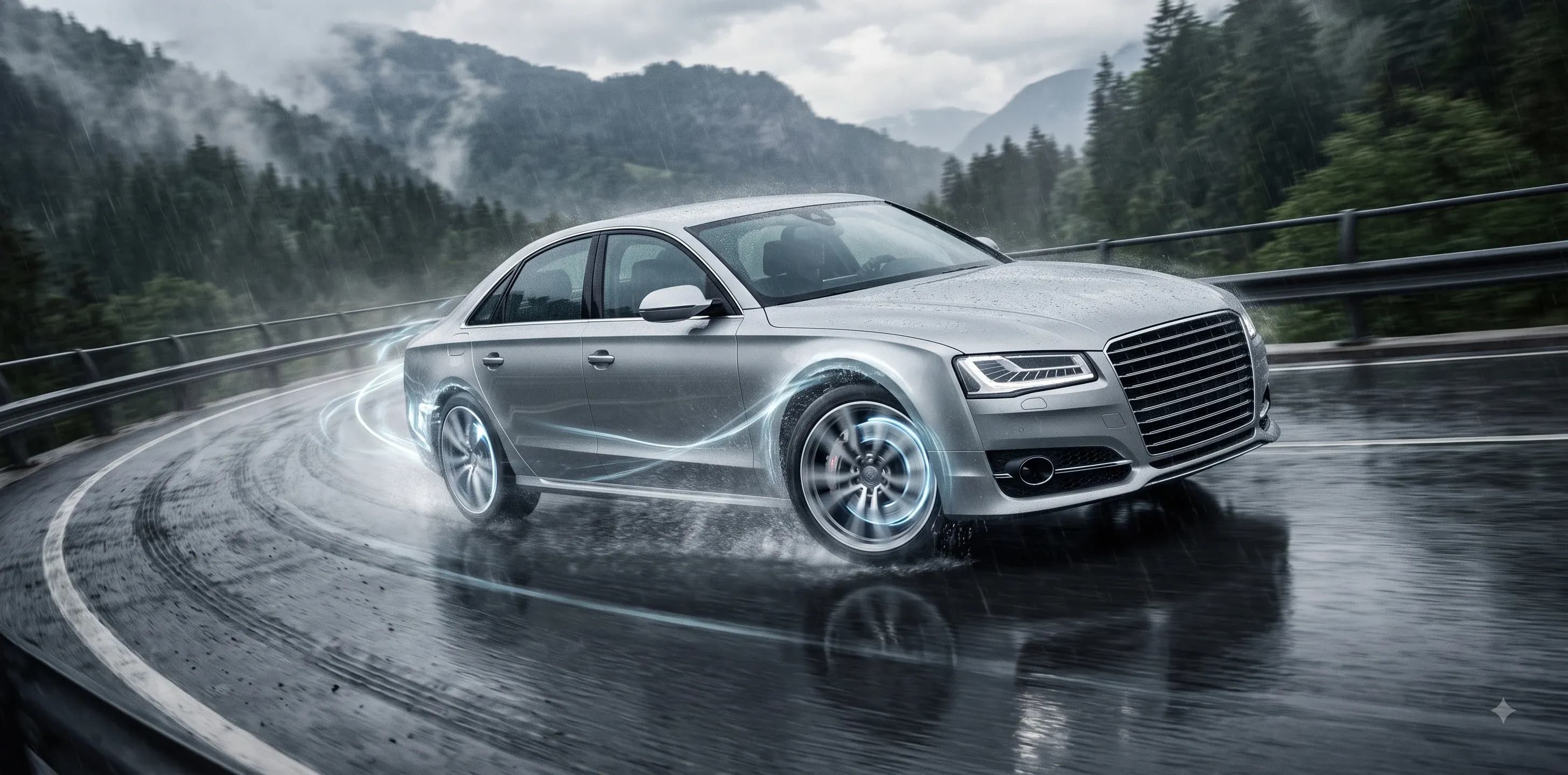
Key takeaways
● ESC uses sensors to detect when a car's actual path differs from the driver's intended direction.
● It corrects this by braking individual wheels and cutting engine power, not by steering for you.
● ESC cannot overcome the physical limits of tyre grip on a wet or icy road.
● It's required on most new cars sold in India today, though exact rules vary by category.
Introduction
Hit an unexpected patch of wet road mid-corner. Most drivers feel the car start to slide before they can react. That's exactly the moment electronic stability control in car systems are designed for. It quietly steps in, often before you've even noticed something's wrong. This guide explains what electronic stability control is, how the car ESC system actually works, and what it can't do.
What Is Electronic Stability Control?
What is electronic stability control, in plain terms? It's a system that monitors your car's direction and intervenes automatically if it starts to slide or lose grip. Some brands call it ESP, Electronic Stability Programme, instead. The esc meaning in car contexts is the same either way: a safety net for moments when grip runs out.
How the Car ESC System Works
So what is esc in cars actually doing under the hood? The car esc system relies on a constant stream of sensor data, checked many times every second.
Sensors that monitor ESC speed, steering angle, and yaw
Sensors track hoESCast each wheel spins, which way you've steered, and how much the car is actually rotating.
Selective braking applied to individual wheels
If the car's path drifts from what you intended, ESC brakes specific wheels to help pull it back in line.
Engine power reduction to regain control
It can also briefly cut engine power, reducing wheel spin until grip and control are restored.
Also Read: What is a Car Axle
What Happens During Oversteer and Understeer
Oversteer happens when the rear wheels lose grip, and the back of the car swings out more than you intended. Understeer is the opposite: the front wheels lose grip, and the car drifts wider than you steer. ESC watches for both and reacts within a fraction of a second. That's often faster than a driver could correct it manually.
What Happens When Electronic Stability Control Activates
A dashboard light usually flashes when ESC kicks in. You might feel a slight braking pulse or a brief dip in power. Both are normal and intentional.
How to Use ESC
For everyday driving, just leave it switched on. Some cars allow turning it off for specific situations like deep snow or sand, where wheel spin actually helps. Switch it back on once you're back on normal roads.
Common Problems With Electronic Stability Control
A faulty wheel speed or steering angle sensor can trigger a warning light and disable ESC until it's fixed. Mismatched tyre sizes or badly worn tyres can also throw off sensor readings. The system becomes less effective even when nothing's technically broken.
What Electronic Stability Control Can and Cannot Do
ESC can help you keep control during sudden manoeuvres or slippery surfaces. It cannot overcome the physical limits of tyre grip. And it won't save you from entering a corner too fast for the conditions. Safe speed and following distance still matter just as much, regardless of what safety tech your car has.
Benefits of Electronic Stability Control
The biggest benefit is a real reduction in skidding-related crashes, particularly single-vehicle loss-of-control incidents. It's especially valuable on wet roads or during sudden emergency swerves, where human reaction time alone often isn't fast enough. Most drivers only notice it's working once, in the one moment it genuinely matters.
Preventing even one major accident can save far more than the cost of repairs, while also helping maintain your vehicle's long-term condition and value.
Also Read: Types of Cars in India
Conclusion
So, what is electronic stability control, really? A quiet safety net that catches you in the moments your own reflexes can't quite keep up. It's not a substitute for careful driving, but it meaningfully reduces your odds in a genuine emergency. Check that the ESC light behaves normally on your next drive, and get any fault checked promptly.
FAQs
Is ESC the same as ESP in cars?
Broadly, yes. ESP is just another name some manufacturers use for the same stability control system.
Does electronic stability control work at all speeds?
It's active across most driving speeds, though it's most noticeable during sudden manoeuvres or slippery conditions.
Is electronic stability control mandatory in all cars?
It's required on most new cars sold in India today, though exact rules vary by vehicle category.
Can ESC help in heavy rain or hydroplaning?
It can help maintain control as grip reduces, though it can't fully prevent hydroplaning on a very wet road.
Can worn tires affect how well ESC works?
Yes. ESC depends on tyre grip to function well, so worn tyres reduce how effectively it can help.
Does ESC make a car safer for tyres?
It can help, since it reacts to instability quickly, though towing adds dynamics that ESC alone can't fully correct.