Types of Cars in India & Car Body Types
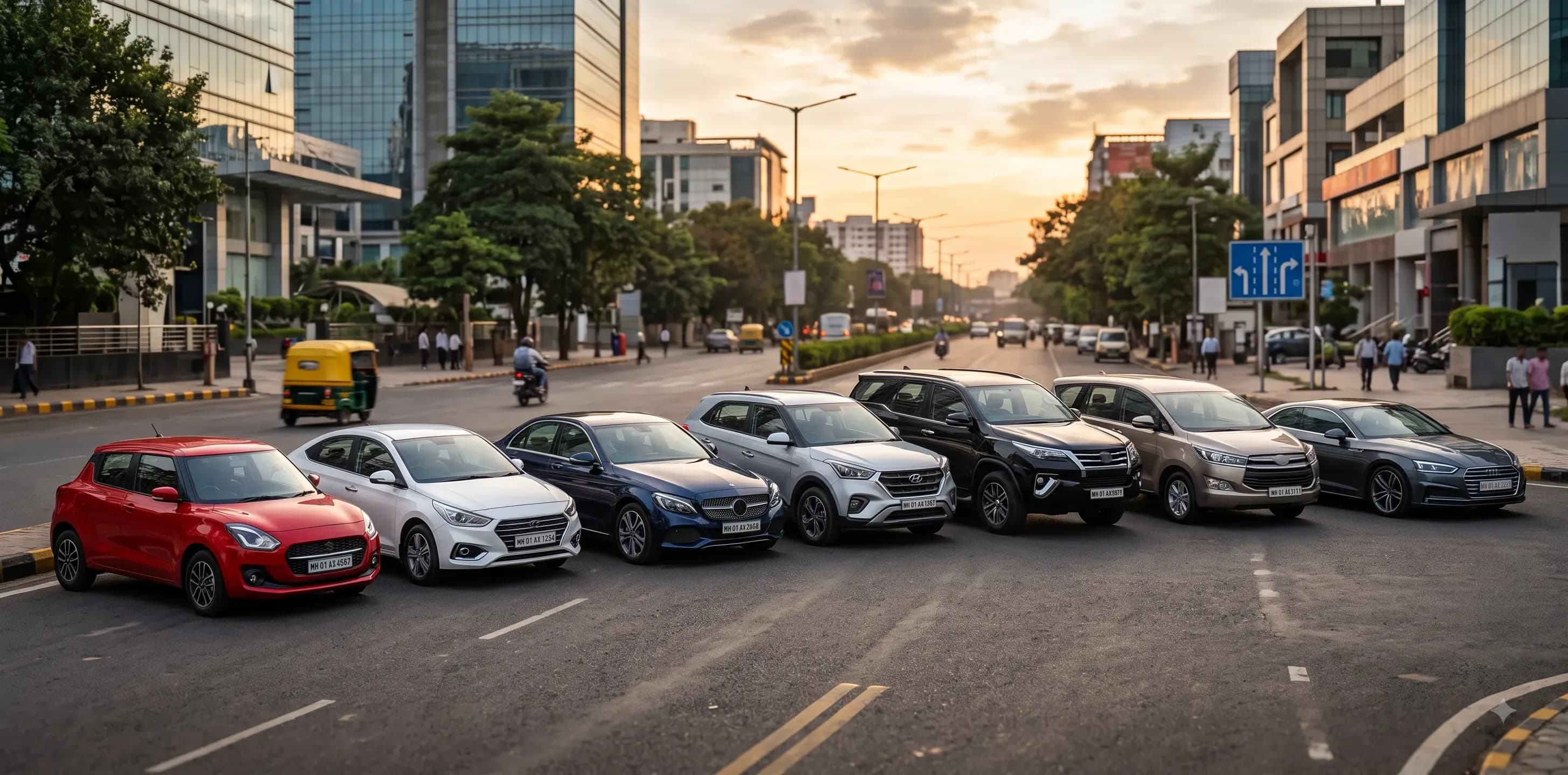
Key takeaways
● Hatchbacks suit city driving and tight parking best, thanks to their compact size.
● SUVs and MUVs offer the most space, ideal for larger families and long trips.
● Crossovers blend SUV looks with a car-like, unibody driving feel.
● Body type also affects mileage, boot space, and long-term maintenance costs.
Introduction
Walk into any showroom in India, and the sheer range of body shapes can be overwhelming. That's because there isn't just one answer to what car suits you. Different types of cars exist precisely because driving needs differ so much from one household to the next.
Some buyers want to compare all types of cars side by side before narrowing things down. Others already know roughly what shape suits them and just need confirmation. This guide breaks down each major body style and what it's actually good for. It also covers how many types of cars you'll realistically need to consider.
Why car body type matters
Body type isn't just about looks. It shapes how a car fits into your actual daily life.
Space, comfort and seating needs
A family of five needs a very different seating room than a solo commuter, and body type drives that directly.
City driving versus highway use
Compact body types handle tight city traffic and parking far more easily than larger ones do.
Boot space, ground clearance and mileage
Bigger bodies usually mean more boot space and higher ground clearance, often at some cost to mileage.
Also Read: What is Engine Flushing?
Different types of cars by body type
Here's how the most common car body types in India actually differ from each other. These different kinds of cars cover almost everything you'll see on Indian roads today.
Hatchback
Hatchbacks are compact, with a rear door that lifts upward and shared cabin-boot space. They're easy to park and manoeuvre, which makes them popular for city driving. Mileage tends to be strong too, thanks to lighter overall weight. They're often the most budget-friendly option to buy and run.
Sedan
Sedans use a three-box design, with the boot separated from the cabin. This usually means a quieter cabin and more rear legroom than a hatchback of similar size. They suit professionals and small families well, especially for regular highway driving.
SUV
SUVs sit higher, with more ground clearance and generally more cabin and boot space. They handle rough roads with more confidence than smaller body types. The trade-off is usually a bit more fuel consumed per kilometre, and a higher purchase price too.
MUV and MPV
MUVs and MPVs are built around maximising passenger space, often with three rows of seating. They suit larger families who regularly travel together. Boot space can shrink considerably when all rows are in use.
Crossover
A crossover borrows SUV styling and a higher stance, but uses a car-based unibody platform underneath. That generally makes it lighter and more car-like to drive than a traditional SUV.
Coupe
Coupes are two-door, sportier in shape, with a sleeker, lower roofline. Rear space and practicality usually take a back seat to styling and driving feel here. They suit enthusiasts more than families.
Also Read: Best CVT Cars in India
Why Understanding the Body Type of a Car Matters
Body type doesn't just affect day one of ownership. It also shapes resale value and insurance premiums over time. Family needs change, too. The right body type car for today might feel cramped in five years. It's worth thinking a little further ahead.
Choosing the right car body type
Start with your actual driving pattern, not the body type that looks best in photos. If you mostly drive solo in the city, a hatchback usually makes the most financial sense. If you regularly carry a full family or gear, an SUV or MUV earns its higher running cost.
Choosing the right body type can improve practicality, reduce running costs, and ensure your vehicle continues meeting your needs for longer.
Conclusion: Types of Cars in India, in Short
So, the different types of cars in India really come down to a simple trade-off. Space and capability versus cost and ease of driving. Hatchbacks win on affordability and city manoeuvrability. SUVs and MUVs win on space and rough-road confidence. Match the body type to your actual weekly driving pattern, not just to what looks impressive in a showroom.
FAQs
Which car body type is best for Indian city driving?
Hatchbacks generally suit city driving best, thanks to their compact size and easier parking.
Which car body type is best for long family trips?
SUVs and MUVs or MPVs generally suit long family trips best, given their extra space and comfort.
Are crossovers and SUVs the same?
Not exactly. Crossovers use a car-based unibody platform, while traditional SUVs often use a tougher body-on-frame design.
Which body type usually gives the best mileage?
Hatchbacks usually give the best mileage, helped by their lower weight and smaller engines.
Does body type affect maintenance costs?
Yes, generally. Larger, heavier body types like SUVs often cost more to maintain than smaller hatchbacks.