Understanding Traffic Signal Rules in Indian Cities
Key Highlights:
- The yellow/amber light is often misinterpreted by drivers as a directive to cross before the signal turns red.
- By law, vehicles must remain stationary until the signal turns green, even if the junction appears clear.
- Respect pedestrian crossings even if the traffic signal has turned green.
Understanding Traffic Signal Colours and Their Meanings
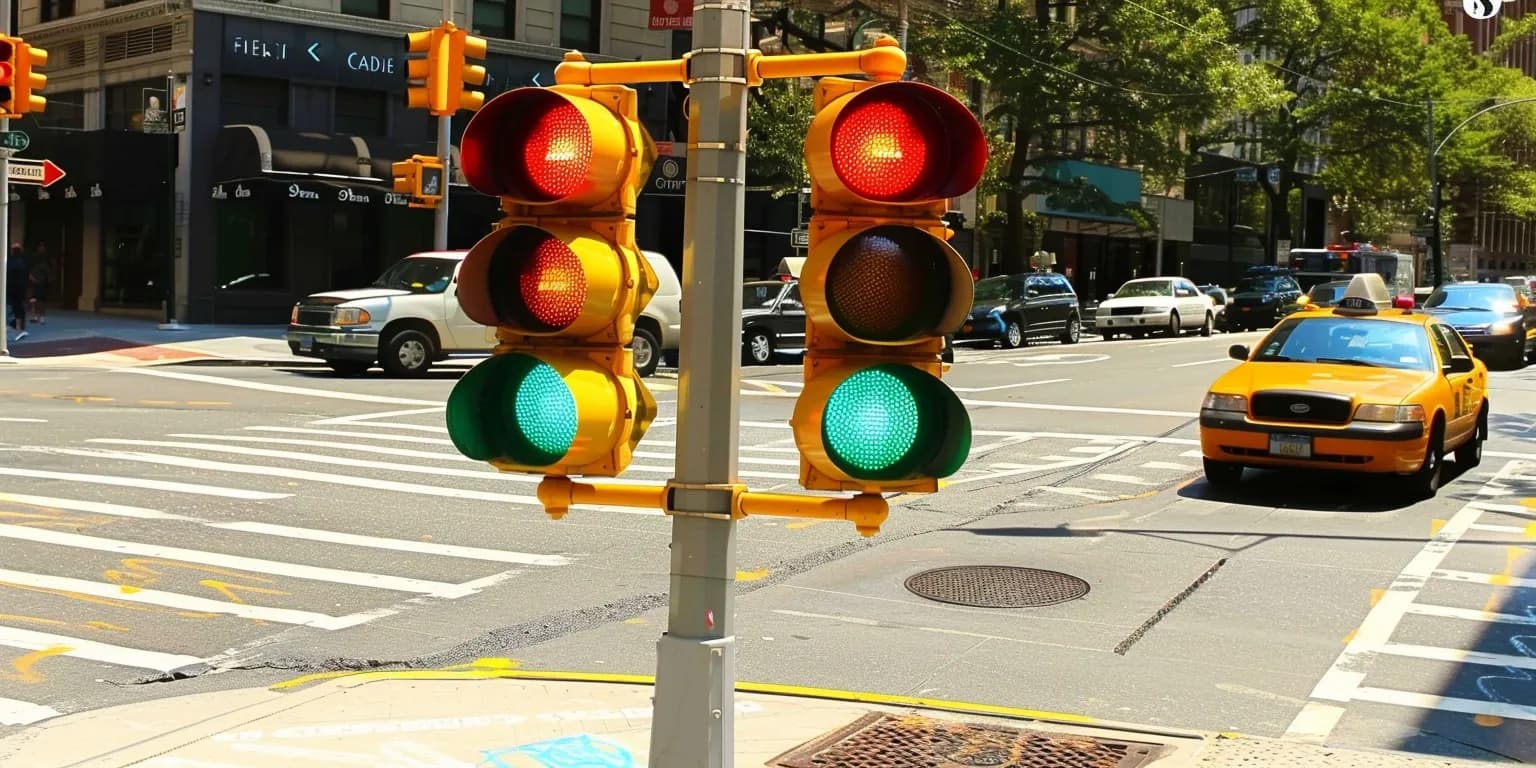
These universal signals form the foundation of traffic rules in India. Pedestrian signals featuring walking or standing figures complement traffic lights in many cities, indicating when it's safe to cross. The three-colour traffic light system used in India has specific meanings that every motorist must follow:
- Red: Come to a complete stop before the stop line or zebra crossing
- Yellow/Amber: Prepare to stop or proceed with caution if stopping isn't safe
- Green: Proceed only after ensuring the junction is clear
Rules at Red Signal
When approaching a red light, drivers must stop completely before the stop line or zebra crossing. Jumping a red light is one of the most dangerous and common offences on Indian roads. Even when the junction appears clear, vehicles must remain stationary until the signal turns green. Traffic police often monitor busy intersections to catch offenders who disregard this fundamental rule.
Rules at Yellow Signal
The yellow light is frequently misinterpreted by drivers as a signal to accelerate and cross quickly. In reality, it serves as a warning that the signal will soon turn red. Drivers should slow down and prepare to stop. Only when a vehicle is too close to the signal and sudden braking might cause an accident, should the driver proceed with caution.
Rules for Turning at Signals
Many junctions in India permit free left turns unless specifically prohibited. However, drivers must still check for pedestrians before turning. Proper lane discipline while turning is equally important and helps prevent accidents at busy intersections. For right turns:
- Follow the dedicated arrow signal if available
- Wait until the main signal permits movement and the road is clear
- Always indicate your intention to turn well in advance
Pedestrian Rights at Traffic Signals
Pedestrian safety is paramount at traffic signals. Blocking the zebra crossing is a punishable offence under traffic signal rules in India, as it forces pedestrians to walk around vehicles, putting them at risk. Drivers must:
- Stop before the zebra crossing, not on it
- Wait for pedestrians to cross completely before proceeding
- Respect pedestrian signals even if the vehicle signal has turned green
Penalties for Violating Traffic Signal Rules
The 2019 amendment to the Motor Vehicles Act introduced stricter penalties to discourage traffic violations. Repeat offenders face harsher action with higher fines and longer licence suspensions. These are aimed at creating discipline among drivers who have previously ignored lighter fines. The current fine structure includes:
| Violation | Fine Amount | Additional Penalties |
|---|---|---|
| Jumping a red light | Rs. 2,000 | Potential licence suspension for repeat offenders |
| Stopping over a zebra crossing | Rs. 2,000 | - |
| Dangerous driving at signals | Rs. 2,000+ | Possible imprisonment in severe cases |
Electronic Surveillance and E-Challans
Most large Indian cities have equipped traffic signals with cameras that automatically record violations such as:
- Vehicles jumping red lights
- Stopping beyond the stop line
- Blocking pedestrian crossings
The systems generate e-challans that are sent directly to the registered vehicle owner. Drivers should regularly check official traffic police websites for pending challans to avoid legal complications.
Impact of Violating Signal Rules
Breaking traffic signal rules isn't a minor infraction. Fines for jumping red lights and related penalties aren't merely revenue collection tools, but are essential deterrents to dangerous behaviour. The consequences include:
- Severe accidents from multi-directional collisions
- Injuries and fatalities to both motorists and pedestrians
- Traffic congestion that wastes fuel and time
- Legal penalties and potential licence suspension
Building Awareness About Traffic Signal Rules
Traffic education plays a crucial role in fostering safe driving habits. Schools, colleges and driving schools should emphasise the importance of following traffic signals. Traffic police and transport authorities must continue awareness campaigns highlighting the risks of signal violations. Drivers should take personal responsibility by:
- Setting a positive example for others
- Remaining patient at signals even during rush hours
- Encouraging passengers and fellow drivers to respect signals
- Reporting malfunctioning signals to authorities
It's a Sign
Red means stop, yellow means get ready to stop, and green means go with caution. Following these signals prevents accidents and ensures smooth traffic movement. Violating them can result in fines of up to Rs. 2,000 and even harsher punishment for repeat offenders. With the use of cameras and e-challans, enforcement has become stricter and more effective. Every driver and pedestrian has a role in making roads safer. Respecting traffic signals is not only a legal duty but also a moral responsibility towards society.
FAQs
1. Can I be fined for stopping my vehicle after the stop line at a traffic signal?
Yes. If you cross the stop line and halt on the pedestrian crossing or in the middle of the junction, it is a violation. The fine can range from Rs. 500 to Rs. 1,000 depending on the city.
2. Are there penalties for not following the yellow signal?
Yes. The yellow or amber signal means you should slow down and prepare to stop. If you speed through it, the traffic police can fine you, similar to red light jumping.
3. What is the fine for overspeeding near traffic lights?
Overspeeding near signals is dangerous. The fine is usually between Rs. 1,000 and Rs. 2,000 for light motor vehicles and can be higher for commercial vehicles.
4. Is using a mobile phone at a traffic signal punishable?
Yes. Even if your vehicle is waiting at a red light, using a mobile phone without hands-free mode is an offence. The fine can be up to Rs. 5,000 in some states.
5. How can I pay fines for traffic signal violations?
You can pay fines online through the Parivahan website, state transport portals or via e-challan apps. Payments can also be made at traffic police stations.