Child Safety in Cars: Essential Rules Every Parent Must Know
Key Highlights:
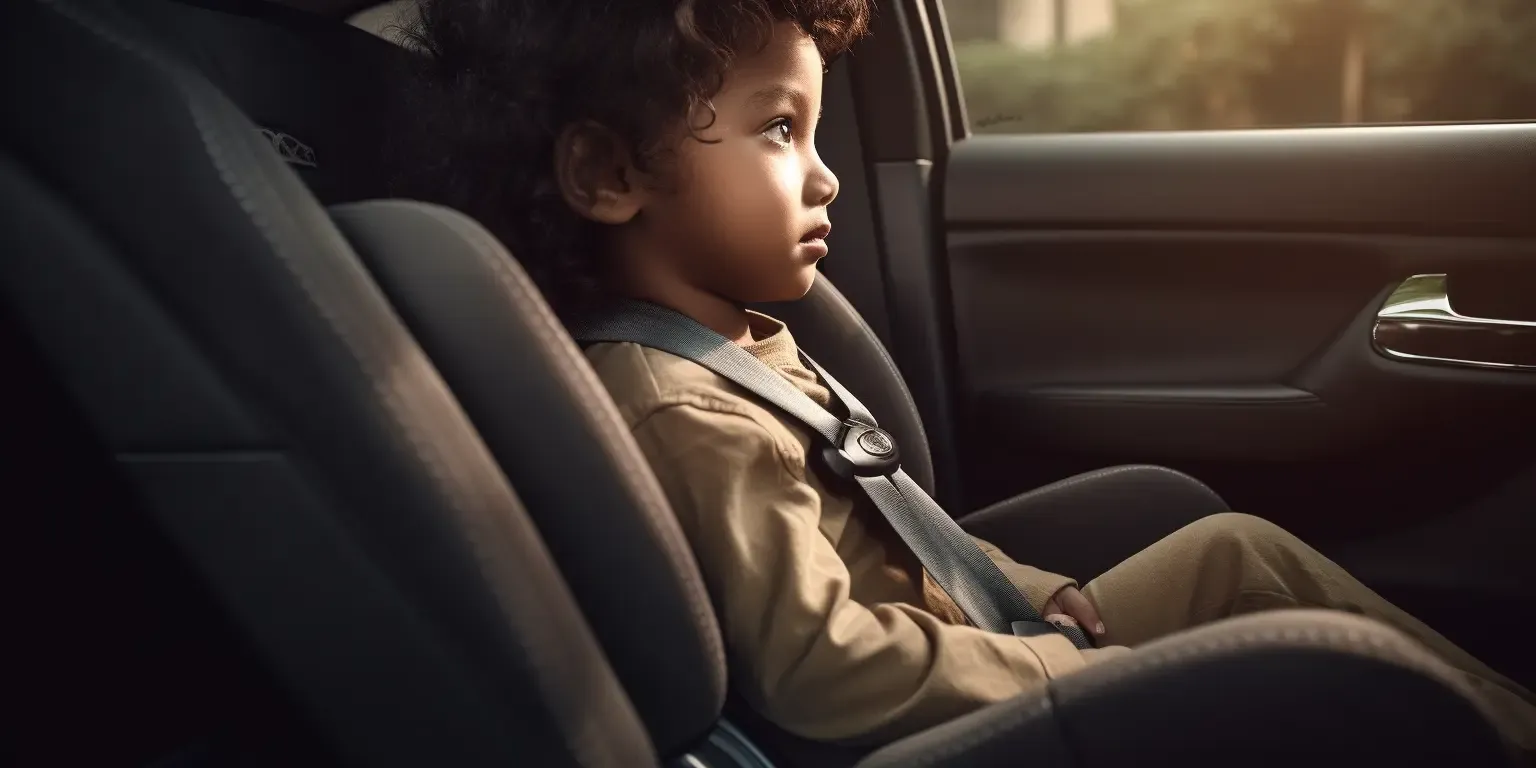
- It is always safer for children to sit in the back seat.
- Once installed, the child seat should not move more than an inch in any direction.
- Booster seats are recommended for older children who have outgrown child seats, but are still not big enough for regular adult seatbelts.
Child Restraint Systems
Child restraint systems are made to protect children at different stages of growth. The right seat depends on the child’s age, weight and height. The main types include infant seats, convertible seats, booster seats and child harnesses.
An infant seat is rear-facing and suitable for babies up to about one year of age or until they reach the maximum specified weight or height limit. Rear-facing seats give the best protection for a baby’s neck and spine during sudden braking or an accident.
Convertible seats can be used in both rear-facing and forward-facing positions. Parents usually switch to a convertible seat when the baby becomes too big for the infant seat. Experts suggest keeping children rear-facing for as long as possible, often up to two years or longer if the seat allows.
Forward-facing seats with a harness are used once the child has outgrown the rear-facing option. These seats help spread crash forces over the stronger parts of the body and lower the chance of injury.
Booster seats are for older children who have outgrown the harness seat but are still not big enough for an adult seatbelt. A booster raises the child so that the belt rests correctly across the chest and lap.
Seatbelt Use for Older Children
Children usually need a booster seat until they are about 10 to 12 years old, depending on their height. A simple check can show if a child is ready to use the normal seatbelt:
- The child should be able to sit upright against the seat with knees bent at the edge without slouching.
- The lap belt should fit firmly across the upper thighs and not the stomach.
- The shoulder belt should lie across the chest and shoulder and not touch the neck or face.
Why Children Should Be Seated Behind
Placing children in the rear is one of the easiest and most effective ways to keep them safe. The front airbag is designed for adults and can cause serious harm to children during a crash. Even when a child is seated in a car seat, the force of an airbag can still be dangerous. For this reason, it is always safer to keep children in the rear seat.
In larger cars with three rows of seats, the middle row is usually safer than the third row. This is because it is further away from the area most affected by a rear impact. Parents must also make sure that the seat chosen for the child has proper seatbelts or latch systems to hold the car seat securely.
How to Install Child Seats
Buying the right car seat is only the beginning. The way it is fitted is just as crucial for safety. Several accident reports have shown that child seats are often either loosely placed or not fixed properly. Parents should always go through both the car seat manual and the vehicle manual with care.
Once installed, the seat should not move more than an inch in any direction. The harness straps must be snug and flat against the child’s body. The chest clip should be kept at the level of the armpits. Rear-facing seats must be set at the proper recline angle to stop the baby’s head from falling forward.
General Guidance for Cars with Children
Apart from using the right car seat, there are other important rules for parents to follow. Children must never be left alone in a parked car, even for a short while. The temperature inside can rise quickly and cause heatstroke. Young children may also lock themselves in by mistake or fiddle with car controls.
It is best to avoid keeping loose objects inside the car. During sudden braking, even a small toy or bottle can fly forward and injure the child. Heavy bags should always be kept in the boot instead of on the seats.
Rear door child locks should always be switched on. This prevents children from opening the doors while the car is in motion. Parents should also keep an eye on window controls to prevent fingers from getting trapped.
Allowing children to eat in the car can raise the risk of choking, especially for toddlers. On longer trips, it is safer to stop and let the child eat outside the vehicle.
Setting Good Habits Early
Children learn by copying adults. When parents and guardians consistently wear seatbelts, children begin to view it as the standard, right thing to do. Consistency is critical. Regardless of whether it is a short journey or slow driving on local roads, children should always be safely secured. Accidents can happen even close to home and at low speeds.
Making safety a part of daily life helps as the child grows older. Instead of having to convince the child to wear the seatbelt, parents can make it a clear rule, just like brushing teeth before bedtime.
FAQs
1. When can a child move to a forward-facing seat?
A child can move to a forward-facing seat once they outgrow the rear-facing seat, usually after the age of two, but it is safest to keep them rear-facing for as long as possible.
2. How long should a child use a car seat or booster seat?
Children should use a suitable child seat or booster seat until they are at least 135cm tall or around 12 years old, whichever comes first.
3. What is the difference between ISOFIX and seat belt installation?
ISOFIX uses fixed connection points in the car, making installation easier and reducing the chance of errors. Seat belt installation is safe if done correctly, but can sometimes be less secure if fitted incorrectly.
4. Can a child seat be placed in the front seat?
It is safer for children to travel in the back. If the front seat must be used, the airbag should be turned off (some cars have a dedicated button) when using a rear-facing seat.
5. Do car seats expire?
Yes. Most child seats have an expiry date, usually between six and ten years. Materials can weaken over time, so it is essential to replace an old seat.