Pre-Delivery Inspection Checklist: Don't Accept Your New Car Without These Checks
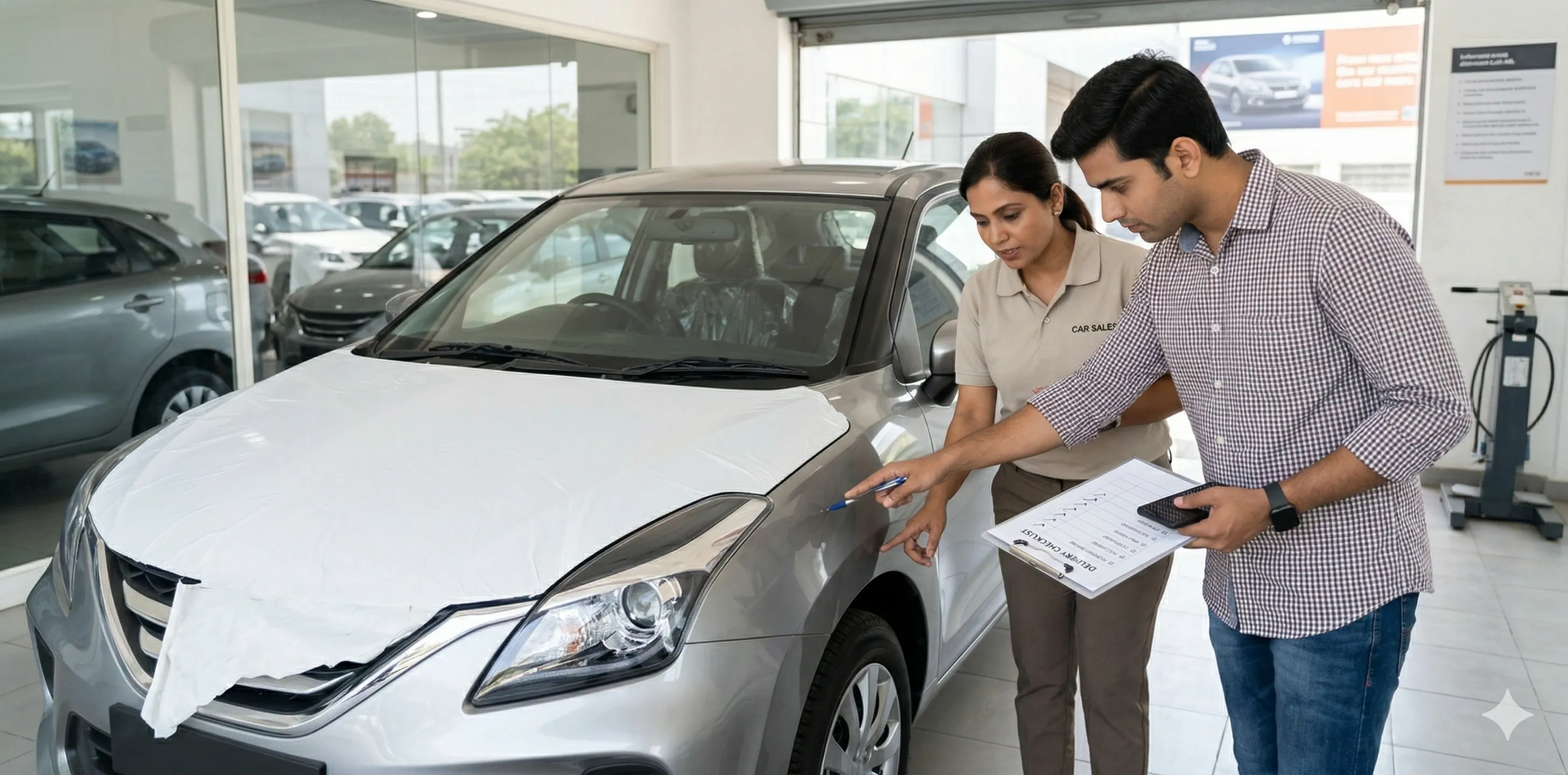
Highlights:
1. What is PDI?
2. Exhaustive PDI checklist
3. Why is PDI important?
4. What to expect during PDI?
You have chosen the car, your car has come to the dealership, and now comes the most important and significant part of the process – the pre-delivery inspection (PDI). This is perhaps the last and most important checkpoint between you and your brand-new car.
A PDI gives you the chance to thoroughly inspect the vehicle before making the full payment. It is your time to quality check the vehicle and safeguard the money you are spending for your comfort and safety.
PDI Made Simple: Step-by-Step Checks
We have broken down the PDI process into small steps so you can easily follow them and ensure that the vehicle you are bringing home has no performance issues.
Things the dealership needs to do for you:
- They need to ensure that the car is ready and parked in proper daylight with enough space to walk around it. You should be able to open all doors, the bonnet and the boot.
- They need to supply you with the VIN (Vehicle Identification Number) and engine number in advance. This will help you decode the month and year of manufacture of your vehicle. By checking this, you will avoid getting an old vehicle or a test-driven car.
- Do not make the final payment before completing the PDI thoroughly. In case there is an issue, it can be resolved at the dealership level before the car is fully paid for.
Paperwork Check
Documentation is absolutely vital when buying a new or used vehicle. Incorrect or incomplete documentation can haunt you for years. Things that you need to check when doing a document check are as follows:
1) Sales invoice
Check the model, variant you are buying, engine/gearbox type, colour and VIN. They should match the type of car you are buying exactly.
Double-check the price, taxes, insurance, accessories and any add-ons that you agreed to buy. All of this should be in writing.
2) Payment receipts
Receipts of every payment made by you should be made available to you. Check your booking amount, down payment, accessories, extended warranty, etc., are clearly mentioned in the paperwork.
3) Insurance and registration
Insurance, especially third-party insurance, is of utmost importance. Ensure that the insurance policy is in your name, with the correct model, variant, VIN, engine number and IDV.
The start date of the policy coverage should be on or before delivery day to avoid a gap in protection.
For registration, confirm the spelling of your name, address and the registration type (private, commercial, company name, etc.).
4) Miscellaneous
There are some small but significant things like the owner’s manual, service booklet and warranty booklets that the car must have.
If you have opted for roadside assistance and extended warranty, or a service packag,e get all of it in writing from the dealership.
Do not sign paperwork that is incomplete or vague; the chances of fraud are high when the paperwork is not done properly.
How to Inspect Your Car From the Outside?
Check it like a mechanic. Bend, crouch, and use your phone’s flashlight. Go through every nook and corner of the new car to ensure there is no damage or messy paint jobs hiding something.
Panel gaps and paint job
Do this very carefully and slowly; don’t let the dealership guy rush you while doing this. Check for scratches, dents, and touch-ups, colour mismatch between panels, paint bubbles or dust nibs under clear coat.
Make sure there are no major panel gaps around doors, bonnet and boot that are not part of the design. There should be no sharp misalignment that suggests accidental damage or poor repair.
Glass and lights
Check every glass pane for cracks, chips, deep scratches, or distortion. Also make sure all exterior lights: headlights (low and high beam), DRLs, indicators, tail-lamps, brake lights, reverse lights, fog lamps and indicators work the way they should.
Tyres, wheels and spare
Size, brand and manufacturing date are the three things that you need to check. All tyres, including the spare, should be of the same brand and size specified for your variant. Ensure the tyres have full tread depth.
Your alloys/steel rims should not have any curb rash, scratches or bends.
Jack, wheel spanner, towing hook and any tyre inflator are essential in the tool kit. Make sure your car has them all.
Open and shut
Make sure every door, bonnet and boot open and close effortlessly. There are no cuts or gaps in the rubber beading that could cause water leakage or wind noise. Take pictures of things that are not ok.
Interior check
All the surfaces of the car should be spotless and covered in plastic covers wherever possible.
Check all seats and use the levers to slide, recline, height height-adjust if available.
Switch on the ignition and ensure all warning lights work as they are supposed to.
Check if the entertainment system, glove boxes, windows, trays, AC vents, sunroof and all other interior features work properly.
Under the bonnet
Do some basic under-the-bonnet checks. See if the bonnet is easy to open and props properly on the rod. The engine bay should be clean, with no oil stains, fluid spills, loose connectors, hanging wires or missing clips.
Any PDI is incomplete without a short, careful drive. During the drive, check the odometer; it should typically be under 100 km. Ask for an explanation if the reading is more. If you are not satisfied, ask for a different unit.
Last But Not the Least
Ensure you have both keys, and test lock/unlock, remote features and immobiliser behaviour from each key.
Check for all the accessories that you asked for and tick them from a list.
It is advised to take a walk-around video and some pictures of the inside and outside of the car to keep as a reference for later.
Get a list of all pending things written down by the dealership. Do not go with verbal communication.
If you follow these simple but comprehensive PDI rules, you will have a beautiful car-buying experience and peace of mind.
FAQs
1. What is PDI in a car?
The full form of PDI is Pre‑Delivery Inspection. It stands for the final quality and safety check done at the dealership by the buyer before registration and delivery of a new car. In this, you check exteriors, interiors, mechanical and electrical systems and fluids of the new car before taking delivery.
2. Why is PDI important?
A PDI is the last checkpoint in the car-buying journey. It helps catch defects before the vehicle reaches the customer. A proper PDI protects the buyer’s interests, supports warranty claims, and maintains the dealership’s reputation.
3. What should I check during PDI as a customer?
Look at the inside and outside of the car with a fine-tooth comb. Check the paint, dents, glass, tyres, operate all doors, lights, wipers, horn, windows, infotainment, and verify VIN/engine number against the invoice and documents.