What Is a Plug in Hybrid Electric Vehicle? Everything You Need to Know
Key Highlights:
- In India, PHEVs are limited to only a few luxury options from foreign manufacturers.
- In the affordable segment, HEVs make more sense than PHEVs in terms of pricing and maintenance.
- Some state governments offer subsidies for PHEVs, alongside HEVs.
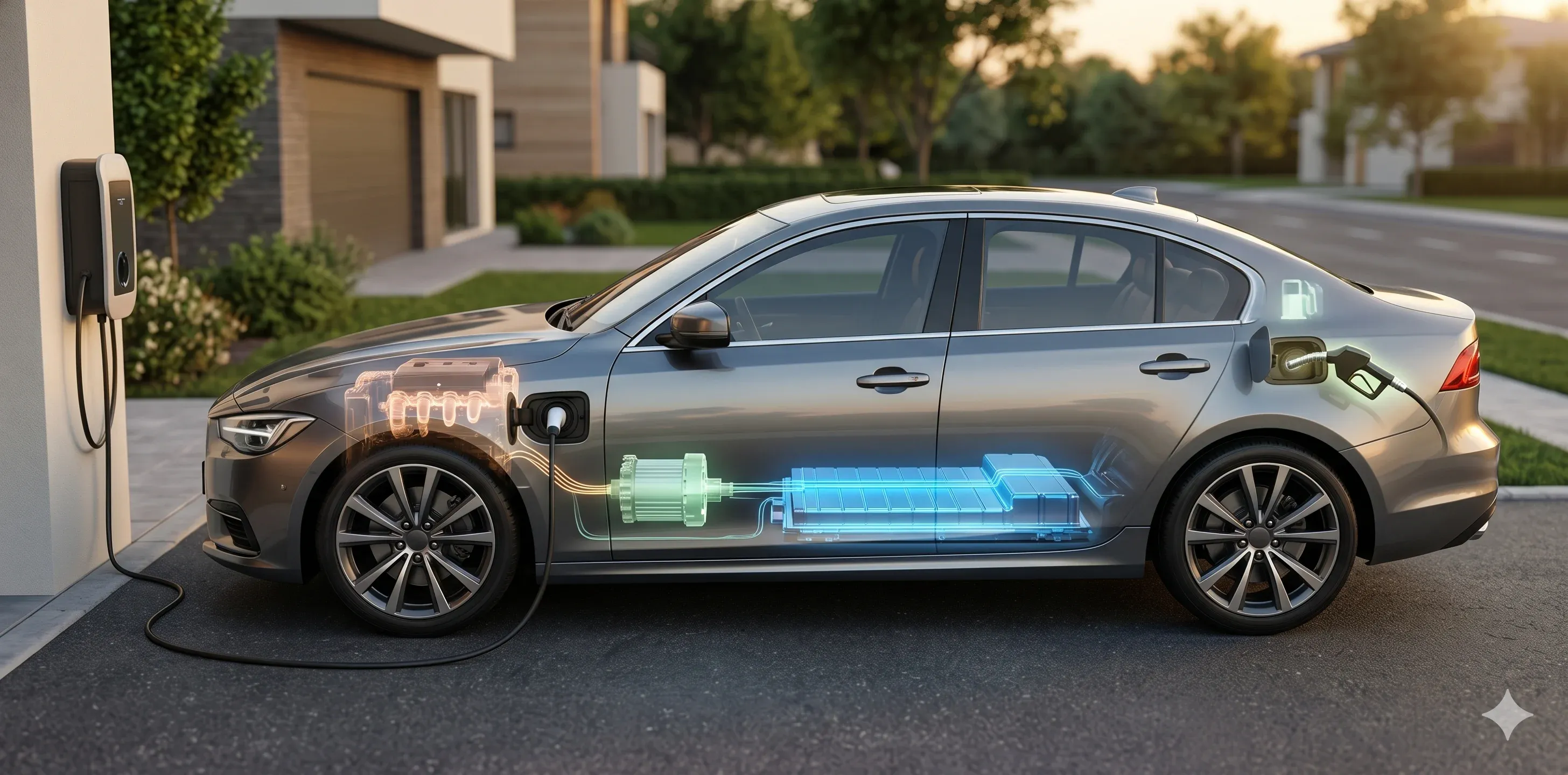
An ICE power plant and electric motor make up a plug-in hybrid electric vehicle. The electric motor drives a rechargeable battery. PHEVs can be charged separately from a home socket or a public charging station, unlike mild hybrids or strong hybrids that charge only through the engine's power and regenerative braking.
PHEVs should not be confused with regular hybrids or Hybrid Electric Vehicles (HEVs). Regular hybrids cannot be plugged in to charge - like the Toyota Hyryder in India. They charge the battery using the engine and regenerative braking. Their electric range is limited.
PHEV - Working Principle
A plug-in electric vehicle powertrain is designed to switch between electric power and engine power depending on performance demand or driving environment. Here’s a quick look:
- The car runs entirely on electricity for short city trips, saving fuel and emissions.
- For longer drives, the engine takes over and works together with the motor for a more powerful power transfer.
- Regenerative braking pumps some of the lost energy into the battery.
PHEVs - Benefits Over Full-Electric & ICE Alternatives
A PHEV is ideal for those who drive predominantly in the city but also need to travel long distances without the need to plan for charging stops. Here are the main highlights of PHEVs:
- Dual Power: Both the engine and electric motor may propel the vehicle, either alone or together.
- Electric-only Range: The PHEVs typically deliver 100 kilometres of pure electric driving per model.
- Fuel Savings: For short commutes, one could save fuel by using the electric-only mode.
- Lower Emissions: Tailpipe emissions are reduced compared to normal petrol cars.
- Flexibility: No fear of running out of charge on long trips.
Benefits of PHEVs in India
- Cost Savings: A PHEV running in full-electric mode may reduce running costs with rising fuel prices.
- Zero Emissions: No tailpipe emissions when driving in electric mode.
- Convenience: After a day’s commute, owners can charge at home using a simple wall socket.
- Government Initiative: While most incentives target full EVs, some states also promote PHEVs for cleaner mobility.
Challenges of PHEVs in India
- High Purchase Price: PHEVs are usually more expensive than regular hybrids.
- Limited Choices: Only a few PHEVs are available in the Indian market, and unfortunately, all of them are in the luxury segment. Examples as of October 2025: BMW XM, BMW M5 and Land Rover Defender 110 X PHEV.
- Charging Infrastructure: Public charging stations remain scant or nonexistent in most cities, although home charging is possible.
- Maintenance Challenges: Not all local workshops are familiar with the diagnosis and repair of hybrid systems.
Why PHEVs Could Work Well in India
In India, many use cars mainly within cities, where traffic congestion and pollution levels are high. Short daily commutes can be easily taken care of in electric-only mode. For long weekend trips or intercity travel, the petrol (or sometimes diesel) power plant ensures zero dependency on EV charging facilities. This dual nature makes PHEVs a good option for buyers who are not yet ready to shift to full electric cars.
Comparison with Full Electric Vehicles
- Range: PHEVs do not suffer from range anxiety since the engine supports the drive.
- Cost: Full EVs may be cheaper in some cases due to government support, while PHEVs remain luxury-focused.
- Maintenance: EVs have simpler systems with fewer moving parts, but PHEVs still require periodic engine servicing.
- Suitability: For cities with weak charging infrastructure, PHEVs can be more convenient.
Future of PHEVs in India
Although the Indian government is more focused on promoting full electric mobility, PHEVs may act as a bridge technology. They can help people experience electric driving without the fear of running out of charge. However, their high price and limited availability mean that they may remain restricted to premium buyers unless more affordable models are introduced.
A plug-in hybrid electric vehicle combines the best of two worlds: it gives the clean and quiet drive of an electric car for short distances and the reliability of a petrol or diesel engine for longer journeys. Hybrid vehicles represent an important step towards sustainable transport as they offer flexibility and comfort during the transition from fossil fuels to clean energy.
FAQs
1. How is a PHEV different from a regular hybrid?
A regular hybrid charges its battery only through regenerative braking and the engine, while a PHEV can be plugged in to recharge its battery, allowing for longer pure electric driving.
2. Can I drive a PHEV without charging it?
Yes, a PHEV can still run using the petrol or diesel engine, but without charging, you lose the benefit of electric-only driving.
3. Are PHEVs available in India?
Currently, PHEVs are very limited in India. As of October 2025, only three models are available: BMW XM, BMW M5 and Land Rover Defender X 110 PHEV.
4. Why are PHEVs not common in India?
High costs, lack of charging infrastructure awareness, and government policies that prioritise battery electric vehicles over PHEVs have limited their availability.
5. Are PHEVs eligible for government subsidies in India?
No, under the FAME-II scheme, subsidies are given mainly to full electric vehicles, not to hybrids or plug-in hybrids.