How to Change a Flat Tire on a Car: Step-by-Step Guide
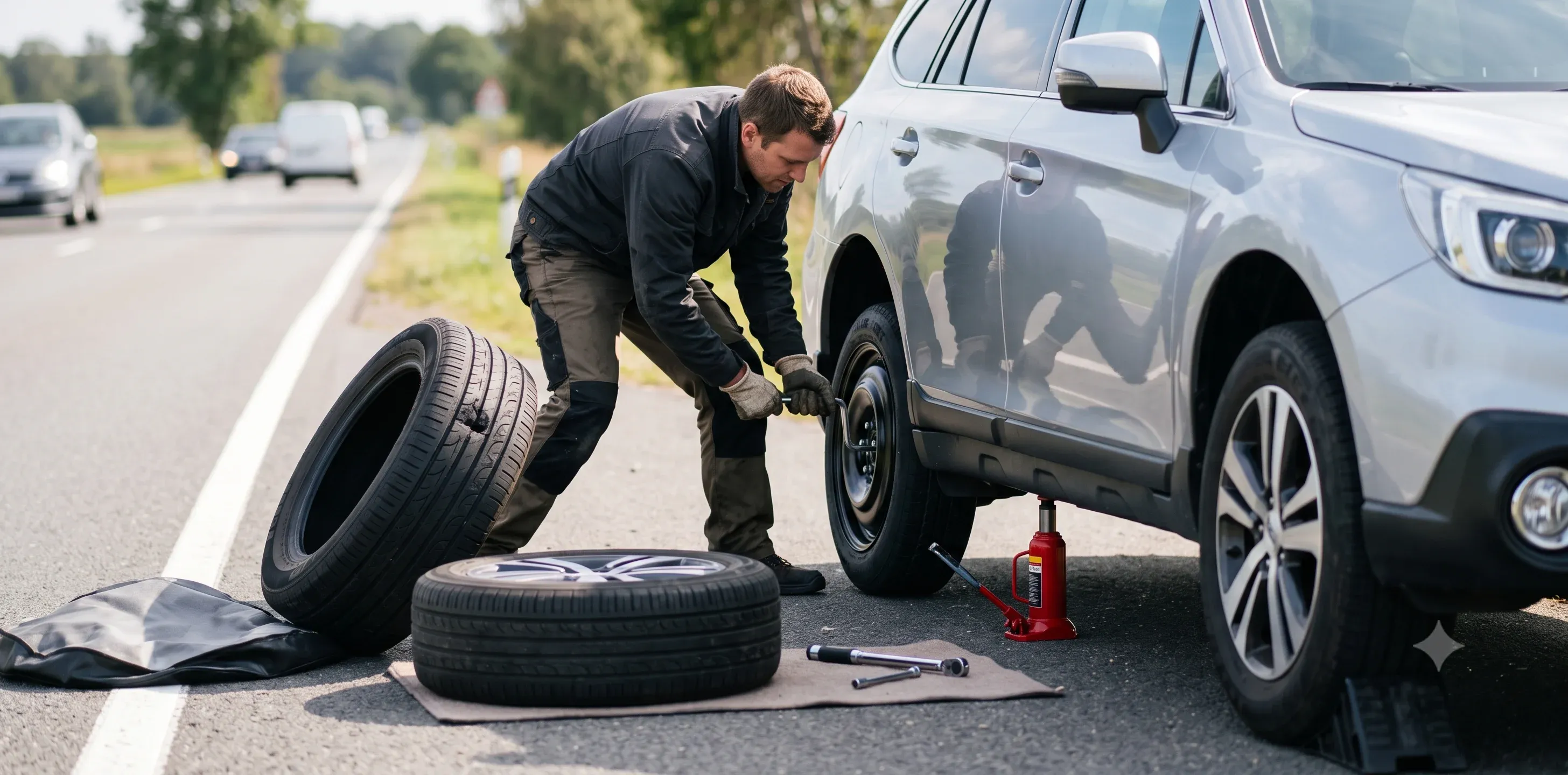
Introduction
Getting a flat tire is hardly convenient. It can occur on wet roads, busy flyovers over city centres, or dusty village roads where help can take hours. Learning how to change tires is more than just car skills; it’s a practical financial safety measure for Indian drivers facing escalating maintenance expenses.
Modern cars now feature small spare wheels, vehicle tyre pressure monitoring systems and roadside assistance packages. However, punctures are still frequent due to bad road surfaces, construction waste and extreme summer weather. The truth is that if a driver knows how to change a tire, he or she will save money on towing, save time and avoid damaged wheels from driving on a deflated tire.
What to Do Before Changing a Flat Tire
Park in a Safe Location
Move the vehicle away from moving traffic immediately. A flat tire should never be changed on a curve, bridge, or narrow shoulder. Flat, stable ground matters because even a slight incline can destabilise the jack.
Turn On Hazard Lights
Hazard lamps improve visibility, especially during monsoon conditions or night driving. Reflective warning triangles should ideally be placed 15-20 meters behind the vehicle on highways.
Apply the Parking Brake
Always engage the parking brake before lifting the vehicle. Manual transmission vehicles should be left in first gear; automatics should remain in “Park.” Small step. Big safety difference.
Tools Needed to Change a Tire
Most factory-supplied tire kits include:
● Spare tire or doughnut spare
● Car jack
● Lug wrench
● Wheel wedges or bricks
● Flashlight
● Gloves
Some Indian hatchbacks now replace full-size spare wheels with puncture repair kits to save weight and improve fuel efficiency. That’s cheaper for manufacturers. Not always convenient for owners.
How to Change a Tire on a Car
Step 1: Locate Spare Tire and Jack
The spare tire is usually positioned beneath the boot floor. SUVs may carry externally mounted spares. Before starting, inspect the spare for visible damage or low air pressure.
Anyone researching how to replace a tire should also confirm the jack’s lifting capacity matches the vehicle’s kerb weight.
Step 2: Place the Jack
Manufacturers provide designated jack points beneath the side sills. Incorrect placement can bend the underbody or crack the side skirts.
A roadside technician once described a case where a customer placed the jack under the floor pan of a compact SUV. The metal collapsed instantly. Repair bill: nearly Rs. 18,000.
Step 3: Jack Up the Car
Raise the vehicle slowly until the flat tire sits a few inches above the ground. Avoid sudden movements. And don’t crawl beneath the car while it’s supported only by a jack.
Step 4: Remove Hubcaps
If the wheel has hubcaps, remove them carefully before accessing the lug nuts. Some lug wrenches include a flat edge specifically for this task.
Step 5: Loosen Lug Nuts
Turn the lug nuts counterclockwise before the tire leaves the ground completely. This prevents the wheel from spinning freely.
Drivers learning how to change a flat tyre often make the mistake of removing lug nuts entirely at this stage. They should only be loosened first.
Step 6: Remove the Tire
Once elevated, remove the loosened lug nuts fully and pull the wheel straight outward. Heavy alloy wheels may require extra force because of rust or dirt buildup around the hub.
Step 7: Attach the Spare Tire
Align the wheel holes carefully with the lug bolts. Push the spare inward until fully seated. Hand-tighten the lug nuts in a star-shaped sequence.
This stage is central to understanding how to change a tire on a car safely because uneven tightening can create wheel imbalance.
Step 8: Tighten the Lug Nuts
Lower the vehicle partially before tightening the nuts fully with the wrench. Use a crisscross pattern for even pressure distribution.
Drivers searching online for how to change a tire often overlook torque consistency. Over-tightening can damage wheel studs. Under-tightening is worse.
Step 9: Check Lug Nuts After Driving
Drive cautiously for 25-50 kilometres, then recheck lug nut tightness. Spare tires sometimes settle slightly after initial installation.
Also Read: DCT Full Form
Common Mistakes to Avoid While Changing a Tire
Incorrect Jack Placement
Wrong jack positioning may crack the chassis edge or destabilise the vehicle completely.
Not Tightening Lug Nuts Properly
Uneven lug nut tension can cause vibration at highway speeds. In severe cases, wheel detachment becomes possible.
Changing Tire on Uneven Surface
Loose gravel and sloped shoulders create dangerous instability during tire replacement. That’s why professionals prioritise terrain before touching tools.
What is the Difference Between a Spare Tire and a Donut?
A full-size spare matches the original wheel dimensions and supports normal driving conditions. A doughnut spare is smaller, lighter, and designed for temporary use only.
Most doughnut tyres restrict speeds to around 80 km/h and shouldn’t be driven long distances. Yet many budget-conscious owners continue using them for weeks. Risky move.
Understanding how to change a tire also means understanding the limitations of temporary spares.
Safety Tips for Changing Tires
Keep Emergency Tools in Your Car
Basic emergency kits should include gloves, reflective triangles, portable inflators, and tire sealants. Highway punctures during late-night travel aren’t rare in India.
Check Spare Tire Pressure Regularly
Unused spare tires often lose pressure silently over months. A flat spare creates a second emergency.
Avoid Busy Roads While Changing Tires
If traffic density is high, professional roadside assistance remains the safer option despite the waiting time.
Also Read: How to Fix a Car Dent?
Conclusion
Knowing how to change a tire reduces dependency, cuts unnecessary service costs, and improves roadside safety. Tire failures can’t always be prevented. But panic, delays, and expensive mistakes usually can.
FAQs
Would you need a jack to change a flat tire?
Yes. A jack lifts the vehicle safely so the damaged wheel can be removed and replaced.
Can roadside assistance help with flat tires?
Yes. Most comprehensive motor insurance policies and manufacturer assistance packages cover puncture-related support.
How often should I check my spare tire pressure?
At least once every month and before long-distance travel.
How far can I drive on a spare tire?
A doughnut spare should generally be used only for short distances until the original tire is repaired or replaced.