How Much Does Wheel Alignment and Balancing Cost? (And How Often to Do It)
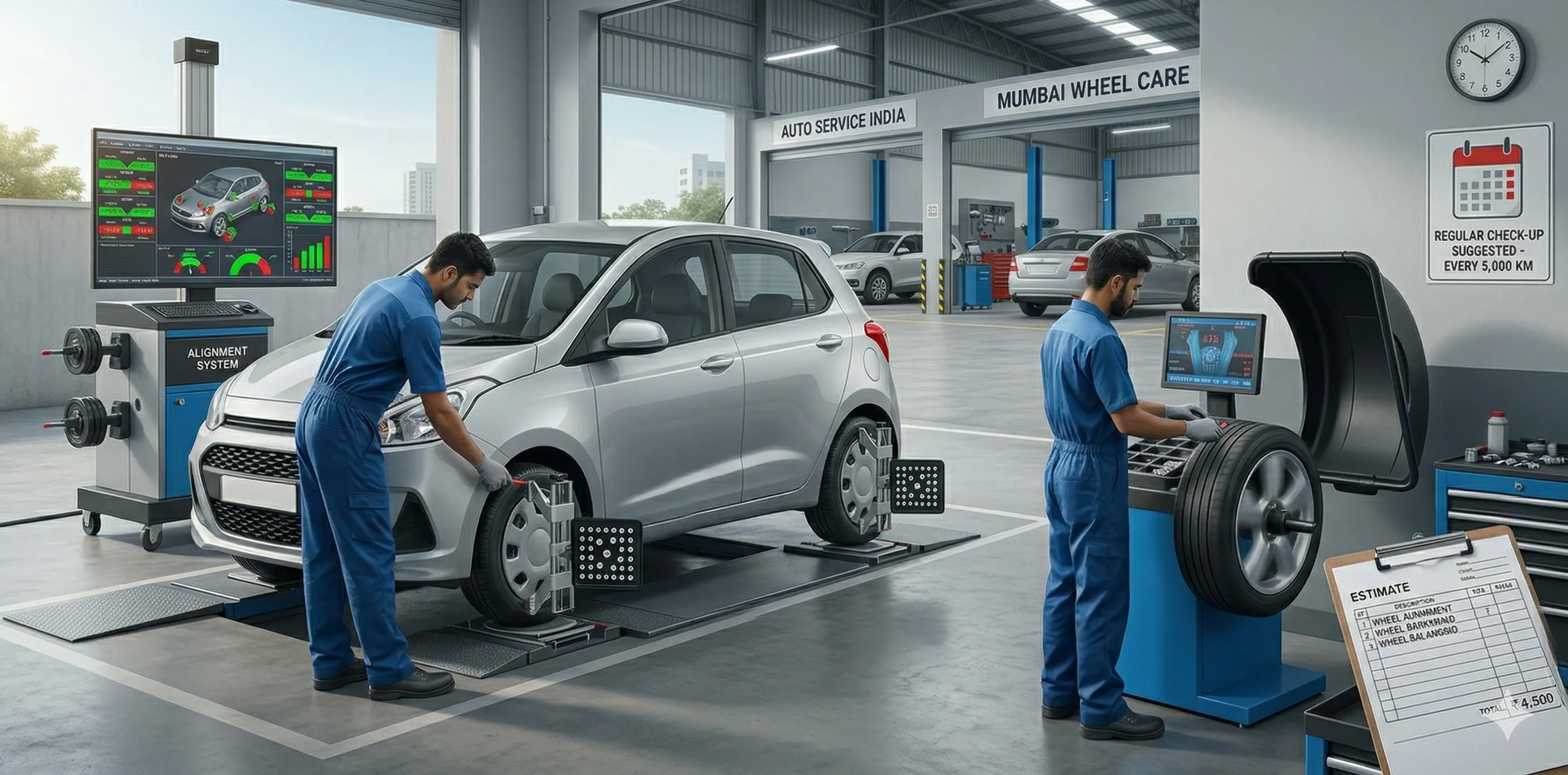
Key Highlights:
- Wheel alignment and balancing are a must for the vehicle’s overall health and ride smoothness.
- Wheel alignment ensures proper stability and handling of the vehicle.
- Alignment is about adjusting the toe, caster and camber angles of the wheels for optimum performance.
- Balancing the wheels reduces unwanted vibrations on the steering and the floorboard at high speeds.
Wheels and tyres are the most neglected things on a car. Most buyers aren't aware of the fact that the wheels also require periodic maintenance in the form of wheel alignment and wheel balancing to prevent uneven wear on tyres and maintain their life.
Both wheel alignment and balancing are essential for smooth ride quality and proper handling. However, these are often confused with each other. Therefore, in this thread, let’s understand everything about wheel alignment and wheel balancing, the two vital components of tyre maintenance, including their importance and associated costs.
Wheel Alignment
The alignment is actually the process of adjusting the angles of the wheels to ensure they are perpendicular to the ground and parallel to each other.
It aims to:
- Maximise tyre life
- Ensure vehicle stability
- Improve traction and handling for better control
- Reduce stress on suspension parts
- Reduce rolling resistance and boost fuel efficiency
- Minimise vibrations for a comfortable ride quality
Ideally, it is advised to check the wheel alignment every year or every 10,000 km.
Signals Your Vehicle Needs Wheel Alignment
A vehicle needs wheel alignment when the following signs are visible:
- The vehicle pulls to one side, and the steering feels off-centre when driving in a straight path
- Uneven or rapid tyre wear
- Squawky sounds from tyres
Reasons For Your Wheels Being Misaligned
Wheels can be misaligned due to various reasons, such as:
- Driving on uneven surfaces/off-road
- Hitting a pothole/bump hard
- Accident
- Sharp turns or manoeuvring at speeds
- Getting new tyres
Process of Wheel Alignment
The wheel alignment process comprises adjusting three main angles of the wheels: toe, camber and caster.
1. Toe Alignment (most commonly adjusted)
Toe, also known as tracking, is an angle when viewed from above. It is described as the alignment of wheels in relation to their longitudinal axis.
Proper toe alignment is extremely important for the vehicle’s stability. If the front edges of the tyres point towards each other, it is called toe-in (positive toe). And if they point away from each other, it’s called toe-out (negative toe).
Toe-in increases tyre grip, which improves straight-line stability and vehicle acceleration, and reduces tyre wear. However, an increased toe-in can make the vehicle feel less responsive while steering and require more driver’s effort. It also reduces the top speed.
On the other hand, toe-out enhances steering response, making it easier to turn the vehicle, but it may affect straight-line driving stability. Hence, proper balances of toe angles are essential for optimal performance and safety.
2. Camber Alignment
Camber angle is the tilt angle of the front wheels when viewed from the front of the vehicle. Positive camber is when the top of the wheel is tilted out, and a negative camber is when the top of the wheel is tilted in.
The positive camber makes the tyres make more contact with the surface, which leads to increased wear on the outer portion. However, it reduces steering effort and makes the vehicle more agile. On the contrary, negative camber makes the inner portion of the tyres wear out more. But it helps in better stability, especially during cornering.
3. Caster Alignment
The caster measures the forward or backward tilt of the steering axis when viewed from the sides. It affects the high-speed stability and the agility of the vehicle.
Also Read: Types of Car Suspension
Wheel Balancing
Wheel balancing comes into play if your vehicle has steel rims. You must have noticed small weights stuck on your rim edges. These are added to balance the weight of the tyre and wheel assembly to enable rims to spin accurately on their axis.
It aims to:
- Enable the vehicle to propel without any vibrations.
- Prevent premature wearing of suspension joints, wheel bearings, and steering components.
- Extend tyre life.
It is recommended to get the wheel balancing done every 10,000 to 12,000 kilometres.
Signals You Need Wheel Balancing
- Vibration in the steering wheel and floorboard at high speeds.
- The vehicle feels shaky even on smooth roads.
- Cupped pattern on tyres.
Cause for Wheel Imbalance
Wheels can get imbalanced due to:
- Tyres’ wear & tear
- Improper tyre installation
- Damaged wheels
Wheel Alignment & Balancing Cost in India
The cost of wheel alignment and wheel balancing varies depending on the vehicle type and the complexity of the service. In general, the wheel alignment typically ranges between ₹500 to ₹1500 per wheel, whereas the cost of the wheel balancing mainly depends on the weights added to each tyre. It typically costs between ₹200 to ₹500 per wheel.
Say Yes to Wheels Maintenance
Buying a car is a memorable event, and we all want our vehicle to always run smoothly. For that, most buyers ensure proper service of the engine and major components, but we often overlook the tyres and the wheels. The wheel alignment and wheel balancing are the two crucial modules of tyre maintenance that noticeably influence the overall condition and performance of the vehicle, along with the safety of its passengers.
FAQs
1. How do I know if my wheels require alignment?
If you notice your vehicle moving to one side and the steering feels off-centred when driving on a straight line, it’s time to get the wheel alignment done.
2. What is the main difference between wheel balancing and wheel alignment?
Wheel balancing is to address the vibration issues at high speeds, whereas wheel alignment is to ensure the vehicle’s stability and proper handling.
3. What are the advantages of wheel alignment?
The proper alignment of your wheels ensures improved handling, even tyre wear, better fuel efficiency and reduced stress on suspension.
4. When to get the wheel alignment done?
You need to get the wheel alignment done every 10,000km or whenever you buy new tyres, hit a pothole hard, after off-roading or notice uneven wear of tyres.
5. What causes wheel imbalance?
The wheel imbalance comes from the tyre's non-uniform weight distribution.