Car Brake Repair and Maintenance Guide
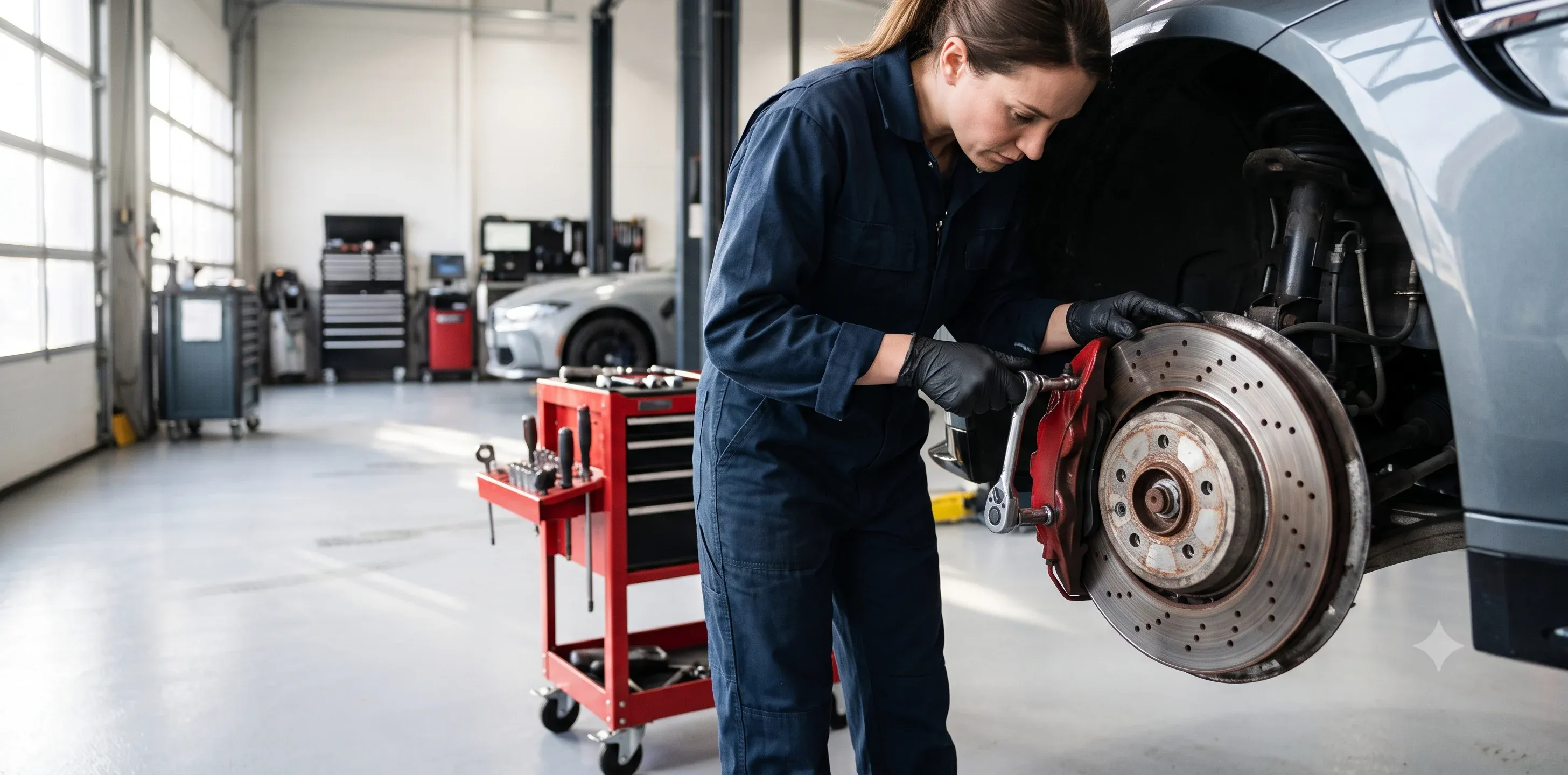
Key Highlights:
- Disc brakes are easier to replace, while drum brakes are easier to repair.
- Apart from model-specific upgraded brake components, it is recommended to stick to parts recommended by the manufacturer.
- Unless you have the right know-how and tooling, it is best to leave brake repairs to the experts.
Brakes rely on mechanical friction. With the brake pedal pressed down by the driver, pads press against the disc or drum to slow the wheels. Brake pads, discs, drums and other parts wear out and develop inefficiencies. This is when they need care.
Importance of Brake Inspection
Brake inspection involves checking the state of brake pads, discs, drums, brake fluid and related components. In India, traffic conditions and road quality may vary drastically every 20-30 kilometres. Hence, brake inspection is crucial. Signs for priority inspection include squeaking or grinding, a spongy brake pedal, vibrations while braking or increased stopping distances.
Brake Repair Essentials
Brake repair includes the fix or replacement of worn or damaged components to restore factory-spec braking performance. Repairs generally include:
- Brake Pad Replacement: Replacing worn pads at recommended intervals ensures smooth braking and protects the discs from scarring to even cracking.
- Disc or Drum Resurfacing: If discs or drums are unevenly worn, they may need resurfacing or replacement (this is often overshadowed by full replacement today).
- Brake Fluid Change: The moisture content in brake fluid can compromise braking performance or cause corrosion.
- Calliper and Brake Lines: Leaky brake lines and sticky callipers can majorly affect braking.
Vehicle Type and Brake Maintenance
Brake maintenance and repair procedures vary with the type of vehicle. Let us discuss some common observations from an Indian perspective:
- Hatchbacks and Sedans: They generally have disc brakes at the front and drum brakes at the rear. Brake pads and discs are smaller and easier to replace. Maintenance costs are moderate, depending on the brand.
- SUVs and MUVs: Being heavier, they require stronger braking. Brake pads are usually larger, and discs may wear out faster due to higher braking momentum. Frequent brake inspection is recommended if the vehicle is primarily used in hilly areas.
- Commercial Vehicles: Trucks, buses and delivery vehicles have bigger braking systems that can endure heavy loads. Repair is more complex since they are often equipped with hydraulic or air brakes. Regular inspection is mandatory for safety and compliance with Indian transport regulations.
- Electric Vehicles: EVs use regenerative braking alongside normal brakes. In theory, this reduces wear on brake pads compared to an equivalent ICE alternative, but EVs tend to be heavier.
DIY Brake Maintenance
While professional brake maintenance is always recommended, there are simple tasks one can perform at home: checking brake fluid levels, cleaning brake dust from wheels and inspecting brake pads visually. However, it’s best to avoid manually opening brake lines or handling hydraulic systems.
Cost Considerations
For budget hatchbacks, brake pads may be very cheap, while choices for SUVs or premium cars may cost substantially more. Labour charges can also vary drastically based on the brand, service centre and location. Manufacturer-recommended parts or high-quality aftermarket alternatives can save money in the long run by ensuring better reliability.
Mistakes to Avoid
Delaying brake maintenance can damage other related components too, thus increasing overall repair bills. Low-quality parts or lower-grade brake fluids can further affect safety. Ignoring vehicle-specific requirements (such as heavier vehicles needing more inspections) is another mistake.
Also Read: BH Number Plate
Types of Brakes: A Quick Comparison
| System | Advantages | Disadvantages |
|---|---|---|
| Drum Brakes | Enclosed design (protected from dust or water) Low manufacturing cost Self-energising design (better braking with less mechanical effort) | Poor heat dissipation Prone to brake fade Heavier and more challenging to maintain |
| Disc Brakes | Good heat dissipation More effective in wet conditions Lesser fade Consistent performance | Higher replacement costs Pads wear faster Exposed to dust or water |
| Hydraulic Brakes | Smooth force distribution Equal pressure on all wheels (unless electronically controlled) Less driver effort | Sensitive to leaks and air bubbles Needs regular inspection Pre-pressurisation is crucial in heavy vehicles |
| ABS (Anti-lock Braking System) | Prevents wheel lock-up Maintains steering control during hard braking Improves stability on slippery roads | Costlier and sophisticated Pedal feedback during braking feels odd initially Longer stopping distance on loose surfaces such as gravel or snow |
| Mechanical Brakes | Simple construction Cheap and easy to repair Effective as a parking brake or emergency backup | Uneven braking force Manual driver input needed Not suitable for high-speed braking |
| Regenerative Braking | Can actually improve driving efficiency Braking intensity can be varied in modern EVs to the extent of allowing one-pedal driving The most advanced braking technology today | Limited to hybrids or EVs First-time users may need some getting used to Maintenance and repairs can only be done by trained professionals with access to the brand’s specific diagnostic tools |
Crucial Tips to Follow
Always use quality parts approved for your vehicle. Ignoring warning signs such as strange noises, vibrations or a soft brake pedal should be avoided. Refrain from overloading your vehicle, as excess weight can increase brake wear. Using engine braking (leaving the car in lower gears to slow down the vehicle) while going downhill avoids excessive heating on the pads and thus brake fade. Maintaining clean brake components and replacing worn-out parts promptly ensures consistent braking performance and road safety.
FAQs
1. How often should I get my car brakes inspected?
It is recommended to have your brakes inspected at least once every 10,000 kilometres or during every regular service.
2. How long do brake pads usually last?
Brake pad life depends on driving style and conditions, but typically they last between 30,000 and 50,000 kilometres.
3. What is the difference between brake pads and brake shoes?
Brake pads are used in disc brakes, while brake shoes are used in drum brakes. Both perform the same role of slowing the vehicle.
4. What is brake bleeding, and why is it needed?
Brake bleeding is the process of removing air bubbles from the brake lines to ensure proper hydraulic pressure and effective braking.
5. Can I replace my own brake pads at home?
Yes, if you have the right tools and knowledge. However, for safety, it is better to get them replaced by a professional.