Is Your Compact SUV Actually an SUV? Car Body Styles in India Explained
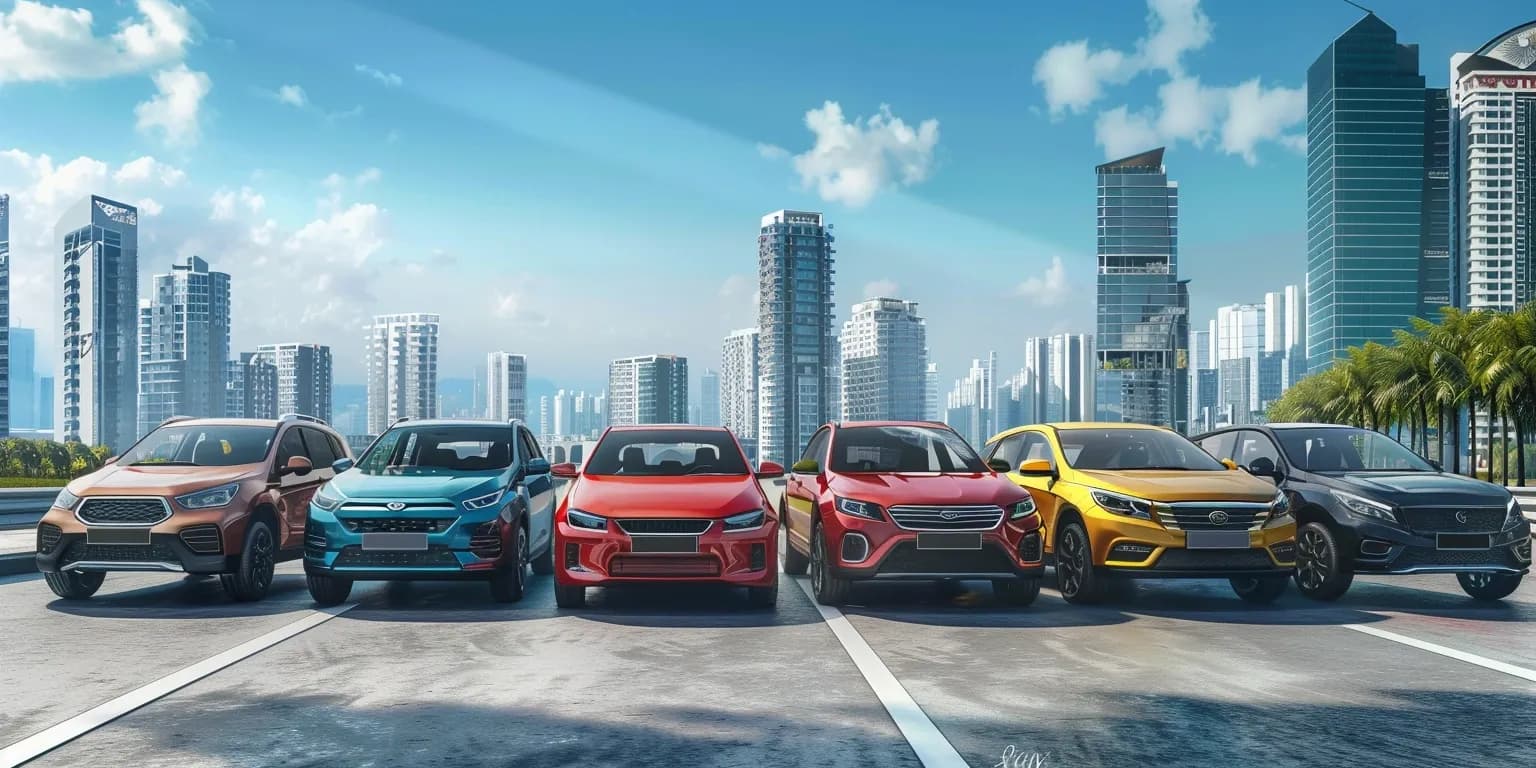
Key Highlights:
- In today’s market, the definitions of various body styles have become diluted based on market trends and price categories.
- India has a strong affinity towards compact crossovers that are marketed as SUVs.
- Sub-four-metre crossovers based on hatchback platforms often hit the highest sales figures each month.
Hatchback
A small car with two rows of seats and a tailgate that opens into the cabin (hence, the term ‘5-door’ or ‘3-door’). The compact shape makes it easy to handle in busy Indian streets and convenient to park in limited spaces. Hatchbacks are usually built to be affordable and fuel-efficient. They are relatively easy to maintain and well-suited for people who mainly drive within the city.
Why choose a hatchback
- Easy to drive in crowded cities and narrow lanes
- Lower price in comparison (unless in a luxury or performance segment)
- Ideal choice as a first car
Sedan
A quintessential body style, a sedan is a car designed with three distinct sections: engine compartment, passenger area and boot. The boot is an enclosed space that usually gives more storage than a hatchback. Sedans offer greater comfort and stability at higher speeds and have a more premium interior. In India, they are often preferred by individuals seeking both luxury and driving fun, at a relatively higher budget. Entry-level choices, albeit limited, include the Honda City, Volkswagen Virtus and Hyundai Verna.
Why choose a sedan
- Better legroom and rear seat comfort
- A larger boot for luggage
- Generally more dynamic (good cornering stability, lower drag coefficient, etc.)
Crossovers
One of the most successful body types in the country, crossovers are based on hatchback or sedan platforms but are styled with higher ground clearance and SUV-like looks. Many are basically raised hatchbacks with extra fibre cladding and form-over-function cosmetics. They usually offer better visibility, a slightly taller driving position and easier ingress and egress. Some crossovers come in all-wheel-drive format, but are not suited for demanding off-road conditions. Popular examples across a wide price range include the Hyundai Venue, Tata Nexon, Maruti Suzuki Brezza, Hyundai Creta, Kia Seltos, Maruti Suzuki Victoris and more.
Why choose a crossover car
- Higher ground clearance than a hatchback
- Compact size for city driving
- SUV-like styling (highly desirable among the average Indian buyer)
SUVs
SUVs, or Sport Utility Vehicles, are bigger and more adaptable. They are mainly classified into two types: ladder frame and monocoque. The former is made on a truck-like chassis and is more suited for off-road driving and heavy-duty work. The latter is usually based on an existing car platform and gives a smoother ride while still offering the height and stance of an SUV. Both variations offer higher ground clearance, spacious interiors and a stronger presence on the road.
Ladder Frame SUVs
Traditionally, SUVs are engineered on a ladder-frame rear-wheel-drive chassis with a low-range part-time 4x4 configuration. Current examples in India include the Toyota Fortuner, Mahindra Scorpio, Mahindra Thar and Maruti Suzuki Jimny.
- Built as a rugged and capable off-roader
- High ground clearance and strong suspension
- Can tow or carry heavy loads
Monocoque SUVs
Generally front-wheel-drive or all-wheel-drive, these modern SUVs support platform sharing, which lowers manufacturing costs. Examples include Toyota Hyryder, Skoda Kushaq, Volkswagen Taigun and Mahindra XUV700.
- More comfortable and car-like to drive
- Better handling on highways and city roads
- Offer more features and technology at a lower price point
MUVs
An MUV, or Multi-Utility Vehicle, is built to carry more passengers comfortably. They usually have three rows of seats and can be adjusted to balance passenger and luggage space. In India, MUVs are often preferred by joint families or used for commercial purposes like cab services. The term ‘MPV’ or Multi-Purpose Vehicle is often used interchangeably with MUV. The most popular example is the Toyota Innova Hycross, alongside the Maruti Suzuki XL6 and Kia Karens Clavis.
Why choose an MUV
- Flexible seating for six to eight passengers
- Ideal for long-distance travel
- Good balance between personal and commercial use
Van
A van is a straightforward, box-shaped vehicle made to use space efficiently. It often has sliding doors, a simple interior and three rows of seating or more. Vans are built for practical use rather than style or comfort. At present, the Maruti Suzuki Eeco is the only van that can be registered as a passenger car.
Why choose a van
- Cheapest way to carry up to seven passengers
- Easy to repair and maintain
- Popular among school transport and small businesses
Special Body Styles
In addition to the popular car body styles mentioned above, the Indian market also has some niche choices across a wide price range:
- Quadricycles: Very small four-wheelers classified differently from cars (Bajaj Qute).
- Microcar: Subcompact cars that are designed for the city, either as a budget or a lifestyle choice (MG Comet, Tata Nano, Mahindra E2O).
- Subcompact sedan: More a hatchback with an extended boot than an actual sedan (Maruti Suzuki Dzire, Hyundai Aura, Tata Tigor).
- Minivan: Often classified as an MPV in India, a minivan has ample space, configurable seating and, depending on the pricing, a luxurious middle-row (Kia Carnival, MG M9, Toyota Vellfire).
- Coupes: Cars with a sloping roof that ends at almost the tip of the boot (BMW 2 Series Gran Coupe, Porsche Panamera, Mercedes CLE Coupe).
- Convertibles: Cars with metal or fabric roofs that can fold into a dedicated rear compartment (BMW Z4, MG Cyberster, MINI Convertible).
- Lifestyle pickups: Pickup trucks sold for personal use, with ample luxury features and supreme off-road capability (Isuzu D-MAX V-Cross, Toyota Hilux).
Choosing the Right Car Body Style
Choosing the right car body style in India depends on your daily driving habits, family size, comfort expectations and most importantly, budget. Hatchbacks are affordable and convenient, sedans provide comfort and elegance, crossovers combine style with practicality, SUVs offer ruggedness and road presence, MUVs prioritise passenger capacity, vans deliver utility, and microcars keep things simple.
Knowing these categories and what they uniquely offer helps you choose a vehicle that perfectly meets your requirements. A car’s body style influences not only how it looks but also how it drives on the road, how much space it provides and how practical it is for daily use.
FAQs
1. Are sedans suitable for highways?
Yes, sedans are stable at higher speeds and provide comfortable long-distance travel. They are suitable for people who frequently drive on highways.
2. How is an SUV different from a crossover?
SUVs are larger, sturdier and often come with off-road capability. They suit adventure seekers, large families and those who travel across mixed terrains. A crossover is a raised hatchback styled like an SUV but built for city use. It fits buyers who want SUV looks with hatchback-like efficiency.
3. How are vans different from MUVs?
Vans are focused on utility and space with simple interiors, while MUVs balance comfort with seating capacity. Vans are suited for commercial use or family travel.
4. Are crossovers just marketing gimmicks?
Not entirely. Crossovers genuinely offer higher ground clearance and a stylish design, making them suitable for people who like SUV looks but drive mainly in cities.
5. Why are SUVs seen as status symbols in India?
SUVs are big, bold and versatile, which makes them desirable. They often appeal to buyers who want presence on the road and a sense of power.