Different Types of Batteries Used in Electric Vehicles (EVs)
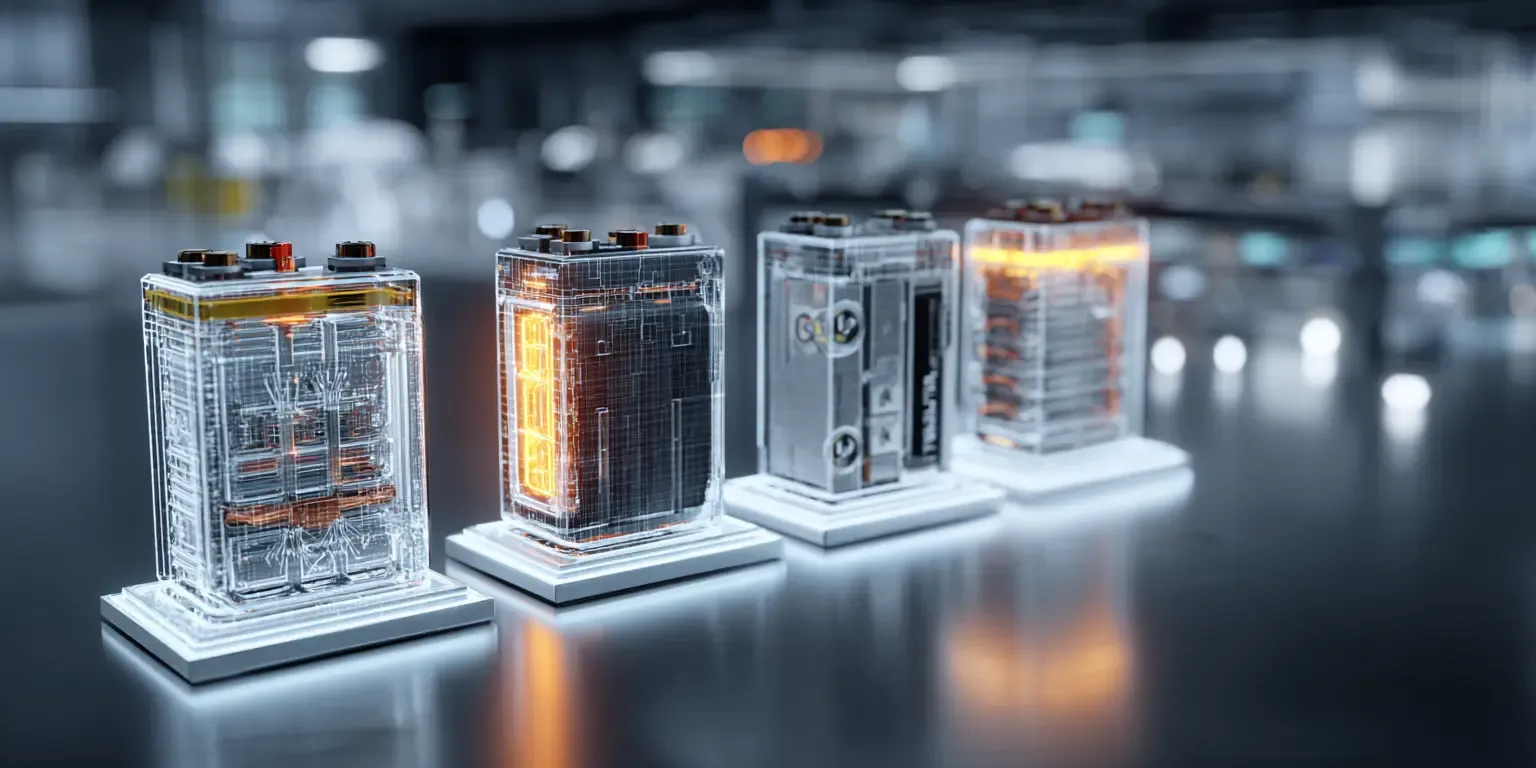
Key Highlights:
- Li-ion batteries are widely used in modern-day EVs.
- NMC, LFP and NCA are standard chemistries used in Li-ion batteries.
- Solid-state batteries could be the future of electric mobility.
- The use of lead-acid batteries is now limited to an auxiliary power source.
Types of Batteries Used in Electric Vehicles
There are five major types of batteries used in electric vehicles:
- Lead Acid
- Lithium-Ion (Li-On)
- Nickel-Metal Hybrid (NiMH)
- Nickel-Cadmium (NiCd) Batteries
- Solid State Batteries (SSB)
Lead Acid Batteries
Lead-acid batteries are the oldest type of rechargeable batteries. They were the most viable option before lithium-ion batteries became mainstream. They are cheaper to manufacture but have low energy density, which results in a faster discharge rate. They are also heavier in weight.
Currently, lead-acid batteries have limited usage in EVs, mainly restricted to e-rickshaws/e-cart and auxiliary power sources in electric cars and buses.
| Pros | Cons |
|---|---|
| Low manufacturing cost | Low energy density |
| Easy availability | Low battery lifespan |
| High surge current, making it suitable for starting engines | Heavier in weight |
| Well-established recycling infrastructure | Not ideal for long-range EVs |
Lithium-Ion (Li-On) Batteries
Lithium-ion batteries are the most commonly used batteries in modern-day EVs due to their high energy density, long lifespan and relatively light weight. These batteries can be tailored to deliver power, capacity, or durability, depending on the carmaker's objectives.
Key Chemistry of Li-Ion batteries:
- Nickel-Manganese-Cobalt (NMC): The most common Li-ion variant globally, NMC batteries balance high energy density and power output, making them ideal for passenger cars needing long range. They do, however, rely on supply-sensitive minerals like cobalt and nickel, raising cost and sustainability concerns.
- Lithium Iron Phosphate (LFP): LFP batteries offer excellent thermal stability, significantly longer lifespan and are less likely to catch fire. They are cost-effective, but their energy density is lower than that of NMC chemistry, resulting in a lower running range.
- Nickel-Cobalt-Aluminium (NCA): Due to their high cost, NCA chemistry is generally used for high-performance and luxury EVs due to their superior energy density and fast charging capabilities.
| Pros | Cons |
|---|---|
| Multiple battery chemistries available for different use cases | Requires a battery management system for safety |
| Excellent energy-to-weight ratio | Raw materials are costly, depending on the chemical type |
| Low self-discharge rate | Sensitive to high temperatures |
| Long cycle life | Higher upfront cost compared to some alternatives |
Nickel-Metal Hydride (NiMH) Batteries
Nickel-metal hydride (NiMH) batteries are popular in hybrid-electric vehicles, like the Toyota Prius. They are highly reliable and have greater resilience to extreme temperatures. However, they have a high self-discharge rate and are expensive to produce. That's why they are considered less viable for full-fledged EVs.
| Pros | Cons |
|---|---|
| Higher energy density than NiCd and lead-acid batteries | Lower energy density than Li-ion batteries |
| Safer and more environmentally friendly than NiCd | Lower efficiency |
| Highly reliable and durable | High self-discharge rate |
| Good cycle life | Bulkier in size |
Nickel-Cadmium (NiCd) Batteries
Nickel-cobalt batteries were once very popular in applications requiring robust performance under extreme conditions. They are highly durable and have the ability to deliver consistent power, but their usage has declined over the years due to environmental concerns over toxic cadmium. They are now largely overtaken by newer technologies like NiMH and Li-ion batteries.
| Pros | Cons |
|---|---|
| High life cycle and reliability in harsh conditions | Harmful to the environment |
| Higher discharge rate capability, making it ideal for heavy-duty & industrial EVs | Loses capacity if not fully discharged before recharging (memory effect) |
| Fast charging ability | More expensive than lead acid |
5. Solid State Batteries (SSB)
Solid-State Batteries (SSB) are primarily Li-ion batteries that replace liquid electrolyte with a solid one, reducing the chances of catching fire. They also promise a higher energy density, improved safety, rapid charging, and longer life span than Li-ion batteries, making them a perfect fit for EV applications. However, the tech is still in its experimental stages, and mass adoption is expected in the coming 2-5 years.
| Pros | Cons |
|---|---|
| Higher energy density than conventional Li-ion batteries | More expensive than Li-ion batteries |
| Minimal risk of fire or chemical leakage | Still in the development phase |
| Extended lifespan | More expensive than lead acid |
Other Emerging Chemistries
Lithium-Sulfur, Graphene, Magnesium-ion, and Zinc-Air batteries are several emerging battery technologies that could reshape the EV battery market in the coming decade.
Powering the Future of EVs
Electric vehicle batteries are evolving rapidly. Knowing the types, advantages, and drawbacks allows buyers and industry professionals to make better decisions, drive sustainable adoption, and prepare for the next big leap in e-mobility.
FAQs
1. Which battery type is most widely used in Indian EVs?
Most Indian EVs use NMC and LFP Li-ion batteries. The LFP is widely used in public transport vehicles and lower-cost passenger cars due to their balance of performance, cost and safety.
2. Why are lead-acid batteries not used in modern EVs?
Lead-acid batteries are heavy, have low energy density and offer a shorter range compared to Li-ion batteries.
3. Do hybrid vehicles use the same batteries as EVs?
Hybrids generally use smaller batteries, often NiMH, whereas EVs typically use Li-ion batteries.