DSG vs DCT Gearbox: Understand the Differences
Introduction
The automatic transmissions have undergone a significant transformation in India. Advanced automatic transmissions are driving the sales of buyers as they seek to alleviate urban congestion, high gas prices and performance demands for compact SUVs. Now, that is when DSG vs DCT comparisons come in handy.
Both systems offer quick shifts and more fuel-efficient performance than traditional automatics with torque converters. However, Indian traffic, heat, and long-term maintenance costs add a big element of difference to the ownership experience. When comparing turbo-petrol hatchbacks or mid-sized SUVs, knowing DSG vs DCT doesn't just help you get the facts, it can also impact reliability, service expenses and driving comfort.
What Does DCT/DSG Gearbox Mean?
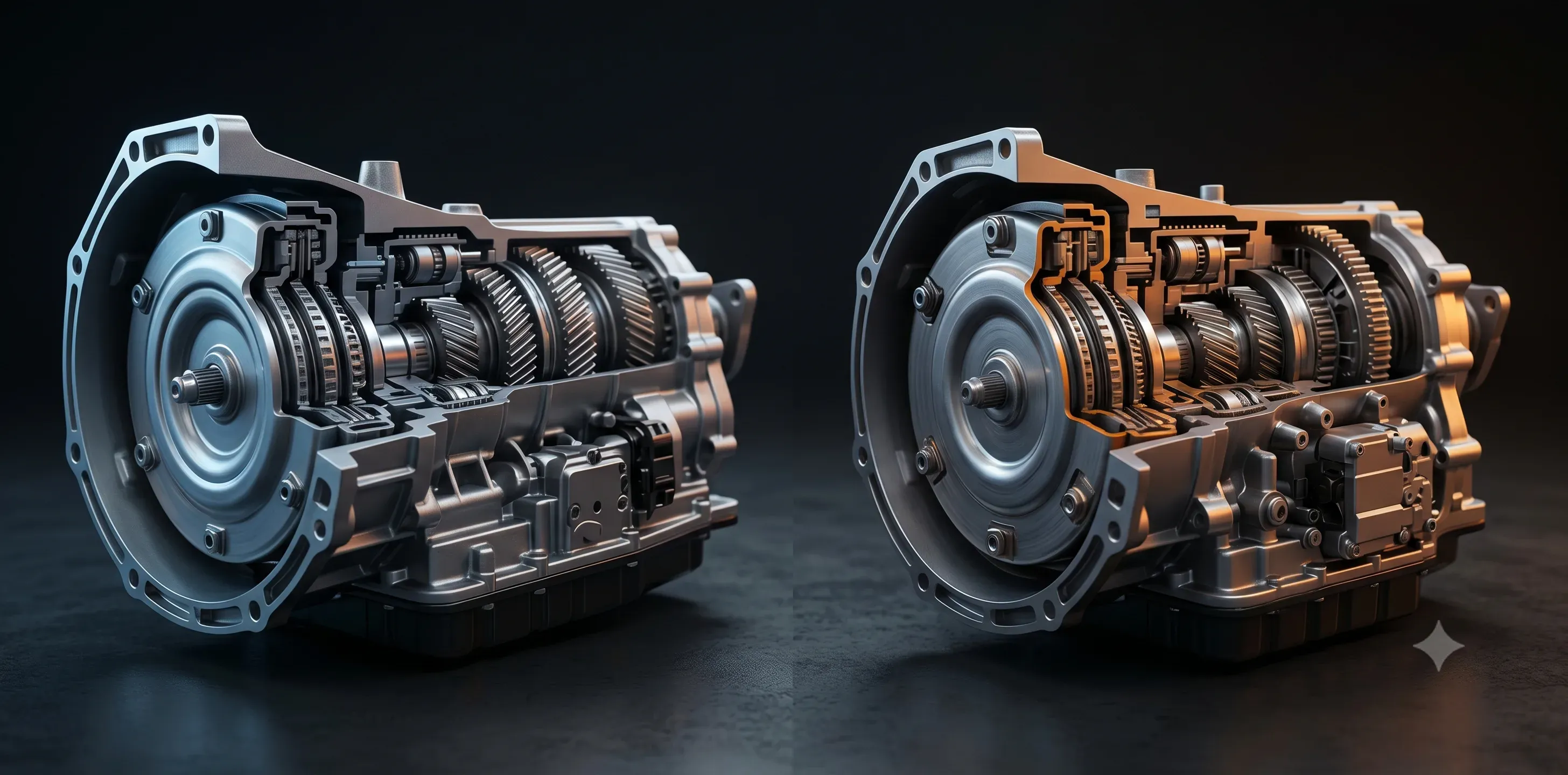
There are two different clutches in a Dual-Clutch Transmission (DCT): one for odd, one for even gears. The first clutch controls 1st, 3rd, 5th, and 7th gears, the second clutch controls 2nd, 4th and 6th.
DSG, short for Direct Shift Gearbox, is Volkswagen Group’s branded version of a dual-clutch transmission. So, anyone asking what is a DSG gearbox should understand this first: DSG is technically a type of DCT.
That’s why discussions around DSG vs DCT often create confusion. The architecture is fundamentally similar, but calibration, clutch type, cooling system, and reliability tuning vary by manufacturer.
How Does a DCT or DSG Gearbox Work?
Think of it like two manual gearboxes operating simultaneously. While one gear is engaged, the next gear remains pre-selected. The moment the system detects a shift requirement, the alternate clutch activates almost instantly.
The result:
● Minimal power interruption
● Faster acceleration
● Better throttle response
● Improved fuel economy
A senior service technician at a workshop once described a frustrated customer’s experience perfectly: “The car feels brilliant on open roads. Then peak-hour traffic starts, and suddenly the gearbox behaves like it’s tired.” That sums up the real-world Indian ownership reality behind many DSG vs DCT debates.
DCT vs DSG: Key Differences
| Feature | DCT | DSG |
|---|---|---|
| Full Form | Dual-Clutch Transmission | Direct Shift Gearbox |
| Manufacturer Usage | Hyundai, Kia, Tata | Volkswagen, Skoda |
| Clutch Type | Mostly dry clutch in mass-market cars | Often wet clutch in higher variants |
| Shift Speed | Very fast | Slightly sharper in performance tuning |
| Traffic Behaviour | Can feel jerky | Better calibration in many cases |
| Maintenance Cost | High | Typically, higher |
| Reliability | Depends on cooling and usage | Depends heavily on service quality |
| Performance Character | Balanced | Sportier feel |
Advantages of DCT and DSG Gearboxes
Faster Gear Shifts
The strongest argument in favour of DSG vs DCT technology is speed. Gear shifts happen within milliseconds, especially during aggressive acceleration. Turbo-petrol engines paired with these gearboxes feel noticeably sharper than CVT-equipped rivals.
Better Fuel Efficiency
Unlike older automatics, dual-clutch systems reduce power loss. In Indian conditions, several compact SUVs equipped with DCT or DSG units deliver mileage figures close to manual variants. That makes DSG vs DCT comparisons important for buyers balancing performance with running costs.
Sporty Driving Experience
Paddle shifters, rapid downshifts, and stronger mid-range pull create a more engaging driving experience. And that matters because buyers in India increasingly expect premium driving dynamics even in sub-₹20 lakh vehicles.
Disadvantages of DCT and DSG Gearboxes
Overheating Issues in Traffic
Here’s the catch. Continuous crawling traffic generates heat. Dry-clutch systems, especially in smaller turbo-petrol cars, may overheat during prolonged bumper-to-bumper driving.
This is where many DCT vs DSG ownership complaints originate.
Higher Repair Costs
Dual-clutch gearboxes are mechanically complex. Mechatronic units, clutch packs, and sensors aren’t cheap. Once warranty coverage ends, repairs can become expensive.
That’s why DSG gearbox vs DCT discussions frequently shift toward long-term maintenance rather than outright performance.
Jerky Low-Speed Performance
At parking speeds or during stop-go movement, some DCT systems hesitate slightly. The gearbox constantly engages and disengages clutches, mimicking manual transmission behaviour.
Popular DCT and DSG Cars in India
| Model | Gearbox Type | Engine |
|---|---|---|
| Hyundai i20 | 7-speed DCT | 1.0L Turbo Petrol |
| Hyundai Creta | 7-speed DCT | 1.5L Turbo Petrol |
| Kia Sonet | 7-speed DCT | 1.0L Turbo Petrol |
| Kia Seltos | 7-speed DCT | 1.5L Turbo Petrol |
| Tata Nexon | 7-speed DCT | 1.2L Turbo Petrol |
| Skoda Kushaq | 7-speed DSG | 1.5L TSI |
| Volkswagen Taigun | 7-speed DSG | 1.5L TSI |