Drum Brakes Vs. Disc Brakes: Comparison of Braking Systems for Cars
Key Highlights:
- Drum brakes are cheaper to make and have a longer life due to simpler construction.
- Disc brakes offer better braking efficiency at higher speeds, while also taking less time to cool down.
- Many entry-level cars still come with drum brakes at the rear to keep costs in check.
Components and Functionality
A more conventional method of braking used in cars, drum brakes have a pair of mechanically operating brake shoes and a master cylinder within a spinning drum. When the brake pedal is applied, it presses the master cylinder linked to it, which then presses the brake shoes outward against the inner surface of the drum, causing friction between them that slows the vehicle’s speed.
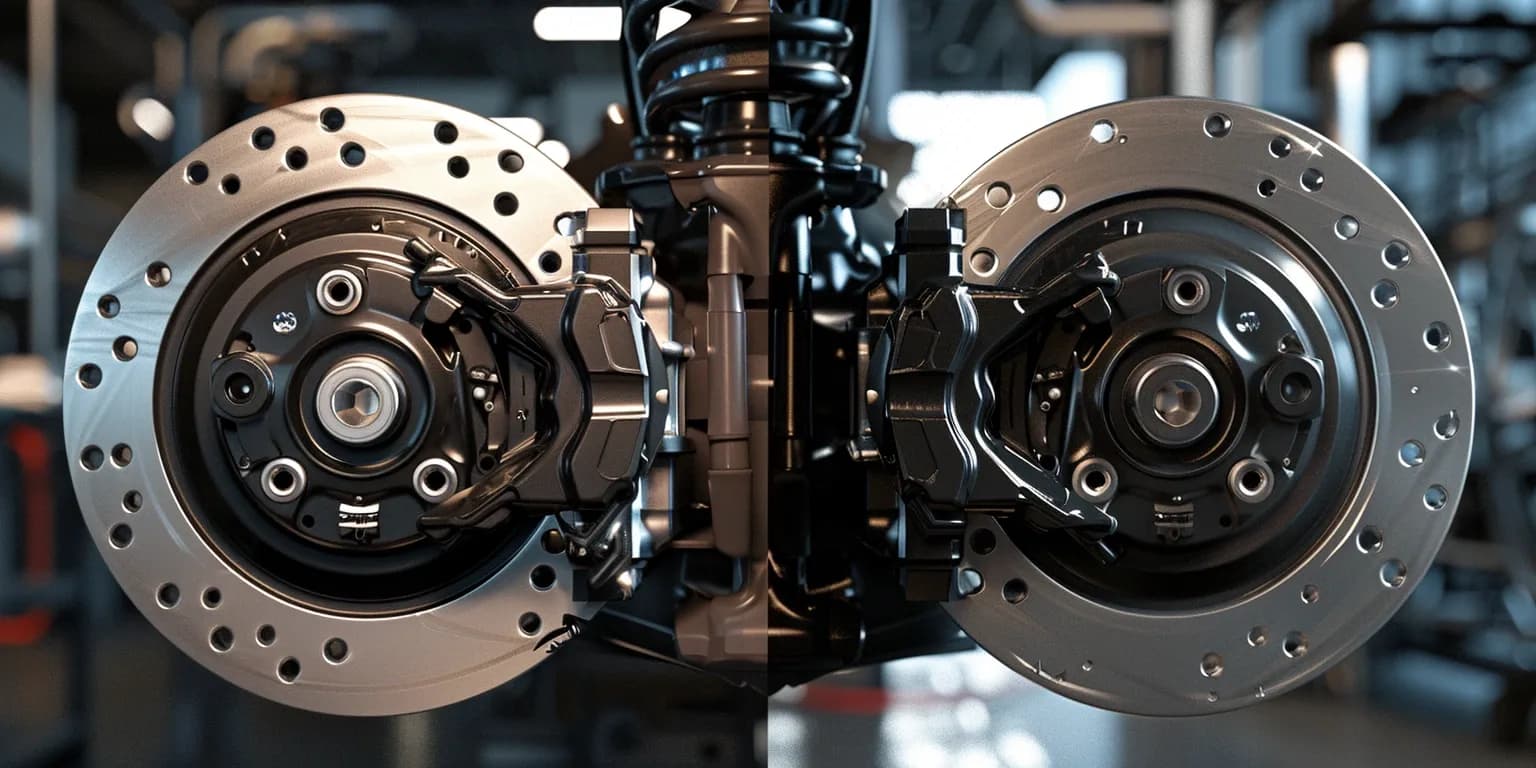
On the other hand, disc brakes are a relatively new technology, but are now widespread and found in all mass-market cars as well. Disc brakes use brake pads instead of brake shoes, which are clamped within a calliper over a spinning disc that’s attached to the wheel. This system uses a hydraulic system, which applies pressure on the brake pads through a piston whenever the brake pedal is applied, resulting in friction between the pads and disc that slows the vehicle.
Performance and Application
All passenger cars sold in India now come with disc brakes as standard for front wheels. However, while entry-level vehicles come equipped with drum brakes at the rear for better cost-effectiveness, more premium, luxury, and sports-oriented cars use disc brakes at the rear. All four-wheel disc brakes are now more commonly offered from premium compact SUVs and sedans onwards.
With its superior setup of components, disc brakes offer a more consistent and precise braking application, compared to drum brakes that are less effective at higher speeds.
Advantages and Disadvantages of Drum Brakes
Advantages
- Due to their simpler construction with fewer mechanical components, drum brakes last longer.
- Since they are cheaper to manufacture due to fewer complicated components, drum brakes are cost-effective, making them more preferable for entry-level cars.
- The fewer the complications in their construction, the less are the maintenance costs, with drum brakes offering reduced wear and better corrosion resistance.
Disadvantages
- In extreme driving conditions, such as sudden or frequent braking or driving down a slope, drum brakes heat up more frequently, as the entire system has little to no room for ventilation.
- In vehicles equipped with drum brakes, you have to press the brake pedal farther for more effective braking, as due to thermal expansion, the drum expands in sudden braking conditions.
- While driving over wet roads or during monsoons, the brake shoes or drum also get wet. As a result, friction is reduced between the shoes and drum, which in turn results in more braking force.
Advantages and Disadvantages of Disc Brakes
Advantages
- Due to a superior hydraulic technology, disc brakes have more effective braking force, especially at higher speeds, resulting in shorter stopping distances.
- With much of the disc exposed to the air, the frictional heat generated at the point of contact of brake pads and disc dissipates quickly. It improves the cooling efficiency of disc brakes during sudden or frequent braking applications.
- Unlike drum brakes, disc brakes perform effectively even in wet conditions, which makes them equally effective in all climatic conditions.
Disadvantages
- Brake pads and calipers in disc brake systems are more expensive than drum brake components due to better materials and more complex engineering.
- Disc brake pads generally wear out faster than brake shoes in drum systems, especially in stop-and-go traffic or during heavy braking. However, they’re also easier and quicker to replace.
- Due to sudden cooling of discs at higher temperatures or poor installation, there exists a possibility of warping of brake rotors, which can lead to brake failure at higher speeds.
To Sum it Up
With a simpler and lighter construction, drum brakes have a significant cost advantage over disc brakes, which is why they are considered a more cost-effective measure for entry-level cars built to a budget. However, as you move up in vehicle segments, better braking performance and safety become paramount, which is why the need for disc brakes becomes essential. With improved heat dissipation in instances of harsh or frequent braking and better braking performance in wet conditions, disc brakes offer better efficiency than drum brakes.
FAQs
1. Which is better, disc brakes or drum brakes?
Due to improved heat dissipation during harsh or frequent braking and excellent braking performance in wet conditions, disc brakes have better efficiency than drum brakes.
2. Why are drum brakes not used anymore?
It is not necessarily true. Drum brakes are still considered for rear wheels in entry-level cars built to a budget. However, for premium vehicles that deliver better power and torque, more responsive braking efficiency is required for the rear wheels, which is why rear wheel disc brakes are offered from premium compact SUVs and sedans onwards.
3. Which is safer: drum or disc brakes?
The use of hydraulics, equal braking efficiency in all climatic conditions and shorter braking distances make disc brakes safer than drum brakes.