What Is TPMS In Cars and Why Is It Important?
Key takeaways
● TPMS comes in two types: direct sensors that measure exact pressure, and indirect systems that infer it from wheel speed.
● A steady warning light usually means low pressure, while a flashing one often points to a sensor fault.
● Underinflated tyres raise blowout risk, hurt fuel efficiency, and wear unevenly.
● Cold weather alone can trigger a TPMS warning, even without an actual leak.
Introduction
Most drivers ignore a dashboard light until it becomes a real problem. That's risky with TPMS. TPMS in cars exists specifically to catch a slow leak before it turns into a roadside blowout. This guide explains what TPMS in cars is and how the system actually works. It also covers what to do the next time that light comes on.
Why Tyre Pressure Monitoring Matters?
Underinflated tyres cause more problems than most drivers realise.
● Increased blowout risk, especially at highway speed
● Reduced fuel efficiency, since rolling resistance rises
● Uneven, faster tyre wear over time
● Longer braking distances on wet roads
● Reduced handling precision in emergency manoeuvres
A working tyre pressure monitoring system catches these risks early, often before you'd notice anything by eye. Most drivers only spot a slow leak once it's already affecting handling. That's exactly the gap TPMS is designed to close.
How Does a Tyre Pressure System Work?
TPMS uses one of two different approaches to detect a problem.
Direct TPMS sensors
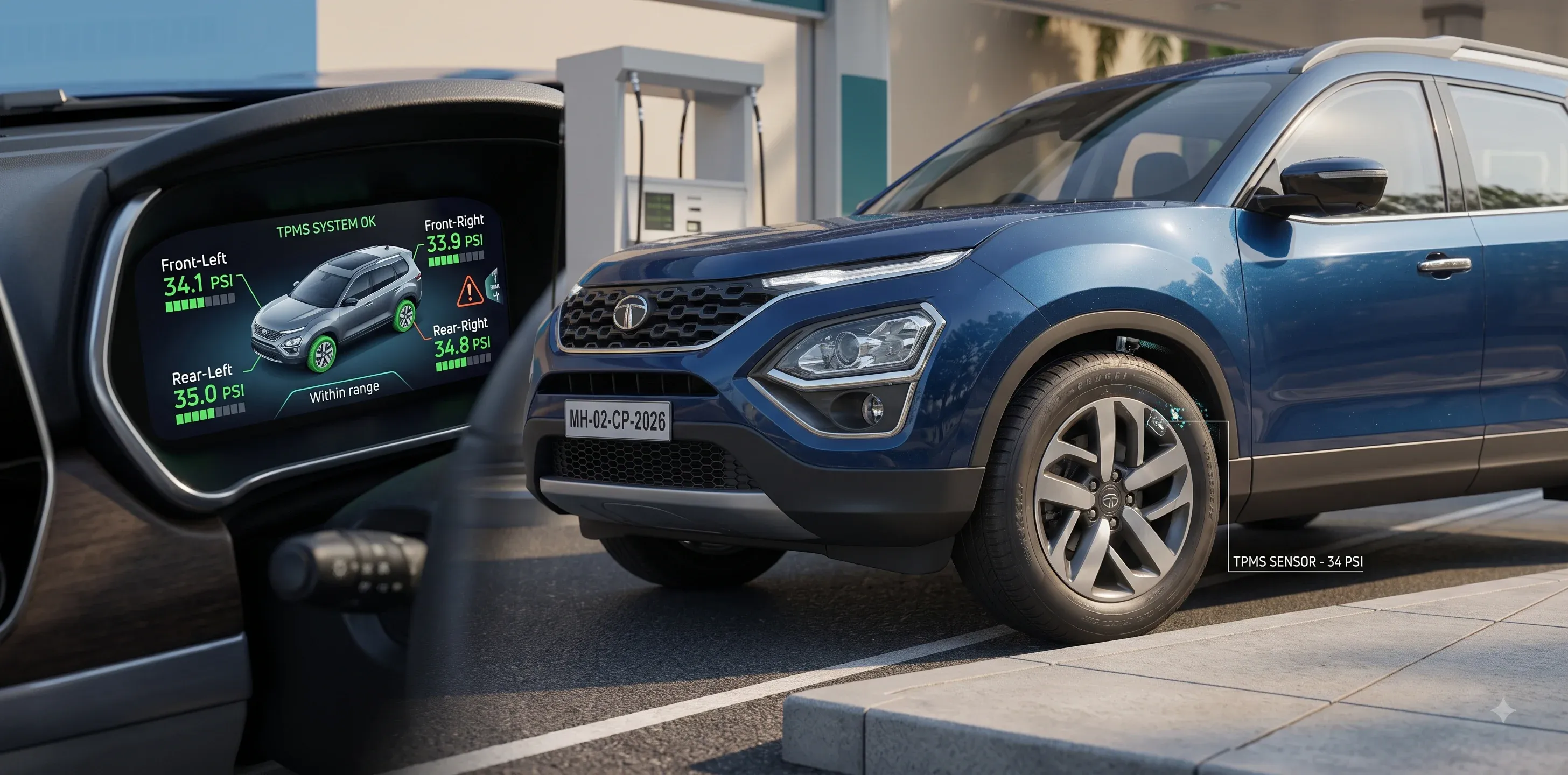
Direct systems mount a sensor inside each wheel, usually on the valve stem. It measures actual air pressure and sends that reading wirelessly to a central unit. This gives precise, individual PSI readings for every tyre. Most newer cars in India now use this more accurate approach.
Indirect TPMS systems
Indirect systems use your car's existing ABS wheel speed sensors instead. An underinflated tyre has a slightly smaller rolling radius, so it spins a touch faster than the others. The system flags that mismatch as a likely pressure issue. It's a cheaper approach, though less precise than direct sensors.
Also Read: Car Check Engine Light
What the TPMS Warning Light Tells You
The TPMS light doesn't always mean the same thing. Its exact pattern matters.
Low-pressure warning
A steady TPMS light usually means one or more tyres have dropped below the safe pressure threshold. Check and inflate them as soon as you reasonably can. Don't wait for the next scheduled service to deal with it.
Sensor or system fault warning
A flashing light, or one with a different pattern, usually points to a sensor or system fault. It's not necessarily a pressure issue at all. That needs a proper inspection rather than just adding air.
Benefits of the TPMS System
TPMS meaningfully reduces blowout and skid risk by catching pressure loss early. It also helps fuel efficiency and tyre wear, since correctly inflated tyres roll more efficiently. Perhaps most usefully, it catches a slow leak long before it becomes a sudden, dangerous flat. That early warning alone can prevent a stressful roadside situation.
Also Read: Small Cars in India
What to Do When the TPMS Light Comes On
Check every tyre's pressure, including the spare if your car has one. Compare each reading against the recommended PSI on the door jamb sticker. Inflate any low tyres to spec. If the light stays on after correcting pressure, get the system checked at a service centre rather than ignoring it. A genuine sensor fault won't fix itself, no matter how many times you top up air.
Conclusion
So, what is TPMS in cars, in plain terms? A simple safety system that catches a dangerous tyre problem before you'd notice it yourself. Correct tyre pressure improves fuel economy, extends tyre life, and reduces uneven wear, helping you get more kilometres from every set of tyres.
Treat the light as an instruction, not a suggestion, and check your tyres the same day it appears. A five-minute pressure check now beats a roadside blowout later. It's one of the cheapest habits you can build as a car owner.
FAQs
Can you drive with the TPMS light on?
You can drive short distances cautiously, but check your tyre pressure as soon as possible rather than ignoring it.
Will TPMS warn you about overinflated tyres?
Yes, most modern systems flag overinflation too, not just low pressure. Both extremes affect handling and wear.
Does every car have a TPMS reset button?
No. Some cars need a manual relearn procedure or a reset through the infotainment menu instead. Check your owner's manual if you're unsure which applies.
Do TPMS sensors need to be replaced with new tyres?
Not always. Sensors usually transfer to new tyres, though they may need replacing if damaged or old. Ask your fitter to check them during a tyre change.
Can cold weather trigger a TPMS warning?
Yes. Tyre pressure naturally drops in cold weather, which can trigger the warning even without a leak. It usually settles once you've topped up pressure for the season.
Can TPMS detect a slow leak?
Typically, yes. Once the pressure drop crosses the warning threshold, the system will alert you. It just won't tell you exactly where the leak is coming from.