What is a Car Chassis & Types of Chassis Frames
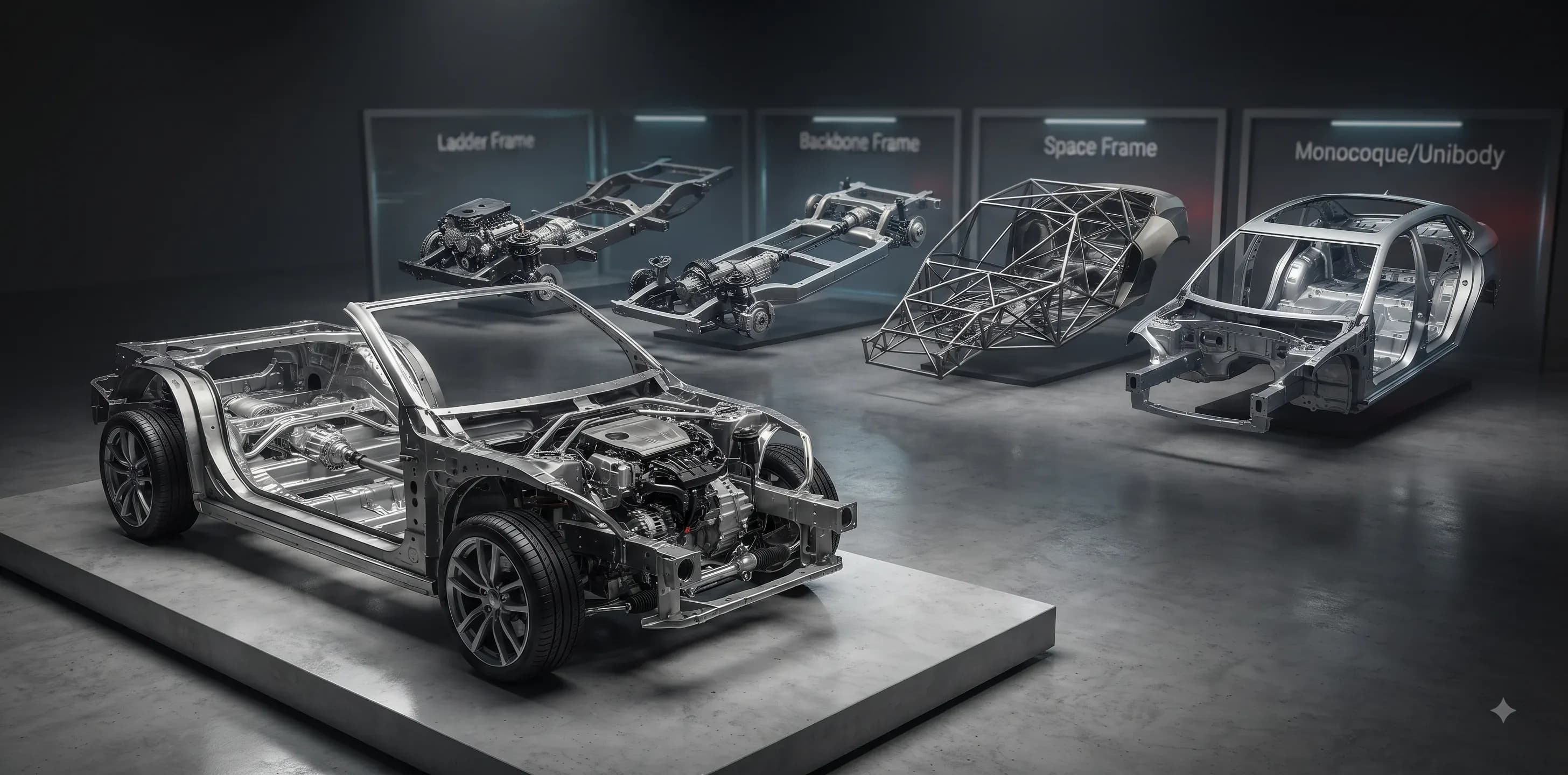
Key takeaways
● Most modern cars use a monocoque chassis, where the body and frame are one welded structure.
● Trucks and body-on-frame SUVs still use a separate ladder frame for extra strength.
● A damaged chassis can sometimes be repaired, but severe damage often means the car gets written off.
● Your car's chassis number is usually stamped near the engine bay or printed on the RC.
Introduction
Pop the hood on any car, and you won't actually see its most important structural part. That's because the chassis sits underneath everything else, quietly holding the whole car together. Knowing what a car chassis helps explain why two similar-looking cars can behave so differently in a crash.
If you've ever asked what the chassis of a car is, the short answer is its structural frame. Everything else gets built around it. This guide covers what it actually does, the main types you'll come across, and how to find your chassis number.
What Is a Car Chassis?
A car chassis is the structural skeleton a vehicle is built around. Everything else gets mounted onto it, directly or indirectly.
In older designs, the chassis was a separate piece from the body. In most modern cars, they're welded into one single structure around which stead. Some buyers think of this as what a chassis is in automobile terms, but it's the same structural frame either way.
What the Chassis Actually Does
The chassis quietly handles four key jobs, even though most drivers never think about it.
Structural support
It bears the weight of the engine, passengers, and cargo, keeping the whole car rigid. Without it, the body alone couldn't hold its shape under real-world stress.
Mounting key vehicle systems
The engine, suspension, steering, and transmission all bolt onto the chassis. It's the common anchor point that holds every major system in place.
Crash load management
A well-designed chassis spreads crash energy away from the cabin. Crumple zones built into it absorb force so passengers feel less of the impact.
Ride and handling behavior
A stiffer chassis flexes less, which sharpens cornering and reduces unwanted body roll. This is one reason sportier cars often feel noticeably more responsive.
Also Read: CNG vs Petrol Car
Types of Chassis Frames
Not every car uses the same chassis design, and the type fitted shapes how the car drives and crashes.
Monocoque construction
Most passenger cars today use a monocoque chassis. The body panels and structural frame are welded into a single unit. It's lighter than older designs, which helps fuel efficiency and handling. Monocoque construction also allows engineers to build in crumple zones more precisely, improving crash safety. The trade-off is that major structural damage is harder, and pricier, to repair properly.
Ladder frame design
A ladder frame uses two parallel rails connected by crossmembers, with the body mounted on top separately. It's the classic choice for trucks, off-roaders, and body-on-frame SUVs like the Fortuner or Scorpio. This design handles heavy loads and towing exceptionally well. The downside is a stiffer, less car-like ride on regular roads.
Backbone layout
A backbone chassis runs a single strong tunnel down the car's centre, connecting the front and rear sections. Body panels attach to it but don't carry structural load themselves. It's a rare design today, mostly seen on niche sports cars rather than everyday vehicles. The approach keeps weight low while staying impressively rigid.
Tubular structure
A tubular space frame is built from a network of welded metal tubes, forming a strong, lightweight skeleton. You'll mostly find this in race cars, kit cars, or very limited-production performance models. It offers excellent strength for its weight, but it's expensive and slow to mass-produce. That's exactly why it rarely appears outside motorsport and niche builds.
Also Read: What is RPM
Conclusion: What Is a Car Chassis, in Short
So, what is a car chassis in everyday terms? It's the structural backbone your entire car is built around, even if you never see it directly.
Whether your car uses a monocoque or a separate ladder frame affects its weight and ride. It also affects repair costs after an accident. Next time you're comparing two cars, it's worth checking which chassis type each one uses.
FAQs
Is the chassis the same as the car body?
Not quite. The chassis is the structural frame, while the body is the outer shell. In monocoque cars, though, the two are welded together.
Do all cars have a separate frame?
No. Most modern cars use a monocoque design instead. Only body-on-frame vehicles like trucks and some SUVs keep a separate frame.
Can a damaged chassis be repaired?
Sometimes. Minor damage can often be straightened by a specialist, but severe structural damage usually means the car is written off.
Why are monocoque chassis common in modern cars?
They're lighter, cheaper to mass-produce, and allow more precise crumple zones, which improves both fuel efficiency and crash safety.
Are electric car chassis different from petrol car chassis?
Yes. Many EVs use a flat, skateboard-style platform with the battery pack mounted low in the floor. That's a dramatic improvement from petrol cars.
Where can you usually find a car chassis number?
If you're searching for what a car chassis number is and where to find yours, start near the engine bay. It's also stamped inside the driver's door jamb. You'll find it printed on your car's RC, too.