What is a Car Radiator and How Does it Work?
Introduction
Modern engines generate enormous heat. In Indian driving conditions, bumper-to-bumper city traffic, long highway runs in 42°C summer temperatures, steep hill climbs with full passenger load, thermal management becomes critical. That’s where the radiator steps in. Understanding what is car radiator technology isn't just for mechanics anymore; it directly affects engine longevity, fuel efficiency, maintenance costs, and even resale value.
A failed cooling system can trigger warped cylinder heads, blown gaskets, and repair bills crossing Rs. 50,000 in premium cars. The reality is simple: ignoring radiator health often becomes far more expensive than maintaining it.
What is a Car Radiator?
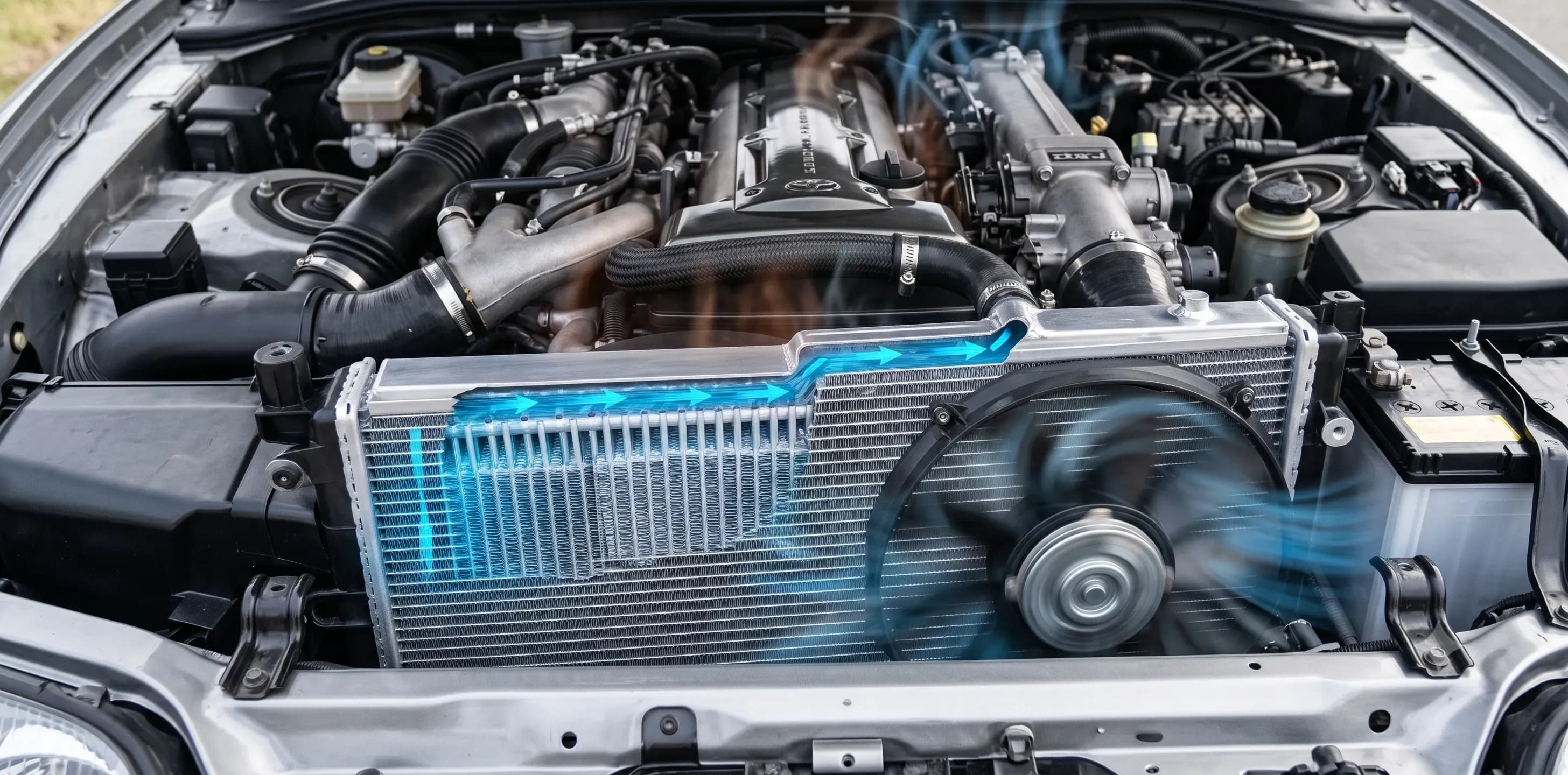
At its core, the radiator is a heat exchanger designed to regulate engine temperature. Anyone wondering “what is a car radiator” functionality should think of it as the vehicle’s temperature control centre. Coolant absorbs heat from the engine and travels through the radiator, where excess heat is released into the air.
This explains what is a radiator in a car and why it remains essential across petrol, diesel, hybrid, and even certain EV thermal management systems.
The use of a radiator in car engineering goes beyond preventing overheating. Stable engine temperatures improve combustion efficiency, protect lubricating oil quality, and reduce wear on internal components. Without proper cooling, modern turbocharged engines common in India’s SUV market simply wouldn't survive prolonged operation.
How Does a Car Radiator Work?
Understanding what is car radiator operation is requires following the coolant cycle step by step.
Hot Coolant Flows into the Radiator
This engine coolant carries away combustion heat and carries it to the radiator via the hoses. A thermostat regulates the flow of coolant according to the engine temperature, and a water pump circulates the coolant.
In urban areas such as Delhi, Mumbai, Chennai or Bengaluru, coolant temperatures can rise rapidly during high traffic times, hitting 95°C. Only then does the radiator begin to work aggressively.
Heat Dissipation Process
Inside the radiator core, thin metal fins maximise surface area. Air passing through these fins removes heat from the coolant. At higher speeds, natural airflow handles cooling efficiently. But during idling or slow-moving traffic, electric cooling fans activate automatically.
A service technician at a multi-brand workshop once described the summer breakdown season bluntly: “Half the overheating complaints come from owners who skipped coolant replacement for years.” And that's believable.
The car radiator's function depends heavily on uninterrupted airflow and healthy coolant circulation.
Cooled Coolant Returns to the Engine
After cooling, the coolant flows back into the engine block to absorb heat again. This continuous loop keeps operating temperatures stable and prevents thermal stress on engine components.
That cycle defines what is car radiator engineering in practical terms: constant heat transfer under changing driving conditions.
Components of a Car Radiator
Radiator Core
The core contains narrow tubes and cooling fins. Aluminium cores dominate today’s market because they’re lightweight, corrosion-resistant, and dissipate heat efficiently.
Radiator Tanks
Positioned at either side or top and bottom of the radiator, these tanks store and channel coolant flow. Plastic end tanks are common in budget-friendly Indian vehicles.
Cooling Fan
The cooling fan forces air through the radiator when the vehicle speed isn't high enough. Fan motor failure remains one of the biggest reasons behind urban overheating complaints.
Overflow Tank
Excess coolant moves into the overflow reservoir when temperatures rise. Once the engine cools, coolant returns to the radiator automatically.
Mounts
Radiator mounts eliminate vibration and protect against structural stress. Eventually, poor mounts can lead to cracks and coolant leakage.
Put all these together, and you will have an understanding of what car radiator construction is and why any minor problem can cause major cooling system issues.
How to Maintain Your Car Radiator
Ignoring cooling system maintenance often leads to expensive engine repairs.
Flush Radiator Coolant Regularly
Coolant loses effectiveness over time. Most manufacturers recommend replacement every 40,000–60,000 km, depending on coolant type and driving conditions.
Clean Radiator Fins
Dust, insects, and mud block airflow through the fins. The Indian monsoon drives debris accumulation significantly.
Check Hoses and Clamps
Rubber hoses degrade due to heat cycles. Small cracks or loose clamps can create coolant leaks that escalate rapidly.
Inspect Cooling Fan Operation
Cooling fan malfunction becomes obvious during long idle periods with rising temperature gauges. Immediate diagnosis is critical.
Anyone researching what car radiator reliability is should understand this: maintenance matters more than brand name alone.
Factors to Consider When Buying a Car Radiator
Material Quality
Aluminium radiators offer superior cooling efficiency and corrosion resistance compared to older copper-brass designs.
Cooling Capacity
High-performance engines and turbocharged SUVs demand greater cooling capacity. Oversized radiators are often preferred for demanding driving environments.
Size and Compatibility
Improper fitment affects airflow, hose alignment, and mounting stability. Compatibility with OEM specifications is non-negotiable.
Warranty Coverage
A reliable radiator should include manufacturer warranty support against leakage or structural defects.
Before replacement, buyers should clearly understand what car radiator compatibility is for their specific vehicle model.
Conclusion
Engine performance depends heavily on thermal stability. And despite being overlooked during routine ownership discussions, the radiator remains one of the most financially important components in any vehicle. Understanding what car radiator technology is helps car owners avoid overheating, reduce long-term maintenance costs, and protect engine health in demanding Indian conditions.
FAQs
What causes a car radiator to overheat?
Low coolant levels, clogged fins, faulty fans, leaking hoses, or thermostat failure are the most common causes.
Can I drive with a leaking radiator?
Short-distance driving may be possible temporarily, but continued operation risks severe engine damage.
What coolant is used in car radiators?
Most modern Indian cars use ethylene glycol-based coolant mixed with distilled water.
How much does radiator replacement cost in India?
Replacement typically ranges from Rs. 4,000 to Rs. 25,000, depending on vehicle segment and radiator type.
Is the car radiator repairable, or do I need to replace it?
Minor leaks and hose issues are repairable. Cracked cores or severe corrosion usually require replacement.
How many litres of capacity does a car radiator hold?
Most passenger cars in India hold between 4 and 10 litres of coolant, depending on engine size and cooling system design.