What is a Car Axle? Types, Functions & How It Works
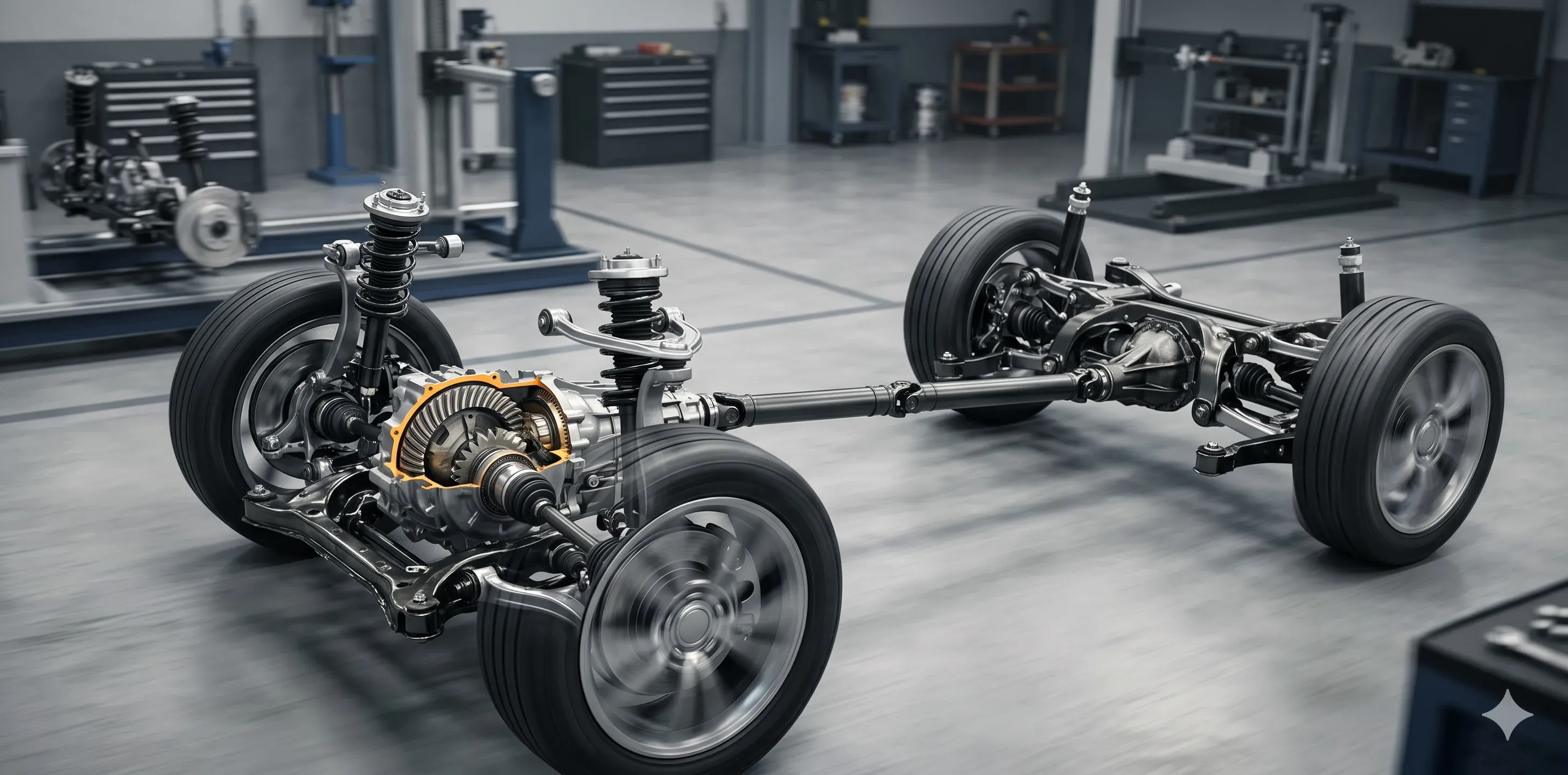
Introduction
Every moving car depends on hundreds of mechanical parts working in sync. Yet few components handle as much pressure, load, and rotational force as the axle. Ask any experienced workshop technician dealing with Indian road conditions; deep potholes, overloaded SUVs, abrupt speed breakers; and axle wear becomes a recurring issue surprisingly fast.
That’s why understanding what is car axle matters beyond textbook engineering. A damaged axle doesn’t just affect ride quality. This can lead to increased tyre wear, stress on suspension elements, affect braking stability and contribute to long-term maintenance expenses.
For buyers comparing hatchbacks, SUVs, or EVs in India’s evolving automotive market, knowing what is car axle and how it functions helps decode vehicle durability, drivetrain design, and ownership expenses. Especially now, when heavier battery-powered vehicles and high-torque turbo petrol engines are becoming common across segments.
What is a Car Axle?
Simply put, what is car axle refers to the central shaft that connects and supports the wheels while transferring rotational force from the engine to the tyres. In basic terms, it’s the structural and mechanical link between the drivetrain and the road.
Many first-time buyers asking what is an axle on a car assume it’s only a rod beneath the vehicle. The reality is more technical. An axle in automobile engineering carries vehicle weight, absorbs stress, and enables controlled wheel movement under acceleration and braking.
Depending on drivetrain layout, cars may use:
● Front axles
● Rear axles
● Stub axles
And modern vehicles often combine axle assemblies with CV joints, differential systems, bearings, and suspension geometry for smoother handling.
How Does a Car Axle Work?
Here’s the catch. Axles don’t operate independently.
When the engine generates torque, the transmission sends power toward the differential. From there, the axle shafts rotate the wheels. In front-wheel-drive vehicles common in India; such as compact SUVs and premium hatchbacks; the front axle handles both steering and power delivery.
Understanding what is car axle becomes easier when viewed as a rotating load-bearing shaft under continuous stress. During cornering, braking, or driving over uneven surfaces, the axle absorbs twisting force while maintaining wheel alignment.
A senior service advisor at a Chennai dealership once described a common issue involving a heavily loaded MPV used for interstate trips. The customer complained about vibration above 80 km/h. The culprit? A bent rear axle caused by repeated impact from crater-sized highway potholes. Small component. Expensive consequences.
That’s the operational reality behind what is an axle on a car.
Functions of Car Axle
Transmit Engine Torque
The primary role of an axle in automobile systems is transferring engine power to the wheels. Without axle rotation, the vehicle simply won’t move.
Support Vehicle Weight
Axles carry the combined weight of passengers, cargo, fuel, and structural load. SUVs and pickup vehicles generally use stronger axle assemblies due to higher load demands.
Absorb Road and Driveline Stress
Indian roads aren’t forgiving. Axles constantly absorb vibration, impact force, and driveline shock generated during acceleration or sudden braking.
Help Wheels Rotate Smoothly
Bearings integrated with axle systems reduce friction and ensure consistent wheel rotation. That directly affects ride comfort and fuel efficiency.
Support Brakes and Wheel Mounting
Brake assemblies and wheel hubs are mounted around axle structures. That’s another reason understanding what is car axle matters for overall vehicle safety.
Also Read: Best Cars Under 20 Lakhs
Types of Car Axles
Front Axle
The front axle supports steering and front suspension components. In front-wheel-drive vehicles, it also delivers engine power.
Buyers researching what is an axle on a car often encounter CV axles here, especially in modern crossovers and EVs.
Rear Axle
Rear axles transfer power in rear-wheel-drive vehicles and support rear-wheel alignment. Heavy SUVs and commercial vehicles rely heavily on reinforced rear axle designs.
Stub Axle
A stub axle connects with the front wheels and helps maintains steering movement. It’s smaller but critical for wheel stability and handling precision.
Different Components of a Car Axle
A typical axle in automobile systems includes:
● Axle shaft
● CV joints
● Differential
● Bearings
● Wheel hubs
● Housing assembly
Each component affects durability, steering feel, and long-term maintenance cost.
How to Choose the Right Axle for Your Car
The reality is, axle selection isn’t only about compatibility. Driving habits matter.
Consider these factors:
● Vehicle type and weight
● Daily load conditions
● Road quality
● Drivetrain layout
● OEM versus aftermarket parts
● Warranty and insurance implications
For example, EVs generate instant torque. That places greater stress on axle assemblies compared to naturally aspirated petrol hatchbacks. Understanding what is car axle helps owners avoid low-quality replacement parts that may fail prematurely.
And yes, cheaper aftermarket axles sometimes create vibration, steering pull, or uneven tyre wear within months.
Conclusion
Modern vehicles may showcase giant touchscreens, ADAS systems, and connected tech. But mechanical fundamentals still decide ownership quality. Understanding what is car axle gives car owners a clearer view of drivetrain reliability, maintenance planning, and long-term running costs.
From urban commuters to premium SUVs tackling rough highways, the axle remains one of the hardest-working components beneath every vehicle.
FAQs
What are the symptoms of a damaged axle?
Common signs include vibration while driving, clicking noises during turns, grease leakage near wheels, uneven tyre wear, and difficulty steering.
What is the cost of car axle?
Axle replacement costs in India typically range between Rs. 4,000 and Rs. 35,000 depending on vehicle segment, drivetrain configuration, and OEM part pricing. Luxury vehicle axles frequently see authorised workshop bills breaching Rs. 1,00,000.
What is the difference between front axle and rear axle?
The front axle primarily supports steering and, in many vehicles, power delivery. The rear axle mainly handles load support and rear-wheel power transmission.
How often should car axles be inspected?
Experts recommend inspecting axle assemblies every 20,000 to 30,000 kilometres, especially in vehicles frequently driven on rough roads or carrying heavy loads.