Moonroof Vs. Sunroof: What’s the Real Difference?
Highlights:
- Difference between a sunroof and a moonroof
- How does a sun and moon roof work?
- Utility of sun and moon roofs
- Drawbacks of the sunroof and the moonroof
The central idea of a moonroof or sunroof is to make the cabin more airy and filled with light. Both are essentially elements of the interior of a car with the primary task of putting the sky in your line of sight. However, the mechanism and build of the two types of roofs are what differentiate them from each other. If we put aside the marketing jingo, today’s cars use the word “sunroof” for what technically is a glass moonroof.
Moonroof Vs. Sunroof
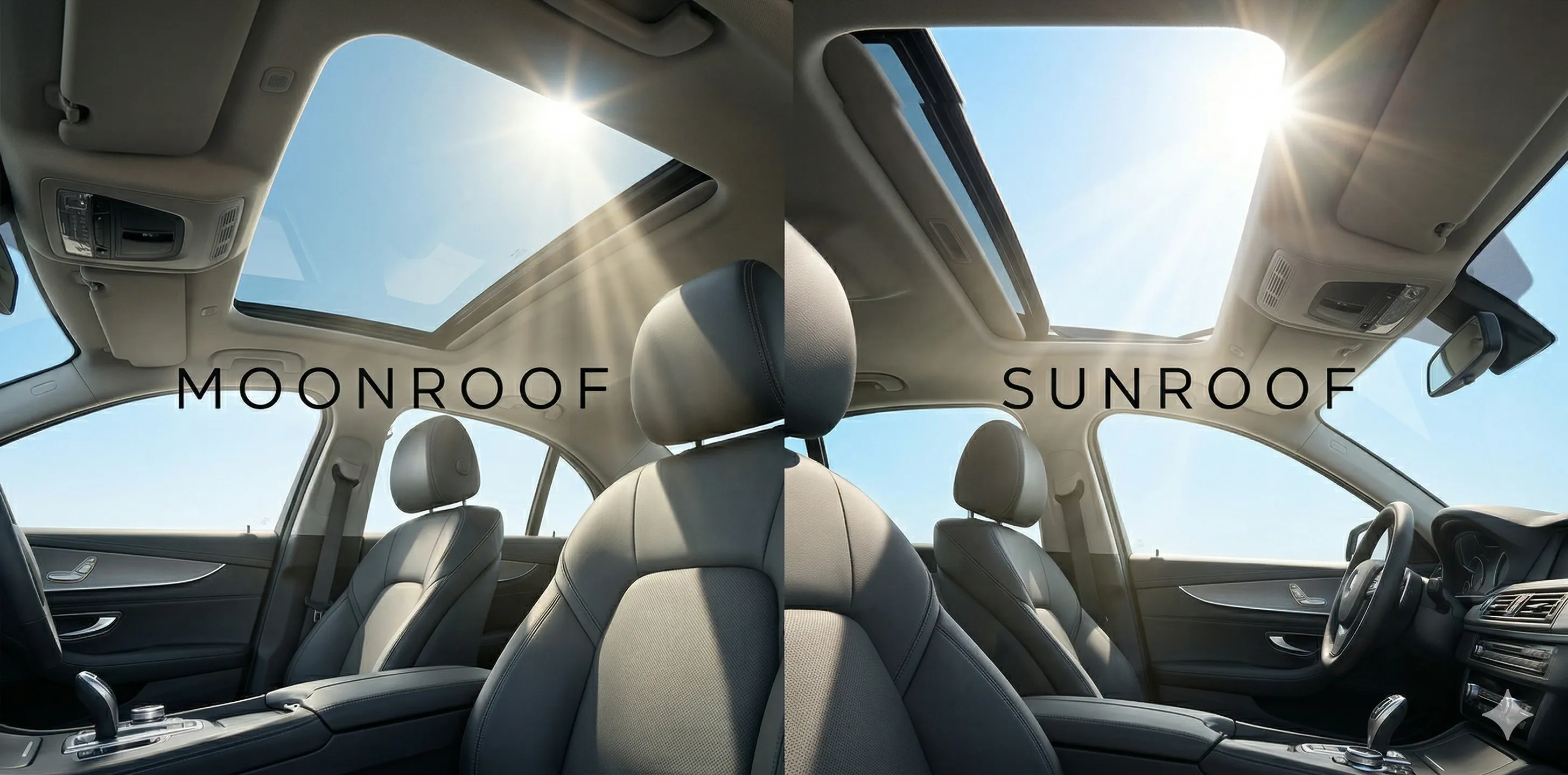
According to the traditional definition of a sunroof, it is a solid metal panel built into the roof that can be slid or tilted to let in light and air. When shut, the panel blends into the bodywork, and there is no opacity, so you couldn’t see through it at all.
Whereas a moonroof doesn’t have the solid panel – instead, it has tinted glass, which lets in light and makes the cabin feel bright even when it is closed. It is just like a window in the ceiling. A moonroof also has a fabric shade that lets you control the amount of light you want to let in. If it’s too bright outside, you can pull the shade and make it darker.
Mechanism Explained
Mechanically, they are both just panels. Panels that have been cut into the roof and can be tilted up, slid back, or a bit of both. In older cars, a sunroof had a simple mechanism where you pop up the panel or push the sliding plate manually or with a basic motor. Back then, the job of the sunroof was more about ventilation than views.
However, moonroofs are more for the drama. They have little to do with convenience and more to do with aesthetics. Moonroofs are almost always powered and made of tinted glass. They are often designed to retract between the roof and headliner or slide over the top. They come paired with an interior blind to help adjust the harshness of light.
Also Read: How to Change a Flat Tire
Facts on Sunroof & Moonroof
A typical traditional sunroof is meant to blend into the car’s roof when closed. It usually matches the paint and lines of the car to ensure the roof looks clean. Sunroofs are meant to be more functional in nature, and their key role is to make the interiors brighter and airier. They are the perfect companion for long drives in good weather.
On the other hand, a moonroof’s key task is to stand out and be noticed. It is made with tinted or darkened glass; the panel contrasts with the body and makes the silhouette look more upscale. It floods the cabin with light and makes it look good in marketing material. A moonroof, often sold as a ‘panoramic sunroof’, is one of the most popular features of cars in India today. Every carmaker has to have one to be considered worthy by the customer.
Confusing Communication
The communication or the marketing language around any movable glass panel on the roof is to call it a ‘moonroof’. Some carmakers argue that the term sunroof is actually the blanket term, and moonroof is just a glass-panel subcategory.
But it is for the buyers to understand the nuances and make informed decisions on the two types of roofs. Next time, when you go to a showroom to check out a car, here are a few questions you can ask the sales representative:
a) Is the panel glass or metal?
b) Does it tilt, slide, or stay fixed?
c) What is the size? Does it have a proper shade to keep out the heat?
The answers to these questions will help you understand whether the movable panel on the roof is a sunroof or a moonroof. So, judge wisely.
Disadvantages to Know
Both sunroofs and moonroofs come with their own set of compromises. For all their aesthetic appeal, they add weight to the top of the vehicle. This type of weight can subtly affect handling and, in some cases, fuel efficiency. All the moving parts in the roof system need to be maintained and cleaned regularly. The tracks, motors, seals, and drains all add to the complexity of the car.
In hot climates such as India, a large glass roof can make the cabin hot. Having too much light filtering in can also cause the cabin to heat up and make the air-conditioning less effective. Also, if the mechanism of the sunroof or moonroof falters, replacing it is an additional cost.
FAQs
1. Which of the two is better for Indian conditions – sunroof or moonroof?
If your idea is to go for form over function, then a moonroof usually feels more premium. The glass panel is designed to brighten the cabin and give it a more open feel. Its look is upmarket overall, so it can be a good choice for those who like a good-looking roof. But do remember that the glass will let more heat and glare inside during hotter months, and this is when a good sliding shade and quality tint come in handy.
2. Do sunroofs and moonroofs reduce safety in a crash?
As a design feature, both sunroof and moonroof are engineered to meet rollover and crash standards. Car makers often use reinforced structures around the opening to make them durable and withstand a crash. The dangers in these roofs often occur not from their design but from their usage. Standing or leaning out of an open roof can be very dangerous; it greatly increases ejection risk, and in the case of a collision, it can be fatal. Leaning out of a sunroof or moonroof is often illegal.
3. How to maintain a sunroof or moonroof?
To prevent any water leakage or smell inside the cabin, clean the rubber seals and drainage channels regularly. Make sure you open and close the roof panels from time to time to prevent them from getting stuck. Always have it inspected during routine service to avoid any costly repairs later.