What is DSG in Cars? Meaning, Working & Advantages
Key takeaways
● DSG uses two clutches, so gear changes happen with almost no power interruption.
● A failed mechatronic unit is the costliest DSG repair, often tens of thousands of rupees.
● DSG can improve fuel efficiency over older automatics, depending on the model.
● Volkswagen and Skoda are the brands most associated with DSG in India.
Introduction
Stuck in bumper-to-bumper traffic, the car jerks forward instead of gliding. That's usually the first complaint about a gearbox fitted to several Volkswagen and Skoda cars sold in India.
It's called DSG. Maybe you're shopping for a car with one, or you already own one. Either way, you've probably typed what is DSG in cars into Google.
DSG stands for Direct Shift Gearbox, a dual-clutch transmission that lines up gears before you need them. This article breaks down how DSG works, what it's like to own, and whether it's worth choosing over the alternatives.
What is DSG in Cars?
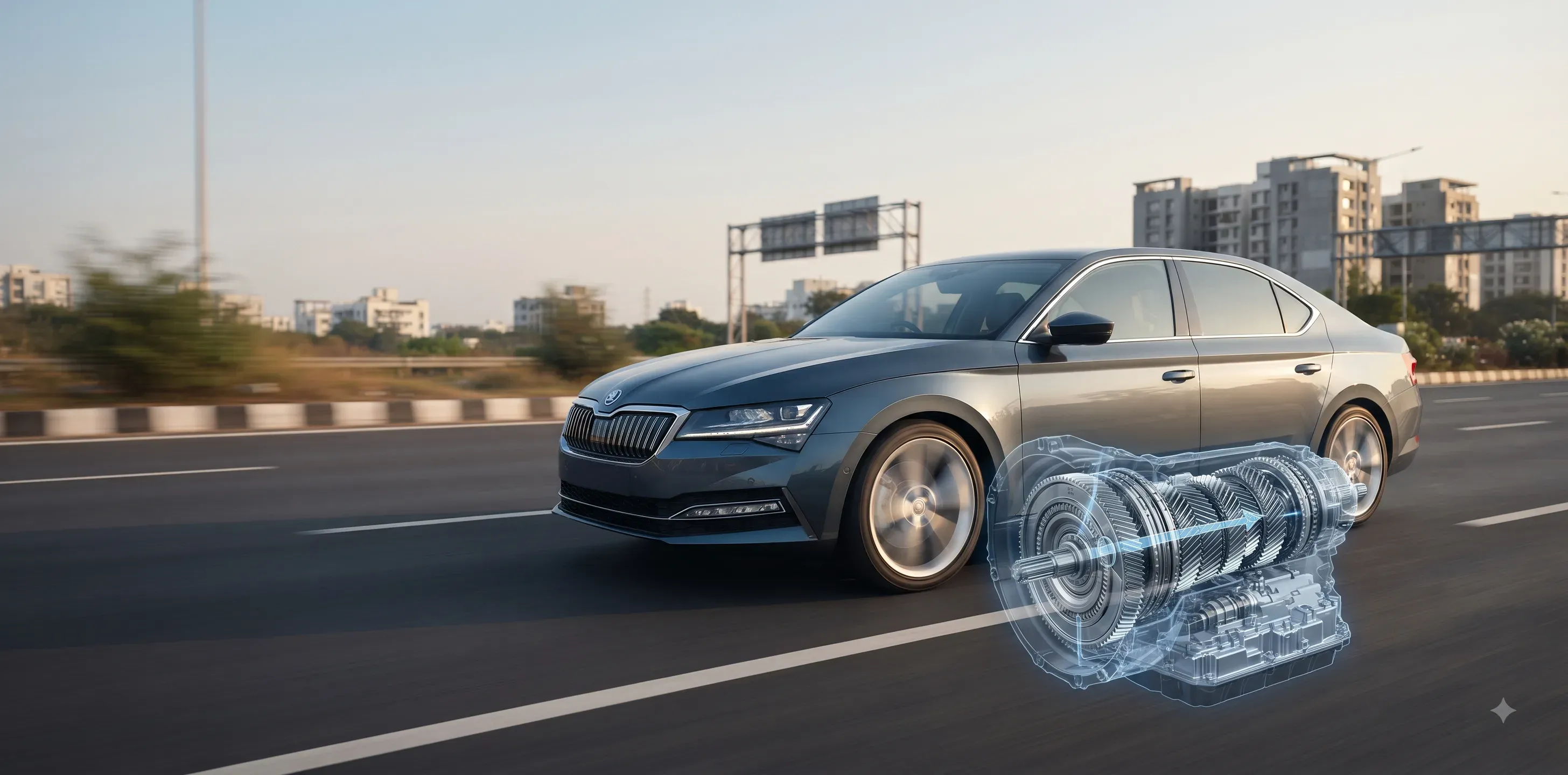
The DSG meaning is simpler than the abbreviation suggests. DSG full form is Direct Shift Gearbox, a transmission developed by the Volkswagen Group. It uses two clutches instead of one.
Unlike a regular automatic, which relies on a torque converter, DSG works more like a manual gearbox. The difference is that a computer does the heavy lifting for you.
DSG in cars first became common in India through Volkswagen and Skoda models, since both brands share an engineering platform. You'll also see it called a dual-clutch transmission, or DCT, on non-VW Group cars.
Also Read: Best CVT Cars in India
How Does a DSG Gearbox Work?
A DSG gearbox splits gears into two groups. Odd-numbered gears sit on one clutch, even-numbered gears on the other.
While you're driving in third gear, the gearbox has already pre-selected fourth on the second clutch. So when it's time to shift, the system simply swaps which clutch is engaged. There's no pause while a new gear gets selected, which is what makes the shift feel near-instant.
This is different from a torque converter automatic, which uses fluid coupling instead of clutches. It's also different from an AMT, a manual gearbox with a robotic arm doing the work, usually slower.
Also Read: DSG vs DCT
Components of DSG
A DSG unit has a few core parts working together:
● Two clutch packs, one for odd gears and one for even gears.
● A mechatronic unit, which combines the hydraulics and electronics that control gear changes.
● Dual input shafts, one connected to each clutch.
● A transmission control unit (TCU) that decides when to shift, based on speed, throttle position and load
The mechatronic unit is worth remembering. It's also the single most expensive part to repair if the gearbox develops a fault.
Advantages of DSG Gearbox
DSG has real advantages if you enjoy a sportier drive.
Faster Gear Shifts
Because the next gear is already pre-selected, DSG changes gears faster than almost any torque converter automatic. You'll notice it most under hard acceleration, where there's no lag between gears.
Better Fuel Efficiency
DSG can be more fuel-efficient than a traditional automatic, since less energy is lost compared to a torque converter. The savings vary by engine and driving style.
Smooth Driving Experience
At cruising speed, DSG feels smooth and unhurried. Gear changes are barely noticeable, keeping the engine in its efficient RPM range.
Improved Performance
Because there's no interruption in power delivery, DSG-equipped cars often feel quicker in a straight line. Same engine, but noticeably slower with a regular automatic.
Disadvantages of DSG Gearbox
These advantages come with trade-offs that matter more in Indian traffic.
Higher Maintenance Costs
DSG servicing isn't like servicing a standard automatic. Transmission oil changes are more specific, and not every local garage is equipped to work on one.
Overheating in Heavy Traffic
Stop-start traffic puts the clutch packs under constant low-speed strain. Some DSG units respond by limiting power until things cool down.
Expensive Repairs
When the mechatronic unit fails, you're not just paying for a clutch. You're paying for the electronics and hydraulics bundled with it. That's why repair bills can run into tens of thousands of rupees.
Jerky Low-Speed Driving Experience
This is the complaint from the introduction. At very low speeds, like crawling in traffic or reversing into a tight spot, DSG can feel hesitant. The clutches are working at the edge of their comfort zone, and it shows.
DSG vs Other Automatic Gearboxes
Now that you know what DSG is in cars, here's how it stacks up against the alternatives.
| Feature | DSG (Dual-Clutch) | Torque Converter Automatic | AMT | CVT |
|---|---|---|---|---|
| Gearbox Type | Dual-clutch automatic | Torque converter automatic | Automated Manual Transmission | Continuously Variable Transmission |
| Gear Shift Speed | Very fast | Moderate | Slower, with noticeable pause | Smooth, no distinct shifts |
| Fuel Efficiency | Good | Moderate | Good | Good |
| Maintenance Cost | High | Moderate | Low | Moderate |
| Best Suited For | Highway-heavy driving | Mixed city and highway driving | Budget city driving | Relaxed, fuel-efficient driving |
If most of your driving is bumper-to-bumper traffic, a torque converter automatic or CVT may suit you better.
Common DSG Gearbox Problems
Most DSG problems trace back to the same handful of causes.
Mechatronic Failure
This is the big one. Symptoms include delayed gear changes, a loss of power, or the car refusing to shift at all.
Clutch Wear Issues
Like any clutch, DSG's clutch packs wear out faster with aggressive driving or frequent traffic crawling. Replacement isn't cheap, but it's far less costly than a full mechatronic failure.
DSG Warning Lights
A flashing gear indicator or a dashboard warning usually means the gearbox has gone into a protective mode. Don't ignore it. Get it checked before the fault gets worse and the repair bill grows with it.
Conclusion
So, what is DSG in cars, in practical terms? It's a fast-shifting, fuel-conscious gearbox that rewards confident driving but asks for costlier upkeep in return.
If your driving is mostly highway, DSG earns its reputation. Stuck in city traffic most days? Weigh the maintenance bills against a torque converter automatic first. Either way, run the numbers on real ownership cost, not just the on-road price. Understanding how your transmission works can help you drive more efficiently and reduce unnecessary wear on expensive components.
FAQs
Is the DSG gearbox automatic?
Yes, DSG is a type of automatic transmission. It just uses two clutches instead of a torque converter, which is what makes the gear changes feel quicker.
Which cars in India come with a DSG gearbox?
Volkswagen and Skoda have offered DSG across several India-market models, including the Polo, Vento, Rapid, Slavia and Kushaq. Check the current spec sheet, as availability changes by year.
How often should DSG transmission oil be changed?
Most manufacturers recommend changing the DSG transmission oil and filter every 40,000 to 60,000 km. The exact interval depends on the brand and how the car is driven.