DCT Full Form in Cars: Meaning, Working & Advantages Explained
Introduction
Modern automatic cars in India aren’t judged only by mileage figures anymore. Gearbox technology now plays a major role in performance, fuel economy, long-term ownership costs, and even resale value. That’s exactly why discussions around what DCT in cars actually means have become increasingly common among buyers comparing premium hatchbacks, compact SUVs, and turbo-petrol sedans.
The DCT transmission full form is Dual Clutch Transmission. It’s a sophisticated automatic gearbox designed to deliver lightning-fast gear shifts without interrupting power delivery. Unlike conventional torque converter automatics, DCT systems focus heavily on efficiency and responsiveness. But there’s a trade-off. Urban heat, crawling traffic, and maintenance expenses can influence ownership experience significantly in Indian conditions.
Understanding what DCT in cars really offers helps buyers avoid expensive surprises later.
What is DCT?
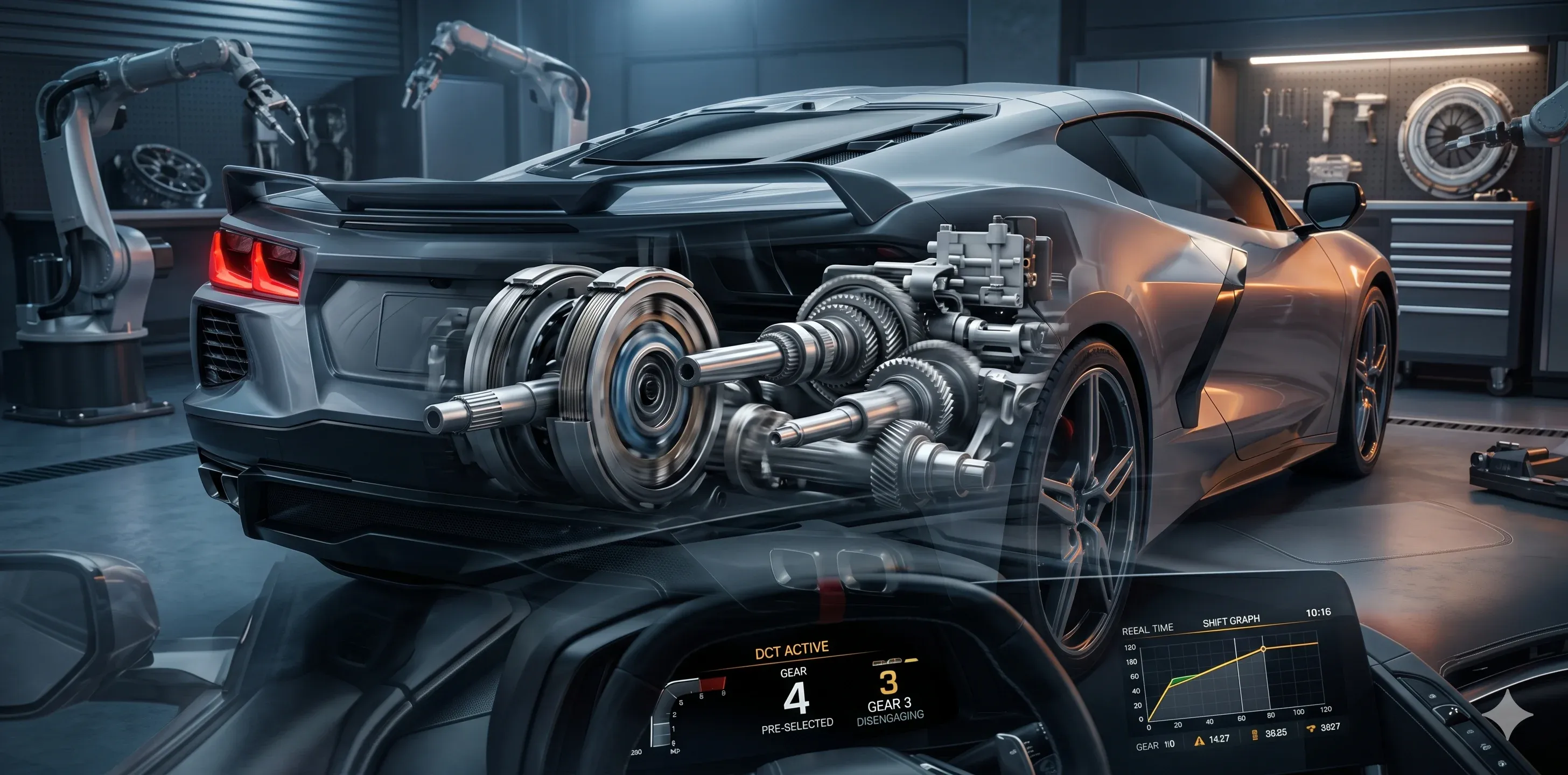
The term DCT full form refers to Dual Clutch Transmission, an advanced automatic gearbox that uses two separate clutches; one for odd gears and another for even gears. This setup allows the next gear to remain pre-selected before the actual shift happens.
That’s where the speed comes from.
The DCT meaning in practical terms is simple: faster shifts, sportier acceleration, and improved efficiency compared to many traditional automatics. Several Indian-market vehicles from Hyundai Motor Company, Kia Corporation, and Volkswagen now use DCT gearboxes extensively in turbocharged variants.
For buyers researching what DCT in cars implies for daily driving, the answer depends heavily on traffic conditions and driving style.
How Does a DCT Transmission Work?
A DCT gearbox operates using two clutches working simultaneously:
● One clutch handles 1st, 3rd, 5th, and 7th gears
● The second clutch controls 2nd, 4th, and 6th gears
When the car accelerates in one gear, the next gear stays ready in advance. The transmission simply swaps clutches during shifting. No delay. Minimal power interruption.
Think of it this way: during a highway overtake, the gearbox doesn’t “search” for the next gear like older automatics often do. It already knows what comes next.
A service advisor at a workshop once described it bluntly: “Customers love the acceleration. Then summer traffic arrives and complaints start.” That sums up Indian DCT ownership rather accurately.
Still, understanding what DCT in cars means mechanically explains why enthusiasts prefer it. Let’s read further to know more.
Types of DCT Transmission
| Feature | Wet DCT Transmission | Dry DCT Transmission |
|---|---|---|
| Cooling Method | Uses transmission fluid for cooling | No oil cooling system |
| Heat Handling | Better in heavy traffic | More prone to overheating |
| Performance | Handles higher torque efficiently | Best for smaller engines |
| Maintenance Cost | Higher | Lower initially |
| Common Usage | Premium SUVs and performance cars | Compact cars and hatchbacks |
Advantages of DCT Transmission
Faster Gear Shifts
DCT systems shift gears within milliseconds. Turbo-petrol SUVs equipped with DCT gearboxes often deliver quicker 0-100 km/h times than manual variants.
That’s one major reason enthusiasts researching what DCT in cars frequently lean toward this gearbox type.
Better Fuel Efficiency
Because power delivery remains uninterrupted, engine efficiency improves. Many modern DCT-equipped Indian cars now return mileage figures close to manual variants under controlled conditions.
Improved Driving Performance
Acceleration feels immediate. Highway overtakes become smoother and safer. And paddle shifters in some models add a more engaging driving experience.
The reality is, DCT technology was originally developed for performance-oriented driving.
Smooth Automatic Driving Experience
In moderate traffic and highway usage, DCT gearboxes feel refined and effortless. Gear transitions remain nearly invisible to passengers.
That’s where DCT in cars' meaning becomes relevant for urban buyers seeking comfort without sacrificing performance.
Disadvantages of DCT Transmission
Higher Maintenance Cost
DCT gearboxes are mechanically complex. Repairs involving clutch packs or mechatronic systems can become expensive after warranty periods end.
Heating Issues in Traffic
Here’s the catch. Indian stop-go traffic creates excessive clutch engagement cycles. Dry DCT systems especially may overheat during long traffic crawls.
Some vehicles even display temporary gearbox protection warnings.
Expensive Repairs Compared to Manual Gearboxes
A manual clutch replacement remains relatively affordable. DCT repairs don’t. In certain cases, gearbox repair bills can cross six figures in premium models.
That’s why buyers evaluating what DCT in cars should consider ownership costs beyond showroom pricing.
Also Read: Best Aftermarket Car Infotainment System
DCT vs CVT vs AMT vs AT
| Gearbox Type | Best For | Driving Feel |
|---|---|---|
| DCT (Dual Clutch Transmission) | Performance and quick acceleration | Sporty and responsive |
| CVT (Continuous Variable Transmission) | Fuel efficiency and city comfort | Smooth but less engaging |
| AMT (Automated Manual Transmission) | Budget-friendly automatic driving | Functional but less refined |
| AT (Torque Converter) | Comfort and easy everyday driving | Smooth, convenient, and refined |
Common Problems in DCT Cars
Common issues seen in Indian driving conditions include:
● Jerky low-speed movement
● Clutch overheating warnings
● Delayed response in bumper-to-bumper traffic
● Higher repair dependency on authorised service centres
● Premature clutch wear in aggressive driving conditions
Still, not every DCT car faces these issues equally. Wet DCT systems generally perform better under sustained urban stress.
Conclusion
DCT technology has transformed the modern automatic car market in India. Faster shifts, improved performance, and better efficiency make it highly attractive for enthusiasts and premium car buyers. But ownership realities matter. Traffic density, climate, servicing quality, and driving habits all influence long-term satisfaction.
Understanding what DCT in cars truly means helps buyers match the gearbox to real-world usage instead of brochure claims alone.
FAQs
What is the difference between DCT and Automatic Transmission?
A DCT is a type of automatic transmission using dual clutches for faster gear shifts, while traditional automatics generally use torque converters.
Which is better: Wet DCT or Dry DCT?
Wet DCT systems usually perform better in Indian traffic because they manage heat more effectively.
Does DCT improve car performance?
Yes. Faster shifts and uninterrupted power delivery improve acceleration and responsiveness significantly.
Is DCT transmission fuel efficient?
Yes, many DCT-equipped cars deliver fuel efficiency figures close to manual variants.
How long does a DCT gearbox last?
With proper servicing and moderate driving conditions, a DCT gearbox can last well beyond 1 lakh kilometres.