Car Tyre Pressure: Complete Guide
Introduction
A modern car can pack six airbags, ADAS features, turbocharged engines, and connected tech. Yet one overlooked detail still dictates fuel economy, braking distance, ride quality, and tyre lifespan; car tyre pressure. Indian roads amplify the issue. Sudden temperature swings, overloaded hatchbacks, cratered highways, and stop-go urban traffic constantly alter car tyre pressure, often without the driver noticing.
The reality is simple: incorrect car tyre pressure quietly increases ownership costs. Fuel bills rise. Tyres wear unevenly. Steering feedback changes. And during monsoon braking, even a small PSI mismatch can affect control. That’s why routine monitoring matters as much as engine oil checks or service intervals.
What is Car Tyre Pressure?
Car tyre pressure refers to the amount of compressed air inside a tyre, measured in PSI (pounds per square inch). Manufacturers define an ideal range depending on vehicle weight, suspension setup, tyre size, and intended load.
Most Indian passenger cars operate between 30-35 PSI. SUVs and MPVs may require slightly higher values. The recommended car tyre pressure front and rear figures are usually printed on:
● Inside the driver-side door frame
● In the owner’s manual
● Near the fuel lid in some vehicles
Ignore generic workshop assumptions. A compact sedan and a three-row SUV won’t use identical settings even if the tyre size appears similar.
How to Check Car Tyre Air Pressure?
A regular tyre pressure check takes less than five minutes. But timing matters. Tyres should ideally be cold, meaning the car hasn’t been driven for at least three hours.
1. Using a Tyre Pressure Gauge
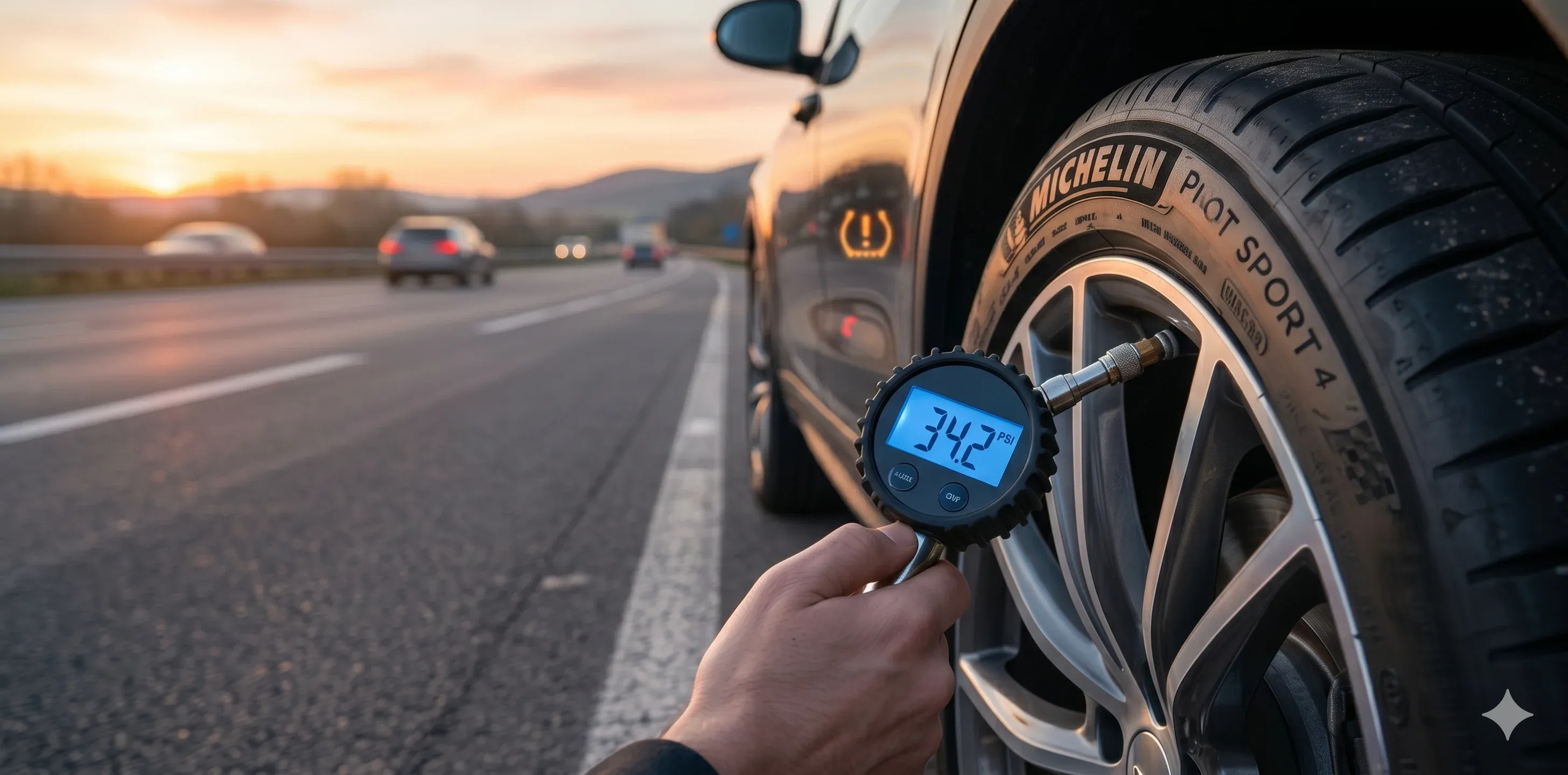
Digital gauges are accurate and inexpensive. Here’s the process:
1. Remove the valve cap
2. Press the gauge firmly onto the valve stem
3. Read the PSI value
4. Compare it with recommended car tyre pressure
5. Add or release air if needed
Petrol stations across India now offer automated inflators displaying live PSI readings. That’s useful, though calibration quality varies.
2. Checking Tyre Pressure Without a Gauge
Without tools, warning signs become important. A tyre looking visibly flatter at the bottom often indicates low car tyre air pressure. Steering may also feel heavier.
A highway patrol technician once described a recurring issue during summer travel rushes. Families packed luggage for long interstate drives, skipped a tyre pressure check, then complained about vibration and poor mileage halfway through the journey. Most cases traced back to severely underinflated rear tyres carrying excess load.
Factors Affecting Car Tyre Pressure
1. Temperature Changes
Heat expands air. Cold contracts it. That’s basic physics.
During Indian summers, parked vehicles exposed to direct sunlight can experience noticeable increases in car tyre pressure. Monsoon mornings may reduce PSI unexpectedly.
2. Vehicle Load and Weight
Five passengers plus luggage change the required car tyre pressure front and rear balance significantly. Heavier loads demand slightly higher rear tyre PSI to maintain stability and tyre shape.
3. Long Distance Driving
Extended highway runs generate heat inside tyres. Air expands gradually, increasing car tyre pressure during the trip. That’s why pressure adjustments should never happen immediately after long drives.
Signs of Incorrect Car Tyre Pressure
1. Underinflated Tyres
Low car tyre pressure creates excessive rolling resistance. The engine works harder. Fuel consumption climbs. Sidewalls flex more, generating heat that accelerates tyre wear.
2. Overinflated Tyres
Too much car tyre air pressure reduces road contact. Ride comfort deteriorates sharply, especially on uneven Indian roads. Pothole impacts also become harsher.
3. Uneven Tyre Wear
Centre wear usually points to overinflation. Edge wear often indicates underinflation. During a proper tyre pressure check, tread patterns should always be inspected alongside PSI readings.
4. Reduced Fuel Efficiency
Drivers chasing better mileage often ignore the connection between tyres and efficiency. But even slightly incorrect car tyre pressure can reduce fuel economy by 2-4%, particularly in city traffic.
Importance of Maintaining Correct Car Tyre Air Pressure
1. Better Fuel Efficiency
Correct car tyre pressure reduces rolling resistance, helping petrol, diesel, hybrid, and EV models deliver optimal efficiency. With Indian fuel prices remaining volatile, small savings accumulate quickly.
2. Improved Tyre Life
Tyres are expensive consumables. Premium SUV tyres can easily cross ₹10,000 per unit. Maintaining proper car tyre air pressure prevents premature wear and protects long-term ownership budgets.
3. Safer Handling and Braking
Emergency braking performance depends heavily on tyre contact patches. Incorrect car tyre pressure affects grip during sudden lane changes, wet-road braking, and high-speed cornering.
4. Better Driving Comfort
Balanced tyres absorb road imperfections more effectively. Cabin noise reduces. Steering stability improves. And highway cruising feels less tiring.
Also Read: Best Aftermarket Car Infotainment System
Common Tyre Pressure Problems and Solutions
Slow punctures remain common on Indian roads due to nails, broken surfaces, and construction debris. If a tyre repeatedly loses PSI, valve leaks or rim damage may be responsible.
Another issue involves drivers asking, "how much psi for car tyres" without accounting for tyre upgrades. Larger aftermarket wheels may require revised settings.
And here's the catch: blindly inflating tyres to maximum sidewall PSI is a mistake. The answer to "how much psi for car tyres" always depends on manufacturer recommendations, passenger load, and driving conditions.
Conclusion
Ignoring car tyre pressure may seem harmless until costs begin stacking up; higher fuel consumption, faster tyre replacement, compromised braking, and unstable handling. Modern cars have become more advanced, but tyres still remain the only contact point between vehicle and road.
Consistent monitoring, seasonal adjustments, and a monthly tyre pressure check can dramatically improve ownership experience across Indian driving conditions.
FAQs
How much PSI should car tyres have?
Most passenger vehicles in India require 30-35 PSI. But the correct answer to "how much psi for car tyres" depends on manufacturer specifications, tyre size, and vehicle load.
What happens if tyre pressure is too high?
Excessive car tyre pressure reduces grip, increases centre tread wear, and makes the ride noticeably harsher on rough roads.
What is TPMS in cars?
TPMS stands for Tyre Pressure Monitoring System. It alerts drivers when car tyre pressure drops below recommended levels, improving safety and reducing tyre damage risks.