Car Dashboard Symbols and Meanings: Warning Lights Guide
Introduction
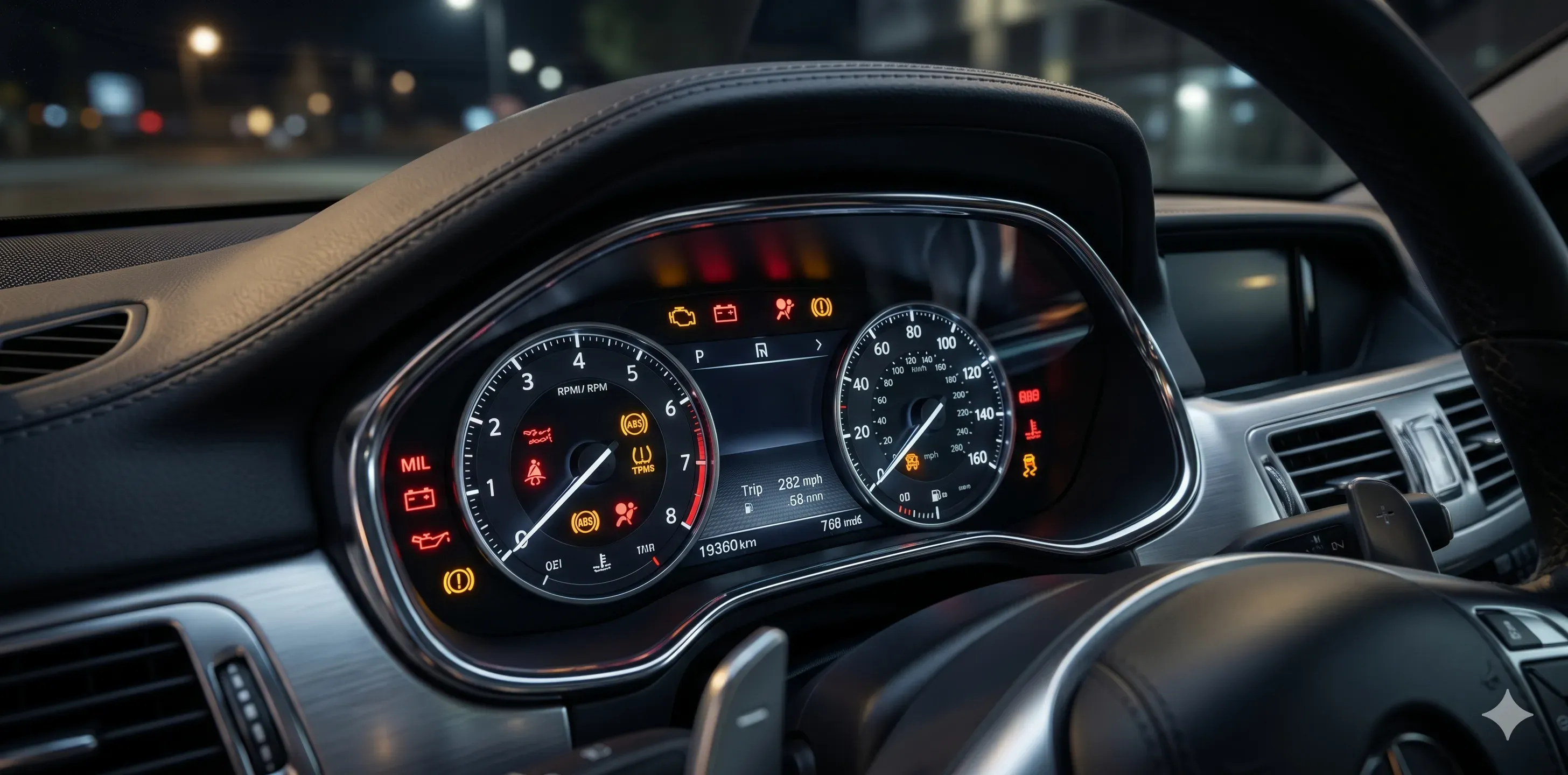
Modern vehicles are packed with sensors, ECUs, and real-time diagnostics. A single illuminated icon on the instrument cluster can point to anything from low washer fluid to a failing alternator. Yet many Indian motorists still continue driving until performance drops visibly. That’s risky. And expensive.
Understanding car dashboard symbols and meanings has become essential, especially as BS6 Phase 2 engines, ADAS features, hybrid systems, and tyre-pressure monitoring technologies become common across hatchbacks, SUVs, and EVs. Ignoring an alert today can easily turn a Rs. 2,000 repairs into a Rs. 50,000 engine or electrical failure tomorrow.
Why Car Dashboard Warning Lights Matter?
Dashboard indicators are the vehicle’s first line of communication. They monitor braking systems, engine temperature, fuel injection, battery charging, airbags, and emissions. Think of them as an early-warning network.
A service technician at a Chennai workshop once described a recurring pattern: drivers often ignore the oil warning lamp because the car “still feels normal.” Two days later, the engine arrived with seized internals and metal debris in the sump. That’s the reality of delayed action.
Knowing car dashboard symbols and meanings helps reduce repair costs, prevents roadside breakdowns, and improves vehicle safety during long-distance travel or heavy monsoon driving.
Types of Car Dashboard Symbols
1. Red Dashboard Lights
Red symbols indicate immediate danger or critical failure. These warnings usually demand that the vehicle be stopped safely and inspected.
Common examples include:
● Engine overheating
● Brake system failure
● Oil pressure loss
● Battery charging issues
2. Yellow / Orange Lights
These are caution alerts. The car may still operate, but inspection shouldn't be delayed.
Typical examples:
● Check engine warning
● ABS malfunction
● TPMS alert
● Emission system faults
Many drivers searching for car dashboard symbols and meanings confuses yellow lights with minor notifications. That assumption often leads to higher maintenance bills.
3. Green and Blue Lights
These are informational indicators rather than warnings. They confirm active systems like:
● High beam headlights
● Cruise control
● Eco driving mode
● Turn indicators
These symbols in car display panels generally don't require action.
Most Common Car Dashboard Symbols and Meanings
1. Check Engine Light Symbol
One of the most misunderstood car dashboard symbols and meanings indicators. It may signal sensor failure, ignition problems, fuel-system imbalance, or catalytic converter issues.
If the light flashes continuously, stop driving immediately.
2. Oil Pressure Warning Light
This warning usually appears as an oil can icon. Low engine oil pressure can destroy turbochargers, crankshafts, and pistons within minutes.
3. Battery Warning Light
Indicates charging-system trouble. Faulty alternators, loose terminals, or weak batteries are common causes, particularly during extreme summer heat in India.
4. Brake Warning Light
A serious safety alert. It may indicate low brake fluid, worn brake pads, or hydraulic failure.
5. ABS Warning Light
ABS prevents wheel lock during emergency braking. A glowing ABS lamp means the anti-lock function may not work correctly on wet roads.
6. Tyre Pressure Monitoring System (TPMS) Light
Low tyre pressure affects fuel economy, tyre wear, and braking distance. Many SUVs and premium hatchbacks now include TPMS as standard.
7. Coolant Temperature Warning Light
This indicates excessive engine heat. Stop the vehicle if steam or overheating symptoms appear.
8. Airbag Warning Light
Airbag deployment systems may malfunction if this light stays on. Accident protection could be compromised.
9. Seat Belt Reminder Light
Simple but important. Seat belts significantly reduce fatal injury risk during high-speed collisions.
10. Fuel Warning Light
Running consistently on reserve fuel can damage fuel pumps over time. Yet another reason why understanding car dashboard symbols and meanings matters financially.
Car Dashboard Symbols That Require Immediate Attention
1. Flashing Check Engine Light
Usually linked to severe engine misfires. Continued driving can damage the catalytic converter.
2. Engine Temperature Warning
Overheating may result from coolant leaks, radiator blockage, or fan failure.
3. Oil Pressure Warning
Among the most dangerous car dashboard symbols and meanings are alerts. Engine lubrication loss can lead to catastrophic failure within minutes.
4. Brake System Warning
Brake responsiveness may reduce sharply. Don’t continue highway driving with this warning active.
5. Battery Warning Light
Electrical systems may fail unexpectedly if charging stops completely.
Also Read: What is RPM in Cars?
Common Reasons Dashboard Warning Lights Turn On
Several factors trigger warning lights:
● Faulty sensors
● Low fluids
● Wiring issues
● Battery voltage drops
● Poor fuel quality
● Tyre-pressure imbalance
● Delayed servicing
The growing complexity of connected vehicles means modern car symbols and meaning charts now include hybrid-system alerts, lane-assist notifications, and ADAS calibration warnings.
Why You Should Never Ignore Car Warning Lights
Here’s the catch. Dashboard warnings rarely disappear permanently without intervention. They usually return with bigger consequences.
Ignoring car dashboard symbols and meanings can lead to:
● Engine damage
● Brake failure
● Reduced mileage
● Higher insurance claims
● Expensive electrical repairs
● Unexpected highway breakdowns
And in India’s stop-go traffic conditions, mechanical stress builds quickly. Even a small cooling-system issue can escalate during peak summer congestion.
Drivers familiar with car dashboard symbols and meanings generally make faster repair decisions, avoid panic breakdowns, and preserve resale value more effectively.
Conclusion
Modern vehicles communicate constantly. The dashboard is not decorative technology; it’s an operational command centre. Understanding car dashboard symbols and meanings allows vehicle owners to respond early, control ownership costs, and avoid avoidable mechanical disasters.
A warning light ignored today often becomes tomorrow’s workshop estimate.
FAQs
Can I drive with dashboard warning lights on?
It depends on the light colour and severity. Red warnings typically require immediate attention, while yellow indicators may allow short-distance driving to a service centre.
Why do dashboard warning lights suddenly appear?
Electrical fluctuations, sensor faults, low fluids, tyre-pressure changes, or overdue maintenance are common reasons behind sudden alerts and unexpected car signs meaning confusion.
Which car dashboard warning lights are serious?
Critical warnings include engine overheating, oil pressure loss, flashing check engine alerts, brake-system failures, and battery charging issues. These car dashboard symbols and meanings should never be ignored.