LED Projector Vs. Halogen Headlamps: Which Car LED Setup Is Better?
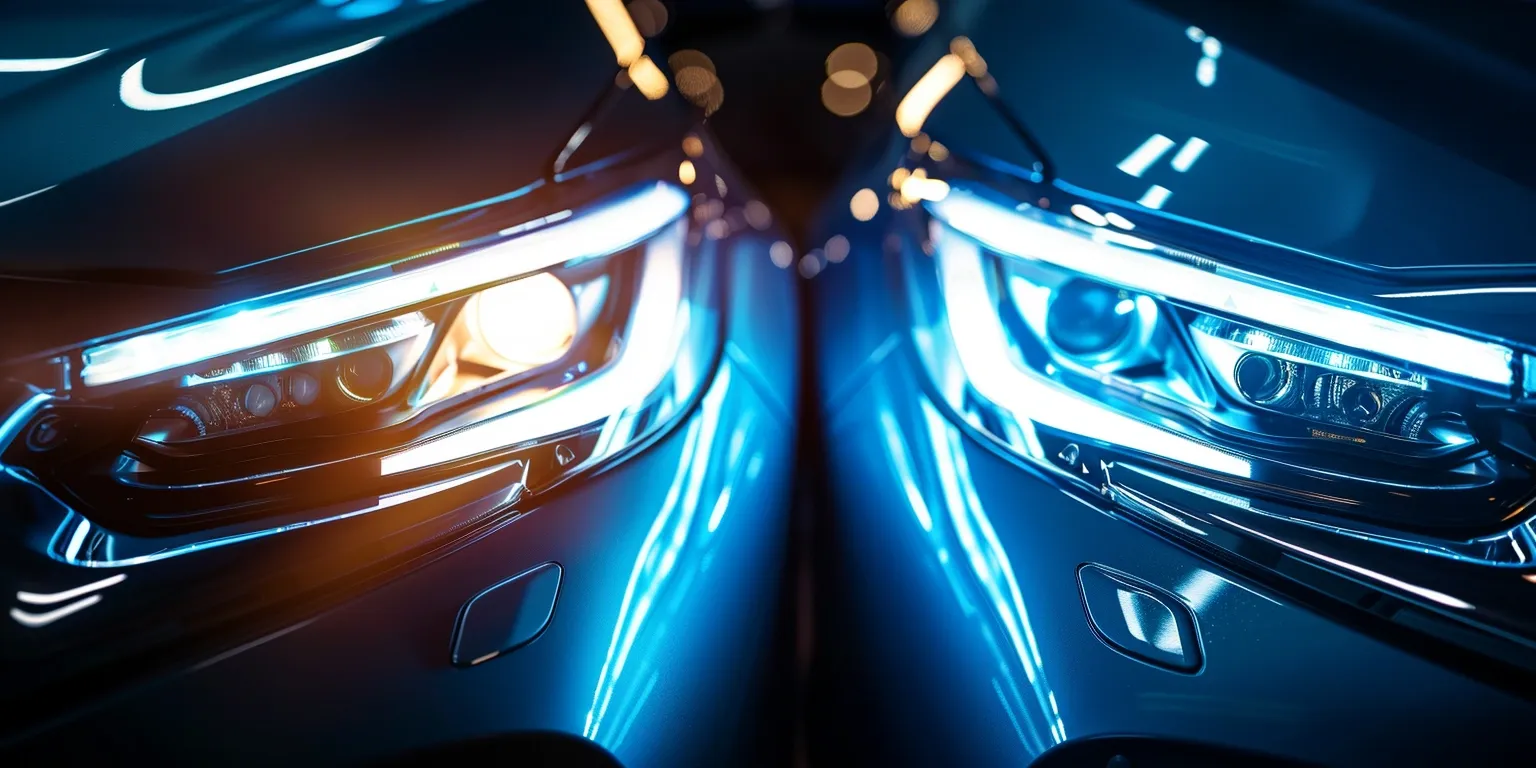
Key Highlights:
- Projector headlamps offer focused, powerful light — ideal for highways and bad weather.
- Halogen headlamps are budget-friendly, simpler, and easier to maintain.
- The right headlight setup depends on your driving habits, budget, and upgrade plans.
- Varied Indian road conditions demand specific illumination.
Understanding Car Headlights: Beyond Just Brightness
Headlights do more than just illuminate the road; they define your visibility and, crucially, how visible you are to others. The internal design of a headlamp unit, not just the bulb's brightness, dictates its beam pattern. This pattern controls light distribution, reach, and glare.
Halogen Headlamps: The Traditional Workhorse
Halogen headlights represent the more conventional design.
How they work: Behind the halogen bulb sits a bowl-shaped, mirrored surface. The light from the lightbulb projects forward after bouncing off this surface. The beam pattern is mostly determined by the reflector's shape.
Pros (with LED bulbs):
- Cost-Effectiveness & Simplicity: Usually less expensive to replace if damaged and easier to manufacture by nature.
- Greater Light Spread: Capable of lighting up a large area directly in front of the car, this feature is helpful for low-speed city driving, where having a wide field of vision is essential.
- Commonality: Found across a vast range of vehicles, from entry-level to some mid-segment cars.
Cons (with LED bulbs):
- Less Controlled Beam: Light tends to be more diffused. The beam pattern can be less uniform, often having hot spots or dimmer areas.
- Possibility of Glare: Some light scatters upward in the absence of a precise light cutoff. Oncoming drivers may experience glare as a result, which is particularly problematic if aftermarket LEDs are mounted instead of halogen in reflector housings that are not made for them.
- Less Accurate Cutoff: There isn't a distinct horizontal line to mark the change from illuminated to dark areas.
- Limited Reach: Although the light is wide, its intensity may diminish over longer distances.
Projector Headlamps: Precision and Focus
Projector headlamps are a more advanced design, increasingly common in modern vehicles.
How they work: A focused, sharp beam is produced when light passes through lenses and a cut-off shield. A convex lens at the end acts like a magnifying glass, focusing the light.
Pros (with LED bulbs):
- Sharper Cutoff & Reduced Glare: The cutoff shield creates a distinct, sharp horizontal line for the low beam. This prevents light from scattering upwards, significantly reducing glare for oncoming traffic. A major safety advantage.
- Focused & Uniform Beam: The lens projects light in a highly concentrated, even pattern, illuminating the road ahead with greater intensity and reach. This provides better visibility at a distance.
- Modern Aesthetic: Often lends a premium, contemporary "eyeball" look to the car's front fascia.
- Better Performance in Adverse Conditions: The focused beam can cut through light rain or fog more effectively, offering clearer visibility.
Cons (with LED bulbs):
- More Complex & Costly: Due to intricate components (lens, shield, reflector), projectors are more expensive to manufacture and replace if damaged.
- Narrower Spread (Close-Up): The highly focused beam might offer a slightly narrower field of vision immediately in front of the car compared to a wide reflector spread from a halogen setup.
- Heat Management: While LEDs produce less heat than halogens, effective heat dissipation is crucial for projector LEDs to maintain performance and lifespan, requiring proper design.
Projector vs Halogen Headlights: A Direct Comparison (LED Setup Focus)
| Feature | Projector Headlamps | Halogen Headlamps |
|---|---|---|
| Beam Focus | Tightly focused, sharp cut-off | Broad, less controlled |
| Brightness | High (especially with LED/HID) | Moderate (halogen or basic LEDs) |
| Glare | Minimal, improves road safety | Can be high if misaligned/modified |
| Maintenance | Costlier to repair, heavier to replace | Cheap, quick, easy fix |
| Looks/Aesthetics | Modern, premium, day appeal | Simple, utilitarian |
| Cost | More expensive, mainly in top trims | Budget-friendly, widely available |
| Common in | Newer, premium, and mid-segment cars | Entry-level and older cars |
Which Car LED Setup is Better for Indian Roads?
The choice between a headlight projector vs. halogen for your car's LED setup often boils down to safety, driving conditions, and budget.
- For Safety: Projector headlamps are generally superior. Their ability to produce a sharp cutoff line and reduce upward light scatter minimises glare for oncoming drivers, a crucial safety feature on India's often unsegregated and brightly lit city roads, as well as dark highways. This adherence to regulated glare limits (as per RTO rules) is vital.
- For Highway Driving: Projectors provide a more focused beam and greater reach for driving on highways. This makes it easier to see obstacles and unforeseen turns far ahead on dark highways.
- For City Driving: Halogens, with their wider spread, can be adequate in well-lit urban areas. However, projectors still offer better clarity in crowded conditions, helping drivers spot pedestrians and obstacles more effectively.
- Overall Recommendation: While halogen LED setups can be functional, especially in budget-friendly vehicles, projector vs halogen headlights analysis generally favours projectors for overall superior illumination, reduced glare, and enhanced safety on varied Indian roads. Many new cars in India are increasingly adopting LED projectors as standard.
Important Considerations Beyond Setup Type
Regardless of your chosen setup, these points are vital for optimal performance and legality in India:
- Quality of the LED Bulb: Lumens (brightness) and colour temperature (white or yellowish, as per RTO rules) matter. Overly bright aftermarket LEDs in reflector housings can be illegal and dangerous. RTO regulations typically cap headlight wattage and prohibit blue lights.
- Proper Aiming/Alignment: Crucial for both types. Misaligned headlights, even powerful LEDs, can blind others and reduce your effective illumination. Ensure they comply with height and intensity rules.
- Legal Regulations: Adhering to RTO rules (e.g., maximum wattage, no blue lights, correct high-beam usage) is not just about avoiding fines (which can be ₹500-₹1000 for violations); it's about road safety for everyone. Modifying headlights outside of legal standards is prohibited.
Indian Market: What’s Trending in 2025?
- Most new cars (₹5 lakh and above) offer projector headlamps at least in top variants.
- LED projectors are now common in hatchbacks (Tata Altroz, Hyundai i20), sedans (Honda City, Hyundai Verna), and SUVs (Maruti Brezza, Tata Nexon).
- Halogen designs are still used in low-cost vehicles to save money.
- Halogen reflector to LED projector aftermarket upgrades run the risk of causing warranty problems, whereas factory-fitted projectors retain warranty and resale value.
Your Path to Better Illumination
Understanding the difference between projector and halogen headlights for LED setups is the key to enhancing your driving safety and experience. While both designs have their place, the precision and controlled output of projector headlamps generally offer a superior solution for the varied and challenging conditions of Indian roads. Make an informed choice about your car's LED setup, and ensure it's always properly maintained and legally compliant for confident journeys ahead.
FAQs
1. Can I put LED bulbs in my existing halogen headlights?
While it's possible, it's often not recommended as halogen housings may not correctly focus the LED light, causing glare for others and inefficient illumination.
2. Are projector headlights always brighter than halogen ones?
Projector headlights are generally more efficient at directing light, making their focused beam appear brighter and more effective, even if the raw lumen output is similar.
3. Do halogen headlights cause more glare for oncoming drivers?
Yes, due to their less controlled beam pattern and lack of a sharp cutoff shield, halogen headlights are more prone to causing glare, especially with powerful LEDs.
4. Which setup is better for driving in fog?
Projector headlights, with their focused beam and sharp cutoff, often perform better in fog as they reduce scattered light and direct illumination effectively onto the road.
5. Are aftermarket LED headlight modifications legal in India?
Modifying headlights with non-standard or excessively powerful aftermarket lights can be illegal in India if they don't meet RTO regulations on wattage, intensity, or colour, potentially leading to fines.