Ultimate Car Accessories for 2025: 10 Essentials for Every Driver
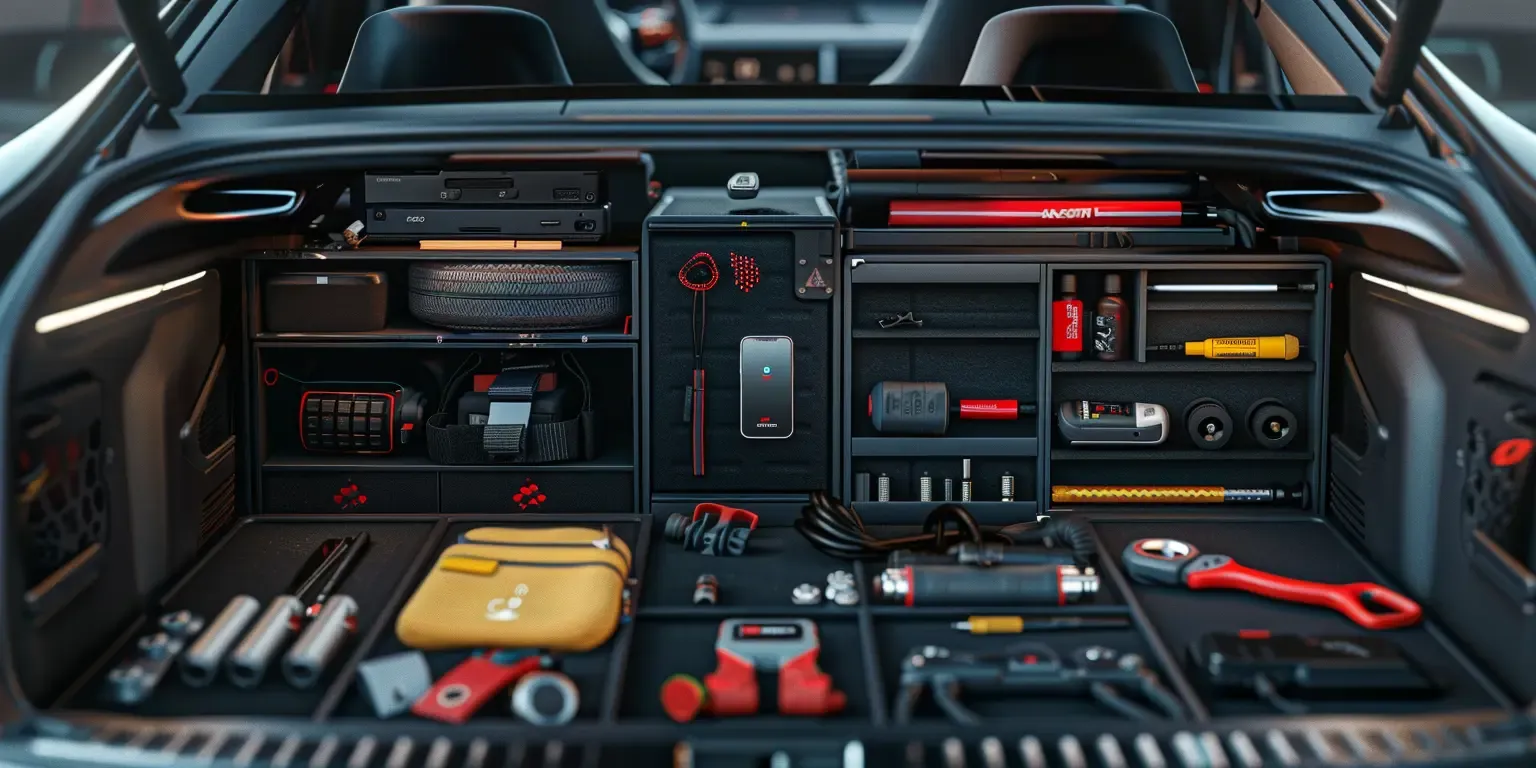
Key Highlights:
- Dashcams running on supercapacitors have better heat dissipation compared to battery-powered equivalents
- Dealer-fitted accessories may be costlier, but will not affect the factory warranty under any circumstances
- A handy OBD-II scanner is a must-have product if one wishes to detect potential hardware issues as early as possible
Whilst buying a new car, it is not uncommon to find that a loaded top variant may still miss out on some essential bits. This is where aftermarket accessories come into the picture. Besides improving the overall appeal of a vehicle, certain products significantly improve safety, comfort and convenience in daily commutes. However, their installation may not be that straightforward. If an aftermarket accessory requires extra wiring or a relay, ensure it won’t affect other vital components or take a toll on the factory warranty. That said, here are 10 great car accessories to consider in 2026, which go beyond a charging cable or smartphone mount:
1. Dashcams
Today, dashcams are no longer a luxury but an absolute necessity. In fact, buyers are ready to spend extra on a variant if it comes with a factory-fitted dashcam (sometimes a dual-camera setup coupled with a 360-degree parking assistant). Dashcams are available from as low as ₹1,500, though there could be compromises such as poor low-light resolution, unintuitive footage sharing process, slower file saving capability, battery power rather than supercapacitors, etc. It’s best to go for popular models with good reviews rather than trying to save on something that may not perform as expected.
2. TPMS
Modern cars usually feature TPMS (Tyre Pressure Monitoring System), either as a general indication or individual psi readings on each tyre. TPMS can also be fitted as an aftermarket accessory, with access to readings on a dedicated display unit or via a smartphone app. One can also specify a reading for low-pressure warnings, unlike factory-fitted units that warn at a fixed reading (usually 30psi or lower). This feature is particularly useful in off-roaders, in which lowering tyre pressure is key.
3. Tyre Inflator
Tyre inflators are a worthy add-on for long journeys. While a TPMS accurately shows which tyre needs more air, one would still have to go to the nearest tyre shop or petrol pump to re-inflate. A tyre inflator eliminates this need since it can work from the vehicle’s 12V outlet (ideally when the engine’s running). Portable tyre inflators have less powerful compressors than a full-scale unit and hence, take longer to inflate a tyre. It is best to check and increase the tyre pressure before the journey (when the air’s cold), as the readings may be inaccurate due to air expansion if the tyres are warm after running for a long time.
4. Compact Vacuum Cleaner
A compact vacuum cleaner is a handy tool to have if one wishes to keep their car’s interior fresh. Running either on battery power or the car’s 12V outlet, these products are designed and accessorised to work well with the nooks and crannies of a vehicle cabin. Some models also feature a flashlight for added convenience. It can also eliminate the need for a dustbin, unless there's a spill. The chance of this happening is very low in a car owned by a clean-freak enthusiast.
5. OBD Scanner
An On-Board Diagnostics (OBD) scanner helps retrieve error codes from the ECU via the car’s diagnostic port (usually located deep under the dashboard on the driver’s side). The device helps detect issues early that may otherwise turn into major repair bills. Modern units (dubbed ‘OBD-II’) offer a dedicated smartphone app for enhanced capabilities. Fault checking on OBD scanners is the first step any vehicle technician would conduct if the cause of a warning light is not immediately known. Hence, knowing the potential fault beforehand can prove beneficial at a service appointment.
6. Basic Tool Kit
Cars of the 2020s may not be built to last, but are developed to run trouble-free for at least the first three years or until the end of the warranty. However, roadside emergencies may still occur due to a variety of reasons, and hence, carrying a tool kit is a good practice. The kit should ideally contain vitals such as pliers, adjustable wrenches, jumper cables, a tyre pressure gauge, a compact hammer, etc. and should be placed within easy reach (driver-side underseat is a good location). It is also wise to learn some basic vehicle maintenance.
7. Seat Gap Fillers
A cheap accessory that’s gaining popularity lately, a seat gap filler works well with any car. It is usually made of foam or faux leather and snugs into the gap between the seat and centre control, preventing loose items (particularly coins, keys or cards) from getting stuck or lost in this space. Certain variants also have a pass-through for seat-mounted belt buckles.
8. GPS Tracker
It is unusual to find a new car priced above ₹10 lakh ex-showroom without a GPS module or a tracking function via a smartphone app. For budget cars or older products, installing a separate GPS unit (with a dedicated smartphone app) can be a wise choice. Some versions even boast of geo-fencing (the user gets notified whenever the car leaves a set perimeter). For Apple device users, placing an AirTag somewhere inside the vehicle is an alternative approach.
9. Boot Organiser
Individuals who wish to keep everything neat and organised may consider adding a boot or trunk organiser. Often cheap, water-resistant, zipped and foldable, it greatly helps save up extra space or prevent loose items from being thrown around in the boot. Some products have the added convenience of being able to be velcroed or harnessed.
10. Ventilated Seat Cushion
In a humid country such as India, seat ventilation cannot be tagged a luxury anymore. The sophistication required in seat design currently reserves this feature for slightly premium variants. It would surely trickle down to budget cars in the future. Until then, a ventilated seat cushion is a great accessory to have if the car doesn’t have factory-fitted ventilated seats. The pored cushion comprises small fans inside and runs on the car’s 12V outlet. Type-A and Type-C versions are available too.
Personalisation Beyond Factory Specifications
The growing demand for aftermarket accessories in India reflects a broader shift in consumer expectations and the evolving need for personalised commute. As vehicle ownership continues to rise across both urban and semi-urban regions, owners increasingly seek ways to enhance comfort, convenience and safety beyond what manufacturers typically offer as standard. The trend is further strengthened by the availability of reliable and affordable products, alongside the unreasonable price jump between variants. However, it is best to stick with factory-fitted options for sophisticated electrical features.
FAQs
1. Does adding aftermarket accessories void the warranty?
A dealer-fitted accessory will not void a factory warranty and may come with its own warranty (usually six months to one year). However, third-party accessories that directly affect the electrical components or performance of a vehicle may void the car’s warranty.
2. What is the difference between OEM and aftermarket accessories?
OEM (Original Equipment Manufacturer) accessories have been tested and approved by the vehicle manufacturer for customer use. Aftermarket accessories include any fitment done outside the dealership. If the product specifications of an aftermarket accessory are the same as those of its OEM equivalent, it may function just as expected, but may still invite a warranty voidance.
3. Are roof racks an illegal accessory in India?
Yes, unless it comes factory-fitted. Roof racks, especially when loaded, raise the vehicle’s centre of gravity drastically and may affect high-speed stability. In most Indian states, roof racks are frowned upon by traffic officials. However, cabs that do airport runs with top-loaded luggage are often ignored.
4. Are performance accessories guaranteed to void the manufacturer's warranty?
In most cases, unless its specifications are identical to the original part or its function is not immediately evident (as in the case of a basic ECU tune).
5. Is there a safe way to install an aftermarket sunroof?
Absolutely no, unless the installer can accurately replicate the dimensions, welding points, wiring and seals of the original version. Spending a bit more and getting a variant with a sunroof is more sensible.